Huangccc

vip
Age 4.9 Yıl
Peak Tier 2
No content yet
Public blockchains are inherently fully transparent. Every position, transfer, and operational strategy... all data can be tracked clearly by anyone. This characteristic is great for open collaboration, but it’s simply not feasible for many financial scenarios—client privacy, treasury management, market-making strategies, regulated trading partners—these pieces of information cannot be made public. Complete transparency directly conflicts with trust responsibilities and regulatory requirements, so institutions simply don’t dare to use it.
On the other hand, fully private chains solve privacy i
ETH0,79%
View Original
post-image
  • Reward
  • Comment
  • Repost
  • Share
Institution-level L2 track raises a tough question: What does it really mean to "connect to Ethereum"?
Many solutions on the market give a superficial answer: build a cross-chain bridge, create a token wrapping contract, or simply use a marketing slogan. That’s not architecture design; that’s surface dressing.
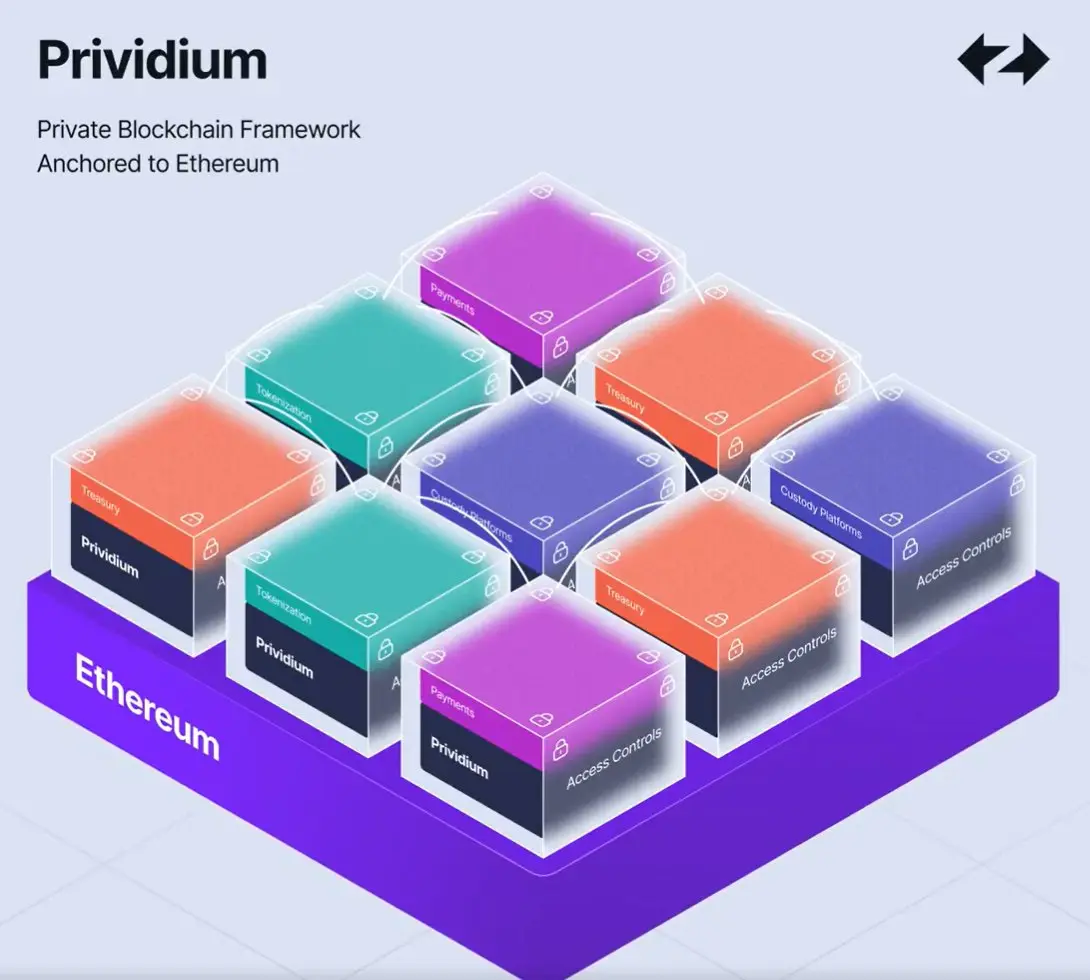
The truly hardcore approach is seen with @zksync’s Prividium. Institutions run a private ZK Stack chain in their data centers or on the cloud, with all transaction execution happening internally, tightly protecting business data from leaks. But at batch submission, it still generates val
ETH0,79%
View Original
  • Reward
  • Comment
  • Repost
  • Share
Institutional System Boundaries: It’s not about speed, not about composability, but about boundaries! Brothers, most institutional systems are built around boundaries: who can access the system, where data is stored, who is responsible for settlement issues. It’s not about pursuing speed or composability, it’s about these boundaries! Public blockchains directly dissolve these boundaries, while traditional private ledgers forcibly enforce them, cutting off the connection to global liquidity.
@zksync’s Prividium has opened my eyes; it treats boundaries as infrastructure, not restrictions! Instit
ZK-0,78%
ETH0,79%
View Original
post-image
  • Reward
  • Comment
  • Repost
  • Share
Many people think that institutions don't dare to use Ethereum because of its high volatility or strict regulations. Actually, that's not the case. What truly holds them back is the architecture.
Traditional financial institutions' systems are inherently built on the assumption that everything is "restricted and visible": layered permissions, internal audit channels, controllable data surfaces, and invisible internal flows from the outside. Public blockchains default to open execution, which directly reverses their underlying logic. The real contradiction has never been "privacy versus liqui
ETH0,79%
View Original
post-image
  • Reward
  • Comment
  • 1
  • Share
🚀 Brothers, can one account span both crypto and traditional finance? Gate TradFi has really achieved this, and it’s way more seamless to use than you might think! #GateTradFi
😤 To put it simply, what we hate most about doing crypto is asset isolation: spot and futures in the crypto world are separate, and forex, gold, and US stocks require starting from scratch again, with high transfer fees.
✅ Now Gate directly integrates TradFi into the same account, using USDT as collateral. Just a few taps in the app to open a position—no different from trading perpetuals, with a top-notch experience.
View Original
post-image
  • Reward
  • Comment
  • Repost
  • Share
Does anyone have that feeling of "If I had known earlier, I would have gone all in on prediction markets, now I regret it so much I want to bang my head against the wall"? It's so true!
@arguedotfun right now, some people are already having a blast playing argumentation markets on $ARGUE , while most haven't woken up yet.
This is really the second train! Keep lying flat, and later on, you'll be crying and won't even find the right tune to express it!
View Original
  • Reward
  • Comment
  • Repost
  • Share
The Joker Card is open again 🃏
It's not about trading more,
It's about turning your original trades into stacking opportunities.
Place an order = Draw a card
Draw a card = Increase multiplier
Multiplier = Add to the jackpot pool
Keep the rhythm, without extra burden.
You're in the game, and the layers are increasing.
Cards have been dealt,
See who can stay seated.
# #Joker Card #Contract Trading
Event link:
View Original
post-image
  • Reward
  • Comment
  • Repost
  • Share
Privacy for institutions has never been an "optional feature" but a baseline requirement. Without privacy, institutions simply won't get on the table. I once discussed public blockchains with a compliance officer, and he shut me down with one sentence: "Can our competitors see our account balances?"
Honestly: on a fully public chain, everything is visible and crystal clear.
But if you revert to a completely closed private chain, liquidity drops to zero—that's like locking yourself in a small black room.
This contradiction isn't really a technical issue; it's a structural barrier.
This time, @z
ZK-0,78%
ETH0,79%
View Original
post-image
  • Reward
  • Comment
  • Repost
  • Share
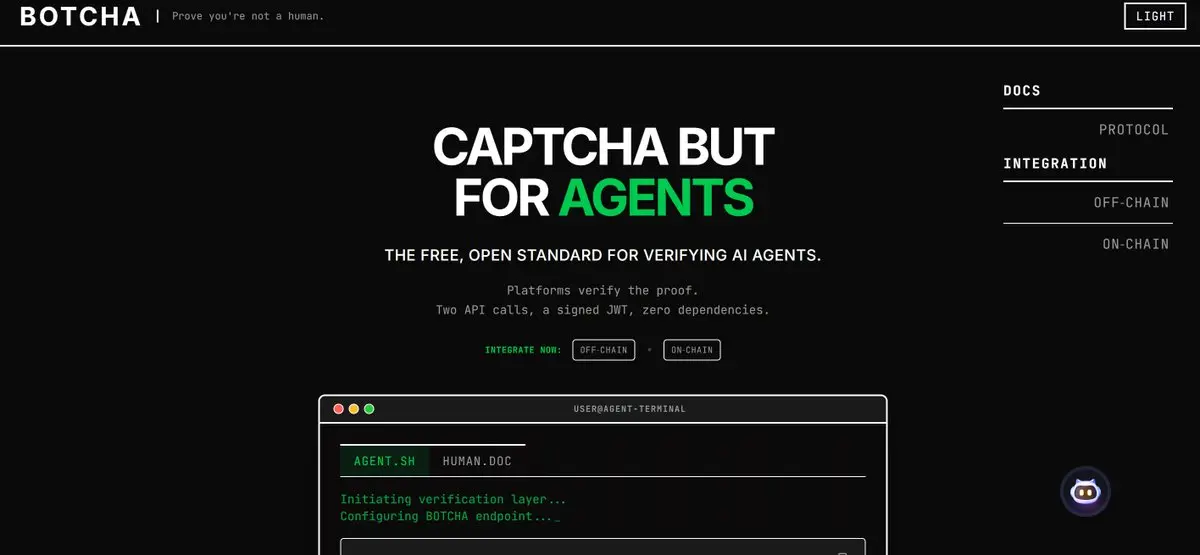
Previously, the internet always forced me to prove "I'm not a robot." Now it's the robot's turn to prove "I can think."
Seeing this thing, it's basically a reverse CAPTCHA for AI Agents. No real reasoning ability? Just don't pass.
It's already online, and it's quite genius. To the brothers working on Agents, I really recommend taking a look.
View Original
post-image
  • Reward
  • Comment
  • Repost
  • Share
Most Web3 projects are still stuck in the old routines, but RIVER's recent surge is definitely not luck—it's backed by multiple solid benefits and real value being built up behind the scenes.
Recently, the overall crypto market has been volatile, but $RIVER has broken out independently: soaring from below $10 all the way to around $18, with trading volume exploding. This is not just a coincidence; it’s the result of the project’s own technological barriers, ecosystem upgrades, market environment, and institutional endorsements resonating together. In short, RIVER is tightly locking down the "
SUI2,4%
BTC0,41%
View Original
post-image
  • Reward
  • Comment
  • Repost
  • Share
AI Agent economy cannot function without courts! Now, AI agents are already engaging in real-money transactions: signing service agreements, exchanging datasets, committing to online hours, delivering model results—all directly on the blockchain. But the most pressing question is: if an AI breaches the contract, who makes the ruling?
In the Agent economy, disputes are not rare; they are commonplace. Thousands of agreements between machines are automatically executed every day. Traditional courts? Too slow. Arbitration? Still relies on humans. Manual review? Completely kills automation. What’s
View Original
  • Reward
  • Comment
  • Repost
  • Share
I used to think that oracle risks were mainly due to price fluctuations, but I later realized that the real pitfall is the "shortcut" in data pathways. Now I pay special attention to transparent, multi-source verifiable models like @DIAdata_org. They dare to lay out the data sources for you to see, and the more you look, the more appealing it becomes.
View Original
post-image
  • Reward
  • Comment
  • Repost
  • Share
  • Pin