# BuyTheDipOrWaitNow?

365.82K
#深度创作营
Bitcoin Technical Outlook at the $63,800–$64,000 Price Zone
Bitcoin at a Critical Inflection Point
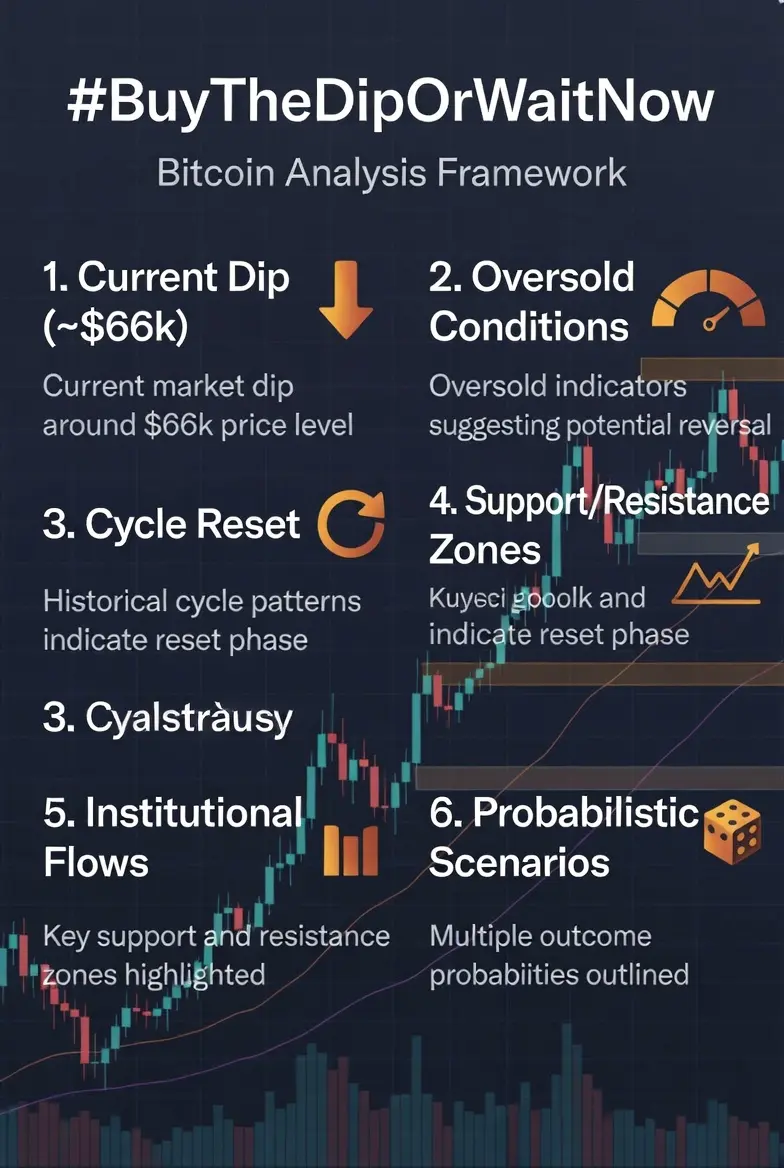
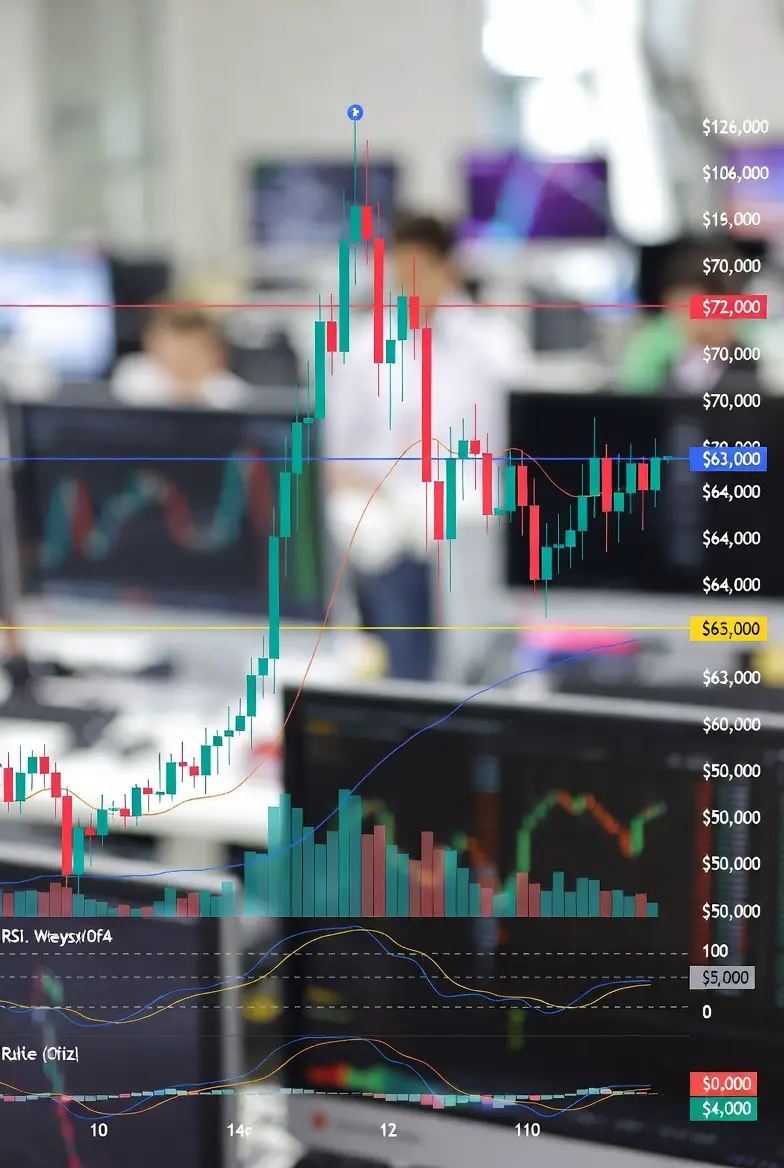
Bitcoin is currently trading in a tight range between $63,800 and $64,000, a zone that has become a psychological and technical battlefield for the market. This price area sits at the intersection of short-term trader expectations and long-term investor conviction. The question behind #BuyTheDipOrWaitNow? is no longer theoretical at this level, every technical indicator, liquidity signal, and macro factor matters. This analysis breaks down Bitcoin’s position using full technical indicator
BTC-1.58%
post-image
post-image
[The user has shared his/her trading data. Go to the App to view more.]
  • Reward
  • 6
  • Repost
  • Share
Discoveryvip:
To The Moon 🌕
View More
#BuyTheDipOrWaitNow? #BTC能否重返7万美元?Gate Plaza | BTC $70K Rebound Analysis – February 28, 2026
Bitcoin (BTC) is currently trading around $67,000, following a period of heightened volatility. Recent market dynamics have shifted significantly after the disappearance of the so-called “10 o’clock dump,” a recurring pattern of sudden liquidity shocks that historically created artificial selling pressure. Regulatory scrutiny and ongoing legal developments appear to have temporarily altered institutional behavior, reducing engineered sell-offs. This structural improvement suggests that BTC is now opera
BTC-1.58%
  • Reward
  • Comment
  • Repost
  • Share
#BuyTheDipOrWaitNow?
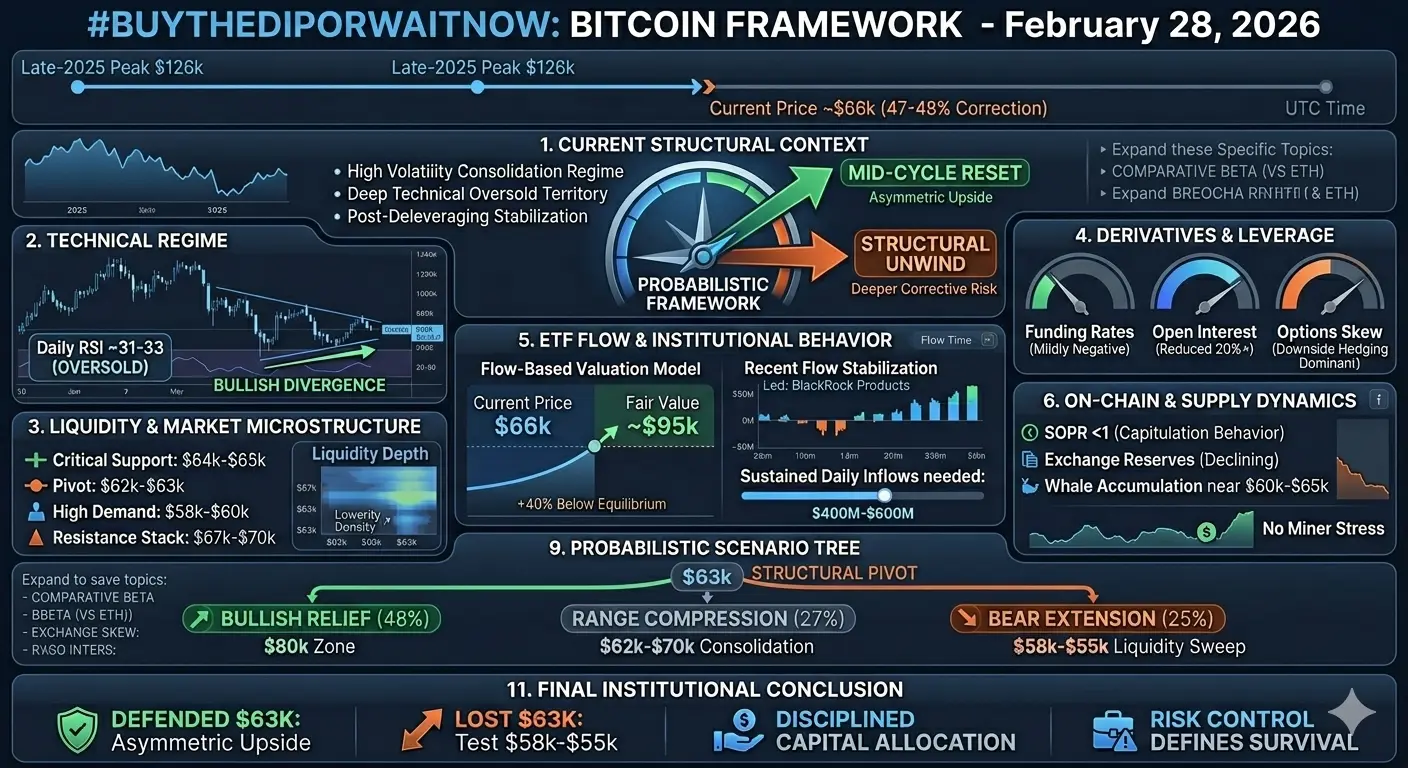
1. Current Structural Context
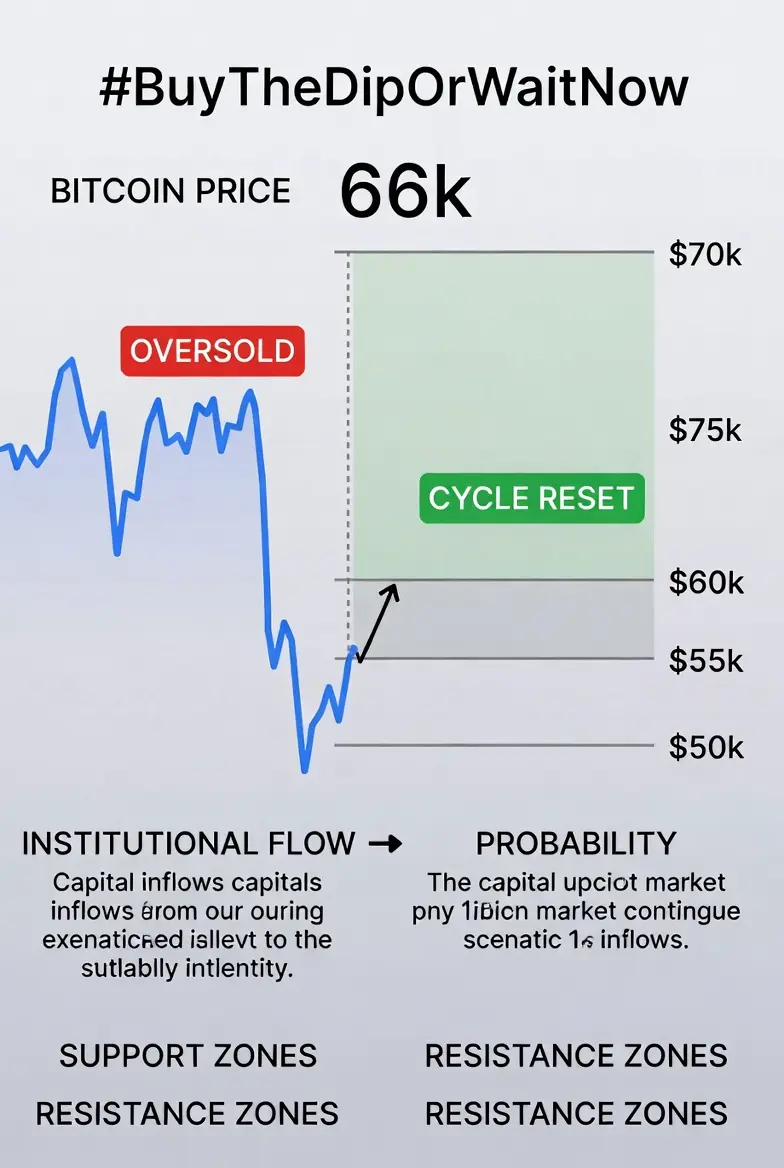
As of early February 28, 2026 (UTC), Bitcoin trades near $65,800–$66,000 following a ~47–48% correction from the late-2025 peak near $126,000.
This places the market in:
A high-volatility consolidation regime
Deep technical oversold territory
Post-deleveraging stabilization phase
Macro-uncertain but structurally intact cycle
The central question is no longer emotional (“Buy or wait?”) — it is probabilistic:
Is this a mid-cycle reset with asymmetric upside, or the beginning of a deeper structural unwind?
2. Technical Regime Assessment
Short-Te
BTC-1.58%
HighAmbitionvip
#BuyTheDipOrWaitNow?
1. Current Structural Context
As of early February 28, 2026 (UTC), Bitcoin trades near $65,800–$66,000 following a ~47–48% correction from the late-2025 peak near $126,000.
This places the market in:
A high-volatility consolidation regime
Deep technical oversold territory
Post-deleveraging stabilization phase
Macro-uncertain but structurally intact cycle
The central question is no longer emotional (“Buy or wait?”) — it is probabilistic:
Is this a mid-cycle reset with asymmetric upside, or the beginning of a deeper structural unwind?
2. Technical Regime Assessment
Short-Term (1–4 weeks):
Daily RSI ~31–33 (oversold)
Bullish divergence visible on lower timeframes
Momentum deceleration (MACD histogram compression)
Volatility compression suggesting expansion ahead
Probability-weighted outcome: 45–55% chance of 8–15% relief rally if $63k–$64k holds.
Medium-Term (1–3 months):
Price remains below 50D and 200D dynamic resistance
Trend technically bearish until $68k–$70k reclaimed
Conclusion: Oversold bounce conditions exist, but structural confirmation requires higher-level reclaim.
3. Liquidity & Market Microstructure
Critical price zones:
Immediate support: $64k–$65k
Structural pivot: $62k–$63k
High-conviction demand: $58k–$60k
Resistance stack: $67k–$70k
Order book depth reveals thinner liquidity below $63k, increasing risk of temporary vacuum if breached.
However, open interest contraction suggests cascading liquidation risk is lower than during late-2025 leverage extremes.
The market is fragile, but not structurally unstable.
4. Derivatives & Leverage Environment
Funding rates remain mildly negative — indicating defensive positioning and short bias.
Open interest is materially reduced (20%+ below peaks), signaling deleveraging largely complete.
Options skew shows downside hedging still dominant.
Interpretation: Leverage excess has been flushed. Reflexive collapse risk diminished. Volatility expansion likely directional, not disorderly.
5. ETF Flow & Institutional Behavior
Recent spot ETF inflows have reversed a multi-week outflow streak, led primarily by BlackRock products.
Flow-based valuation modeling implies a fair value closer to $95k under sustained inflow conditions — placing current price roughly 40% below flow-implied equilibrium.
Key variable: Are inflows persistent or temporary?
If sustained above $400–$600M daily pace, probability of structural recovery increases materially.
6. On-Chain & Supply Dynamics
Indicators suggest:
SOPR <1 (capitulation behavior)
Long-term holder distribution slowing
Exchange reserves structurally declining
Whale accumulation clusters near $60k–$65k
Miner stress signals remain absent.
This resembles mid-cycle reset behavior more than terminal bear capitulation.
7. Macro Correlation Framework
Bitcoin remains highly correlated with:
Nasdaq (~0.7–0.8 beta)
Real yields (inverse sensitivity)
USD strength (DXY drag when elevated)
Primary macro risk: No confirmed global liquidity expansion yet.
Primary macro catalyst: Clear rate-cut pivot or easing cycle could accelerate capital rotation into risk assets.
Macro remains neutral-to-tight, not aggressively contractionary.
8. Cross-Cycle Statistical Positioning
Historical analogs (2017, 2021 post-halving mid-cycle resets):
At 45–50% drawdowns:
Average 6-month forward return ≈ +30%
Median ≈ +25%
Worst macro-adjusted case ≈ −18%
Current drawdown statistically aligns more with mid-cycle reset than structural top formation.
9. Probabilistic Scenario Tree
Short-Term (2–8 weeks):
Bullish Relief (48%): $63k holds → reclaim $68k–$70k → extension toward $80k zone.
Range Compression (27%): $62k–$70k multi-week consolidation.
Bear Extension (25%): Decisive break below $63k → liquidity sweep toward $58k–$55k.
Medium-Term (3–6 months):
Recovery toward $85k–$95k (≈42%)
Extended base formation (≈38%)
Deeper corrective regime (<$55k, ≈20%)
10. Capital Allocation & Risk Discipline Model
Rather than binary decision-making:
Structured scaling approach:
Partial exposure in oversold compression zone
Additional allocation on structural confirmation above $70k
Reserve liquidity for asymmetry below $60k
Maintain hedging flexibility
Risk Management Parameters:
Controlled position sizing
Avoid full allocation pre-confirmation
Preserve 25–40% liquidity buffer
Protect against macro event volatility
Volatility is opportunity only when sized properly.
11. Asymmetry & Expected Value Framing
At ~$66k:
Downside to structural stress zone (~$55k): −17%
Upside to flow-implied valuation ($95k): ~+44%
Risk/reward skew moderately positive — conditional upon $63k structural defense.
The edge lies not in prediction, but in disciplined probabilistic positioning.
Final Institutional Conclusion
The #BuyTheDipOrWaitNow question dissolves under structured analysis.
This is not a binary choice. It is a regime evaluation.
Current regime characteristics:
Deep oversold technicals
Leverage reset largely complete
Early ETF flow stabilization
No miner capitulation
Macro uncertainty unresolved
Volatility compression near expansion
The decisive structural pivot remains $63k.
If defended: Asymmetric upside probability increases meaningfully into Q2.
If lost: Short-term liquidity vacuum likely tests $58k–$55k before stabilization.
The advantage belongs to disciplined capital allocators — not emotional participants.
Volatility is the mechanism.
Liquidity is the catalyst.
Structure defines timing.
Risk control defines survival.
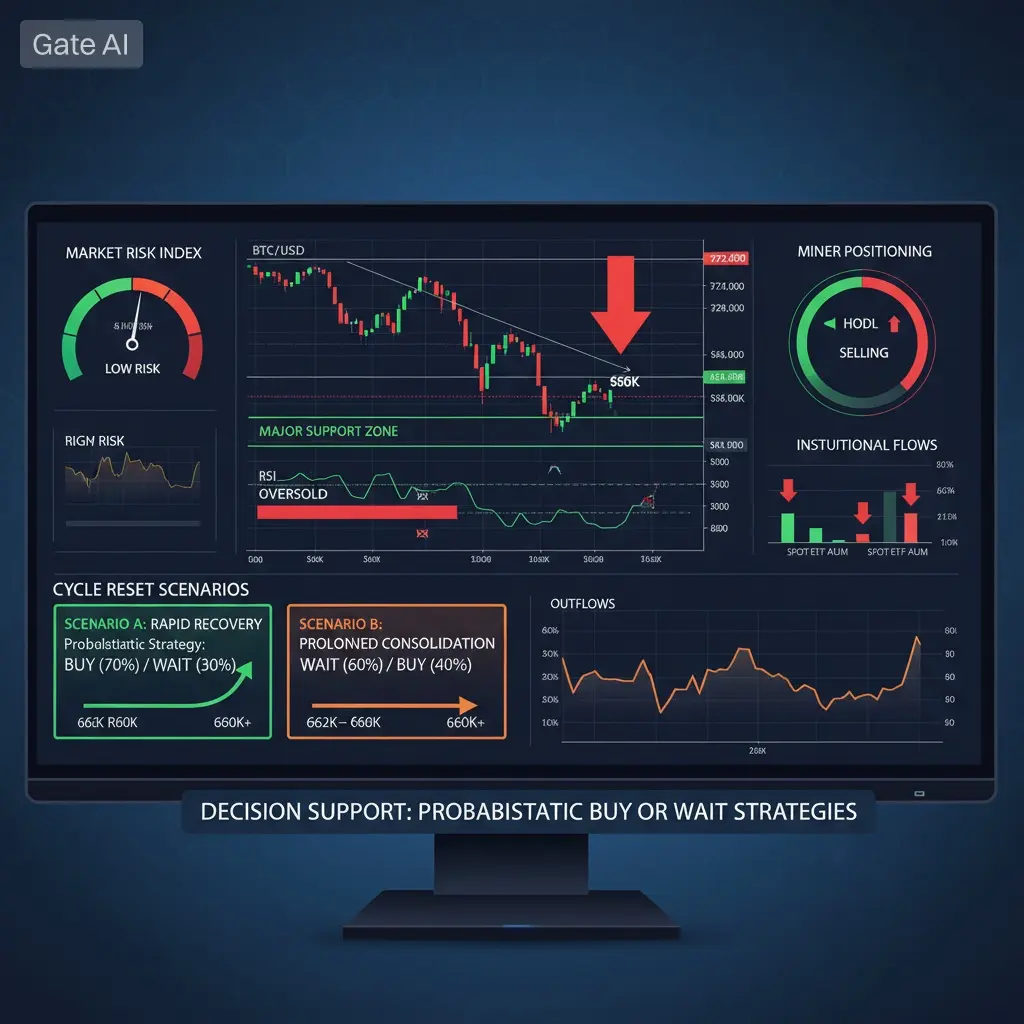
repost-content-media
  • Reward
  • Comment
  • Repost
  • Share
#BuyTheDipOrWaitNow? #BTC能否重返7万美元?Gate Plaza | BTC $70K Rebound Analysis – February 28, 2026
Bitcoin (BTC) is currently trading around $67,000, following a period of heightened volatility. Recent market dynamics have shifted significantly after the disappearance of the so-called “10 o’clock dump,” a recurring pattern of sudden liquidity shocks that historically created artificial selling pressure. Regulatory scrutiny and ongoing legal developments appear to have temporarily altered institutional behavior, reducing engineered sell-offs. This structural improvement suggests that BTC is now opera
BTC-1.58%
  • Reward
  • Comment
  • Repost
  • Share
#BuyTheDipOrWaitNow? #BTC能否重返7万美元?Gate Plaza | BTC $70K Rebound Analysis – February 28, 2026
Bitcoin (BTC) is currently trading around $67,000, following a period of heightened volatility. Recent market dynamics have shifted significantly after the disappearance of the so-called “10 o’clock dump,” a recurring pattern of sudden liquidity shocks that historically created artificial selling pressure. Regulatory scrutiny and ongoing legal developments appear to have temporarily altered institutional behavior, reducing engineered sell-offs. This structural improvement suggests that BTC is now opera
BTC-1.58%
HighAmbitionvip
#BuyTheDipOrWaitNow? #BTC能否重返7万美元?Gate Plaza | BTC $70K Rebound Analysis – February 28, 2026
Bitcoin (BTC) is currently trading around $67,000, following a period of heightened volatility. Recent market dynamics have shifted significantly after the disappearance of the so-called “10 o’clock dump,” a recurring pattern of sudden liquidity shocks that historically created artificial selling pressure. Regulatory scrutiny and ongoing legal developments appear to have temporarily altered institutional behavior, reducing engineered sell-offs. This structural improvement suggests that BTC is now operating in a cleaner market environment where price movements more accurately reflect genuine supply-demand dynamics. Traders and institutions can accumulate without being caught in sudden, predictable liquidity traps, creating the conditions for a potential rebound toward $70,000.
From a technical perspective, BTC is sitting near short-term support at $66,500–$67,000, which has held strongly despite recent volatility. This support is reinforced by layered buying across multiple timeframes, suggesting absorption of sell-side pressure and a consolidation base for future upward momentum. Above this zone, multiple resistance levels will define BTC’s path: $67,500–$68,000 as the first intraday hurdle, $68,500–$69,000 as a psychological pivot corresponding to prior swing highs, and finally $69,500–$70,000, a technically and psychologically significant barrier. Breaking through this final zone with volume would signal a mid-cycle continuation, likely attracting further momentum-driven buyers.
Observing on-chain data, miner behavior indicates accumulation near $65,000–$66,000, with selling pressure substantially lower than average. Exchange inflows have decreased, while outflows have slightly increased, historically a bullish indicator for short-term rebound potential. ETF and institutional inflows concentrated near these price levels further confirm support integrity, adding another layer of confidence for traders. Such flows often coincide with temporary pauses in engineered selling and are a signal that market participants are positioning for mid-cycle upside.
The risk index remains elevated but not extreme. While temporary panic selling occurs during short-term dips, it is largely absorbed by patient buyers at strong support levels. This dynamic creates a high-probability environment for a rebound while maintaining awareness of potential downside scenarios. Historical cycles show that when BTC consolidates near support with strong miner and institutional accumulation, short-term rebounds of 3–6% are common, sometimes leading to continuation toward mid-cycle highs.
Momentum indicators reinforce this narrative. The RSI shows moderate oversold conditions, indicating that BTC has temporarily reached a point where buying pressure could outweigh selling. MACD displays bullish divergence, supporting the potential for short-term upward movement. Volume analysis highlights increasing buy-side activity near support levels, suggesting absorption of selling pressure and the possibility of a gradual, controlled rebound rather than a sudden spike.
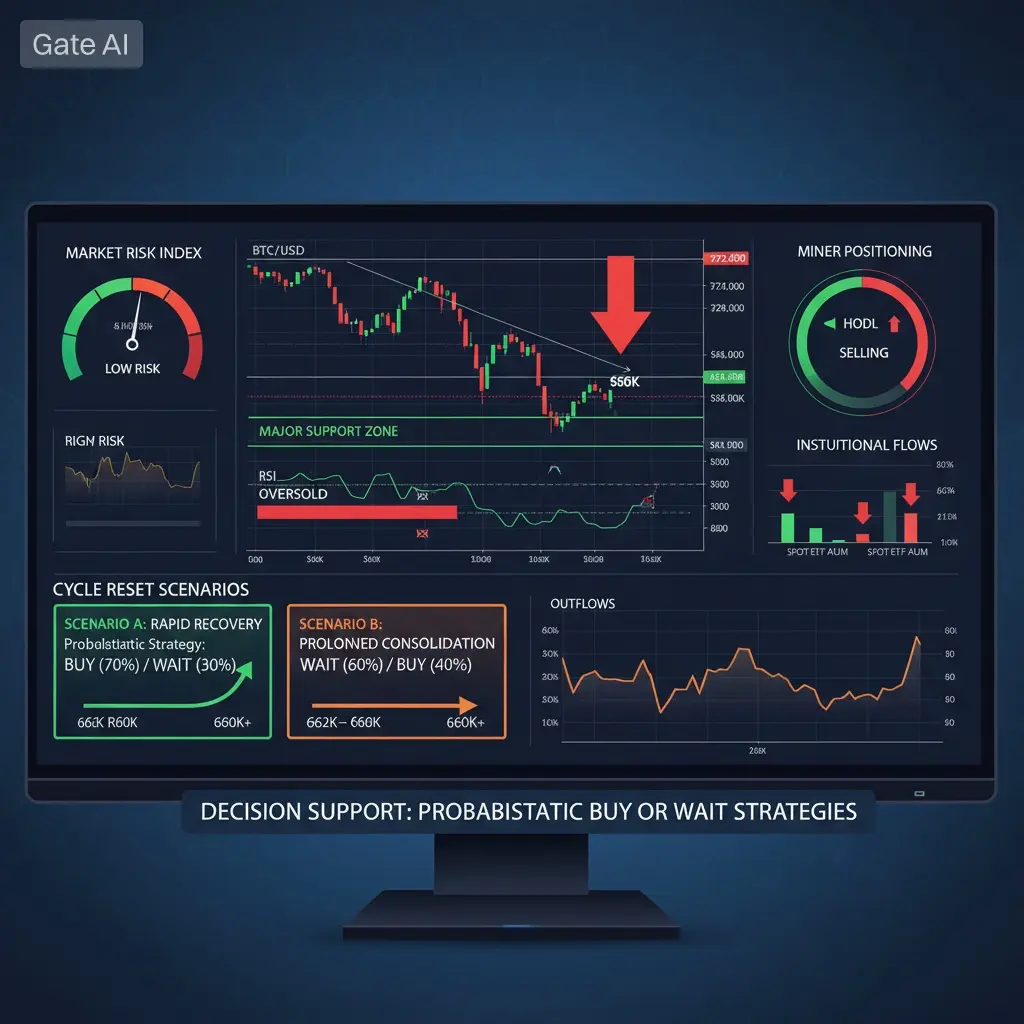
From a probabilistic standpoint, scenario planning indicates:
Short-term rebound toward $68,000: ~60% probability, driven by oversold conditions, miner accumulation, and institutional inflows.
Mid-cycle consolidation: ~30% probability, representing sideways price action and profit-taking, which is healthy for the market’s structural integrity.
Deeper correction toward ~$65,000: ~10% probability, typically triggered by macro shocks or sudden liquidity events, but limited by strong support and accumulation patterns.
Risk management and execution strategy are central to capitalizing on this setup. Layered entries between $66,500–$67,000, combined with stop-losses around $64,800, provide a risk-adjusted approach. Partial profit-taking between $66,500–$67,000, with further evaluation toward $68,000–$70,000, balances exposure and reward. This approach allows traders to capture early upside while mitigating the risk of false breakouts or short-term retracements. Personal experience confirms that layered accumulation in this range historically increases probability of success while limiting downside exposure.
Psychologically, traders are navigating a mid-cycle environment marked by cautious optimism. The Fear & Greed Index at ~38 reflects neutral-to-slightly fearful sentiment, encouraging strategic dip-buying rather than panic selling. Market participants are opportunistically accumulating near strong supports, and short-term overreaction creates high-confidence entry zones for disciplined traders. Historically, such mid-cycle phases allow for measured accumulation ahead of the next leg-up, with volatility providing multiple layering opportunities.
Macro factors further influence BTC’s trajectory. Stable interest rates, cooling inflation, and moderate USD strength reduce systemic pressure on crypto markets. BTC’s partial decoupling from equities (correlation 0.45) also supports independent momentum. While extreme macro shocks remain the primary risk to deeper corrections ($63,000), current conditions favor a controlled rebound, especially when combined with on-chain and institutional support.
Key takeaways: BTC near $67,000 is positioned at a strategic pivot, supported by clean market conditions, strong technical support, miner accumulation, and institutional inflows. Oversold momentum and volume trends indicate a high-probability rebound toward $66,500–$68,000, with mid-cycle consolidation remaining healthy for structural integrity. Layered entries, scenario-based planning, and disciplined risk management are essential to maximize potential upside while controlling downside. Historical patterns and personal experience reinforce confidence in this setup, suggesting that traders who adhere to probabilistic strategies and maintain patience are best positioned to capture mid-cycle gains.
In summary, BTC currently operates in a high-confidence support zone, where technical, on-chain, institutional, and psychological signals converge to favor a controlled rebound. Probabilistic scenario planning, layered entries, and disciplined execution provide traders with a structured framework to approach the market confidently, while maintaining risk awareness in case of sudden macro or liquidity shocks.
repost-content-media
  • Reward
  • 13
  • Repost
  • Share
EagleEyevip:
watching very closely good post
View More
#BuyTheDipOrWaitNow?
1. Current Structural Context
As of early February 28, 2026 (UTC), Bitcoin trades near $65,800–$66,000 following a ~47–48% correction from the late-2025 peak near $126,000.
This places the market in:
A high-volatility consolidation regime
Deep technical oversold territory
Post-deleveraging stabilization phase
Macro-uncertain but structurally intact cycle
The central question is no longer emotional (“Buy or wait?”) — it is probabilistic:
Is this a mid-cycle reset with asymmetric upside, or the beginning of a deeper structural unwind?
2. Technical Regime Assessment
Short-Te
BTC-1.58%
HighAmbitionvip
#BuyTheDipOrWaitNow?
1. Current Structural Context
As of early February 28, 2026 (UTC), Bitcoin trades near $65,800–$66,000 following a ~47–48% correction from the late-2025 peak near $126,000.
This places the market in:
A high-volatility consolidation regime
Deep technical oversold territory
Post-deleveraging stabilization phase
Macro-uncertain but structurally intact cycle
The central question is no longer emotional (“Buy or wait?”) — it is probabilistic:
Is this a mid-cycle reset with asymmetric upside, or the beginning of a deeper structural unwind?
2. Technical Regime Assessment
Short-Term (1–4 weeks):
Daily RSI ~31–33 (oversold)
Bullish divergence visible on lower timeframes
Momentum deceleration (MACD histogram compression)
Volatility compression suggesting expansion ahead
Probability-weighted outcome: 45–55% chance of 8–15% relief rally if $63k–$64k holds.
Medium-Term (1–3 months):
Price remains below 50D and 200D dynamic resistance
Trend technically bearish until $68k–$70k reclaimed
Conclusion: Oversold bounce conditions exist, but structural confirmation requires higher-level reclaim.
3. Liquidity & Market Microstructure
Critical price zones:
Immediate support: $64k–$65k
Structural pivot: $62k–$63k
High-conviction demand: $58k–$60k
Resistance stack: $67k–$70k
Order book depth reveals thinner liquidity below $63k, increasing risk of temporary vacuum if breached.
However, open interest contraction suggests cascading liquidation risk is lower than during late-2025 leverage extremes.
The market is fragile, but not structurally unstable.
4. Derivatives & Leverage Environment
Funding rates remain mildly negative — indicating defensive positioning and short bias.
Open interest is materially reduced (20%+ below peaks), signaling deleveraging largely complete.
Options skew shows downside hedging still dominant.
Interpretation: Leverage excess has been flushed. Reflexive collapse risk diminished. Volatility expansion likely directional, not disorderly.
5. ETF Flow & Institutional Behavior
Recent spot ETF inflows have reversed a multi-week outflow streak, led primarily by BlackRock products.
Flow-based valuation modeling implies a fair value closer to $95k under sustained inflow conditions — placing current price roughly 40% below flow-implied equilibrium.
Key variable: Are inflows persistent or temporary?
If sustained above $400–$600M daily pace, probability of structural recovery increases materially.
6. On-Chain & Supply Dynamics
Indicators suggest:
SOPR <1 (capitulation behavior)
Long-term holder distribution slowing
Exchange reserves structurally declining
Whale accumulation clusters near $60k–$65k
Miner stress signals remain absent.
This resembles mid-cycle reset behavior more than terminal bear capitulation.
7. Macro Correlation Framework
Bitcoin remains highly correlated with:
Nasdaq (~0.7–0.8 beta)
Real yields (inverse sensitivity)
USD strength (DXY drag when elevated)
Primary macro risk: No confirmed global liquidity expansion yet.
Primary macro catalyst: Clear rate-cut pivot or easing cycle could accelerate capital rotation into risk assets.
Macro remains neutral-to-tight, not aggressively contractionary.
8. Cross-Cycle Statistical Positioning
Historical analogs (2017, 2021 post-halving mid-cycle resets):
At 45–50% drawdowns:
Average 6-month forward return ≈ +30%
Median ≈ +25%
Worst macro-adjusted case ≈ −18%
Current drawdown statistically aligns more with mid-cycle reset than structural top formation.
9. Probabilistic Scenario Tree
Short-Term (2–8 weeks):
Bullish Relief (48%): $63k holds → reclaim $68k–$70k → extension toward $80k zone.
Range Compression (27%): $62k–$70k multi-week consolidation.
Bear Extension (25%): Decisive break below $63k → liquidity sweep toward $58k–$55k.
Medium-Term (3–6 months):
Recovery toward $85k–$95k (≈42%)
Extended base formation (≈38%)
Deeper corrective regime (<$55k, ≈20%)
10. Capital Allocation & Risk Discipline Model
Rather than binary decision-making:
Structured scaling approach:
Partial exposure in oversold compression zone
Additional allocation on structural confirmation above $70k
Reserve liquidity for asymmetry below $60k
Maintain hedging flexibility
Risk Management Parameters:
Controlled position sizing
Avoid full allocation pre-confirmation
Preserve 25–40% liquidity buffer
Protect against macro event volatility
Volatility is opportunity only when sized properly.
11. Asymmetry & Expected Value Framing
At ~$66k:
Downside to structural stress zone (~$55k): −17%
Upside to flow-implied valuation ($95k): ~+44%
Risk/reward skew moderately positive — conditional upon $63k structural defense.
The edge lies not in prediction, but in disciplined probabilistic positioning.
Final Institutional Conclusion
The #BuyTheDipOrWaitNow question dissolves under structured analysis.
This is not a binary choice. It is a regime evaluation.
Current regime characteristics:
Deep oversold technicals
Leverage reset largely complete
Early ETF flow stabilization
No miner capitulation
Macro uncertainty unresolved
Volatility compression near expansion
The decisive structural pivot remains $63k.
If defended: Asymmetric upside probability increases meaningfully into Q2.
If lost: Short-term liquidity vacuum likely tests $58k–$55k before stabilization.
The advantage belongs to disciplined capital allocators — not emotional participants.
Volatility is the mechanism.
Liquidity is the catalyst.
Structure defines timing.
Risk control defines survival.

repost-content-media
  • Reward
  • Comment
  • Repost
  • Share
#BuyTheDipOrWaitNow?
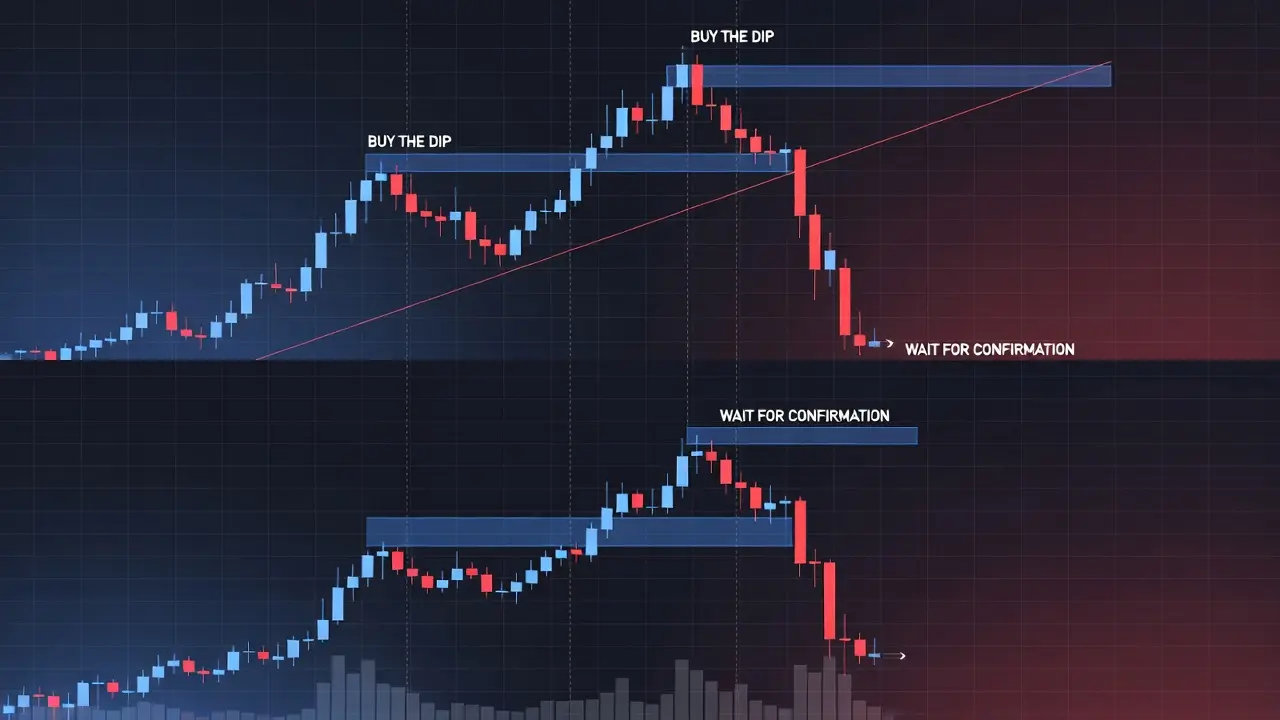
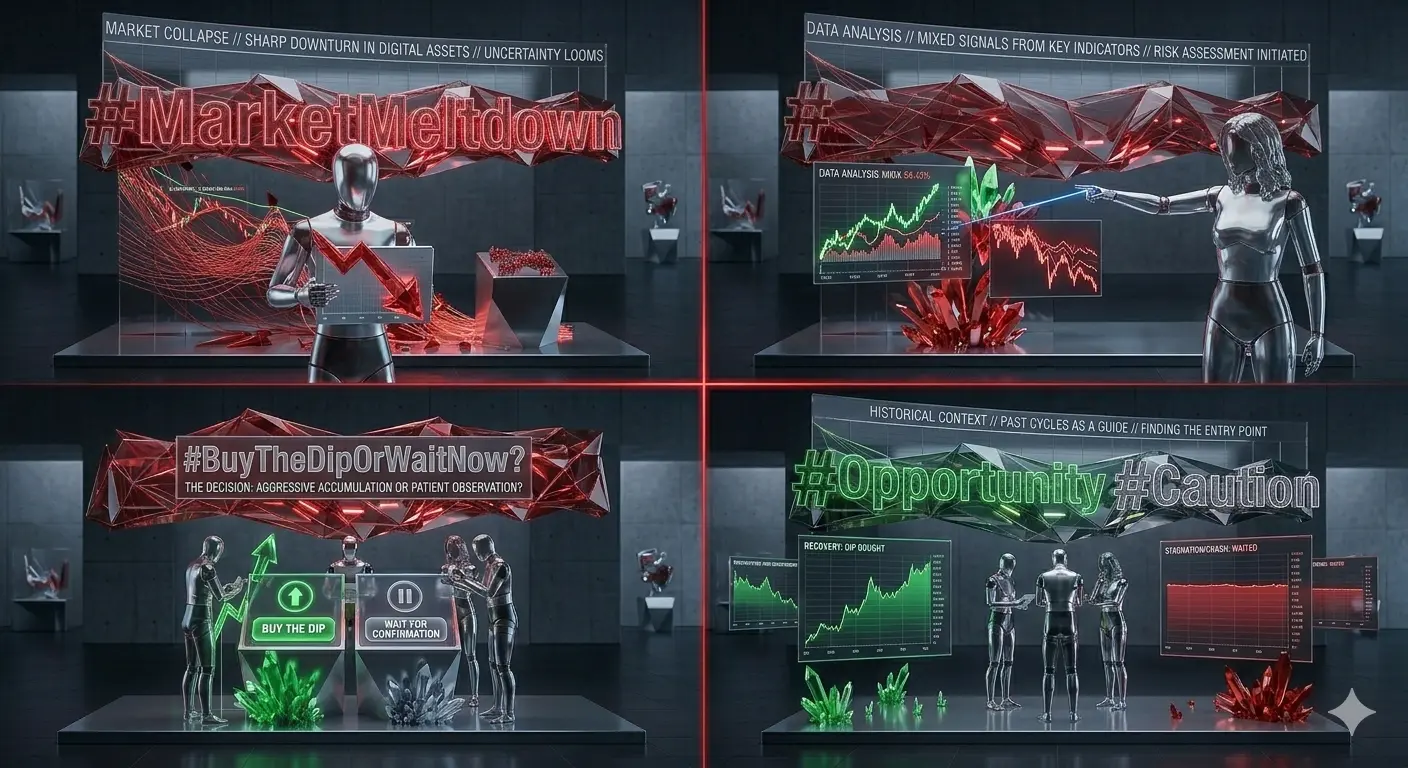
The eternal question haunts every trader: do you buy the dip, or do you wait for confirmation? #BuyTheDipOrWaitNow? isn’t just a rhetorical question it’s the crossroads between impulse and strategy, between emotion and structure. In volatile markets, the difference between opportunistic gain and catastrophic loss often comes down to timing, patience, and discipline.
First, let’s define “the dip.” A dip is not just a red candle. It’s a reflection of short-term selling, profit-taking, macro uncertainty, or liquidity rotation. Emotional reactions make dips look scarier than
post-image
  • Reward
  • 1
  • Repost
  • Share
SoominStarvip:
Buy To Earn 💰️
#BuyTheDipOrWaitNow?
The market right now isn’t simply red or green — it’s a liquidity battlefield. If you’re making decisions based only on candles, you’re probably missing the deeper structure.
Let’s break it down with real context 👇
1️⃣ Market Structure – The Foundation
On higher timeframes (4H / Daily):
If price is still printing Higher Highs and Higher Lows, this dip is likely a healthy pullback within an uptrend.
If a Lower High has formed and key demand zones are broken, this could signal a potential trend shift — not just a dip.
Structure always comes before emotion.
2️⃣ Liquidity &
BTC-1.58%
post-image
post-image
  • Reward
  • 5
  • Repost
  • Share
BeautifulDayvip:
To The Moon 🌕
View More
#BuyTheDipOrWaitNow?
Navigating Crypto Market Volatility
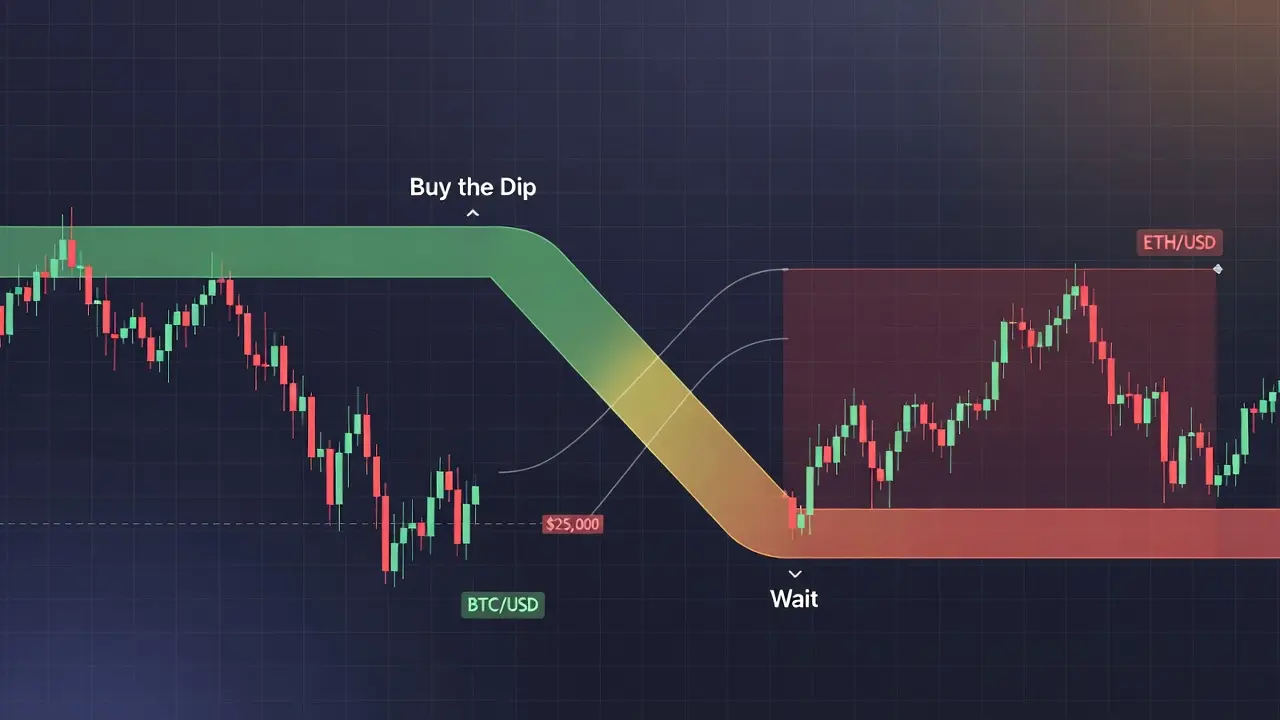
The crypto market has recently experienced notable fluctuations, leaving investors and traders debating a common question: should you buy the dip or wait? Understanding market trends, risk management, and price action is crucial to making informed decisions.
1️⃣ Current Market Context
Price Movements: Bitcoin, Ethereum, and key altcoins have seen sharp dips followed by partial recoveries, reflecting heightened market volatility.
Trading Sentiment: Retail traders and institutional investors are carefully monitoring support zones, while s
BTC-1.58%
ETH-2.06%
post-image
post-image
  • Reward
  • 10
  • Repost
  • Share
ShainingMoonvip:
2026 GOGOGO 👊
View More
#BuyTheDipOrWaitNow?
1. Current Structural Context
As of early February 28, 2026 (UTC), Bitcoin trades near $65,800–$66,000 following a ~47–48% correction from the late-2025 peak near $126,000.
This places the market in:
A high-volatility consolidation regime
Deep technical oversold territory
Post-deleveraging stabilization phase
Macro-uncertain but structurally intact cycle
The central question is no longer emotional (“Buy or wait?”) — it is probabilistic:
Is this a mid-cycle reset with asymmetric upside, or the beginning of a deeper structural unwind?
2. Technical Regime Assessment
Short-Te
BTC-1.58%
post-image
post-image
post-image
post-image
post-image
  • Reward
  • 18
  • Repost
  • Share
SheenCryptovip:
2026 GOGOGO 👊
View More
Load More
Trade Crypto Anywhere Anytime
qrCode
Scan to download Gate App
Community
English
  • 简体中文
  • English
  • Tiếng Việt
  • 繁體中文
  • Español
  • Русский
  • Français (Afrique)
  • Português (Portugal)
  • Bahasa Indonesia
  • 日本語
  • بالعربية
  • Українська
  • Português (Brasil)