
Fry_chy

vip
Age 1.6 Year
Peak Tier 5
No content yet
$SOL Technical Analysis: Major Resistance and Downward Pressure, Downtrend Structure Not Yet Broken
Sol today (April 11) on GATE.io platform, trading between $84.37 and $85.21, with a slight 24-hour increase of about 1.7%. However, the price remains constrained by the 50-day moving average (85.49) and the Ichimoku Kinko Hyo baseline (87.19), forming a strong pressure zone.
Key Indicators:
· Moving Average System: Although the price is above the 7- and 20-day averages, it is still pressured by the 50- and 200-day averages, indicating a short-term bullish tilt but long-term pressure persi
SOL0.23%
USDC0.02%
BTC0.21%
View Original
post-image
post-image
SunshineRainbowLittleBullHorse
$SOL ‌1. Technical Analysis: Key Resistance Suppression, Downtrend Structure Not Broken
SOL today (April 11) on the GATE.io platform is priced around $84.37-$85.21, up approximately 1.7% over the past 24 hours. However, the price is still constrained by the strong resistance band formed by the 50-day moving average ($85.49) ** and ** the Ichimoku equilibrium chart baseline ($87.19).
Key indicators:
· Moving average system: Although the price has risen above the 7-day and 20-day moving averages, it is still being suppressed by the 50-day and 200-day moving averages, indicating a pattern of short-term bullishness but longer-term pressure.
· Momentum signals: MACD is still in negative territory, suggesting that selling pressure remains. RSI is around 50, neutral, lacking breakout momentum. Notably, Stoch RSI has entered the overbought zone (94.37), implying that short-term pullback pressure is building.
· Key support and resistance:
· First resistance zone: $85.50 - $86.00 (the 50-day moving average and the pivot point of the downtrend structure). Analysts clearly state that this is the core level that determines a trend reversal—any rise before breaking through should be treated as a rebound.
· Second resistance zone: $87.20 - $90.00 (the Ichimoku equilibrium baseline and the upper band of the Bollinger Bands).
· Bulls’ lifeline: $81.30 - $82.00. If this level is lost, the downside will test $76.60 and even $75.00.
2. News Insight: A Two-Sided World of Ice and Fire
SOL’s fundamentals are in a stage of fierce game-playing between bulls and bears, with both substantial positives and macro-level pressures.
Core positives:
· ETF capital continues to flow in: The US SOL spot ETF recorded a net inflow of $11.45 million on April 10, with Bitwise’s BSOL product taking the top spot; its historical cumulative inflow has already reached $789 million. This shows that demand from traditional funds for SOL allocation is still present.
· Active on-chain capital: In the past month, Circle has issued an additional 10.5 billion USDC on the Solana chain, providing ample liquidity for the ecosystem.
· Revenue closely tracking Ethereum: Solana’s daily network fee revenue reached $6.42 million, narrowing the gap with Ethereum ($8.05 million) to just $1.63 million, indicating that its on-chain activity is catching up.
Core risks:
· Regulatory uncertainty: The issue that SOL has been identified by the SEC as a potential unregistered security has not been resolved, and this remains the main obstacle preventing large-scale institutional capital from entering the US market.
· Macro linkage: Although macro positives such as Hong Kong issuing stablecoin licenses boost market sentiment, SOL currently is more following the “spillover effect” from BTC’s rise rather than independently strengthening.
3. Trend Outlook: Rebound or Reversal?
Most analysts believe SOL is currently in a “verification phase.” The majority of technical analysis views suggest that the current rise is more like a “get-out opportunity” within a downtrend cycle, rather than the starting point of a new bull market.
Core view: SOL is in the late stage of a “three-stage decline cycle” consolidation, $86 is the bull-bear dividing line.
The current consolidation in the $80-$85 range is interpreted as a “relay consolidation within a bearish trend,” not “bullish accumulation.” Although ETF capital inflows are a positive signal, the trend has not reversed until it breaks above the 50-day moving average.
Strategy suggestions:
· Holders (sell/reduce positions): **It is recommended to reduce positions in batches around $85 **. Before $86 is effectively broken and held, the current rally is a window to lock in profits and control risk.
· Chasers (buy): The risk-reward ratio is relatively poor. If you are truly bullish, wait for the price to gain volume and stabilize above $86 before entering from the right side, rather than chasing longs at the current resistance levels.
· No-position watchers: Be patient and wait for a direction to be chosen. If the price pulls back to the $76-$80 area, you can consider building positions in batches; if it breaks upward above $86, you can chase longs with a small position size, targeting $90-$95.
Summary: SOL’s fundamentals are solid, but the technicals are facing a life-or-death test. $86 is the key pivot going forward—if it breaks through, there is hope to open upside space toward $90-$100; if it cannot be pushed through after a long time, you need to be wary of the “long consolidation leading to a drop,” with a potential retest of $75 and even $60 support. #Gate上线Pre-IPOs

repost-content-media
  • Reward
  • Comment
  • Repost
  • Share
If we compare the capital market to a highway that starts from innovation and leads to wealth management, then private investment is the lanes, and an initial public offering (IPO) is the gateway, and the secondary market is the main road. As for Pre-IPOs, they are the part of the road that was often missing in the past: enabling companies to enter the public market more smoothly, allowing more investors to participate early in the middle portion of company growth returns, all while respecting risks and regulations.
View Original
post-image
post-image
KevinLee
"The 'Mezzanine' of the Capital Market: How Pre-IPO Opportunities Are Moving from a Few to Many"
If the capital market is compared to a highway from innovation to public wealth management, then private placements are on-ramps, IPOs are checkpoints, and the secondary market is the main road. Pre-IPOs are the connecting road that has often been missing in the past: enabling companies to enter the public market more smoothly, and allowing more investors to participate earlier in the mid-stage dividends of company growth, while respecting risks and rules.


repost-content-media
  • Reward
  • Comment
  • Repost
  • Share
Shiba Inu currently shows mixed market signals in April 2026. The price hovers around $0.000006, reflecting a long-term downtrend and an annual decline of about 35%, indicating weak overall momentum. However, on-chain data reveals bullish flows, including a significant withdrawal from exchanges and a 3,230% increase in the burn rate, reducing circulating supply. Whale accumulations and 71% of long positions among major traders suggest growing confidence. Technically, SHIB remains within a downtrend channel, although short-term indicators show a potential breakout possibility. Overall, sentimen
SHIB-0.43%
View Original
post-image
post-image
Moathalmahdi
Shiba Inu currently shows mixed market signals in April 2026. The price hovers around $0.000006, reflecting a long-term downward trend and an annual decline of approximately 35%, indicating weak overall momentum. However, on-chain data reveals bullish flows, including a significant withdrawal from exchanges and a 3,230% increase in the burn rate, reducing circulating supply. Whale accumulations and 71% of long positions among major traders suggest growing confidence. Technically, SHIB remains within a downtrend channel, although short-term indicators show a potential breakout possibility. Overall, sentiment is cautiously optimistic but depends on stronger demand and a broader recovery in the cryptocurrency market.
repost-content-media
  • Reward
  • Comment
  • Repost
  • Share
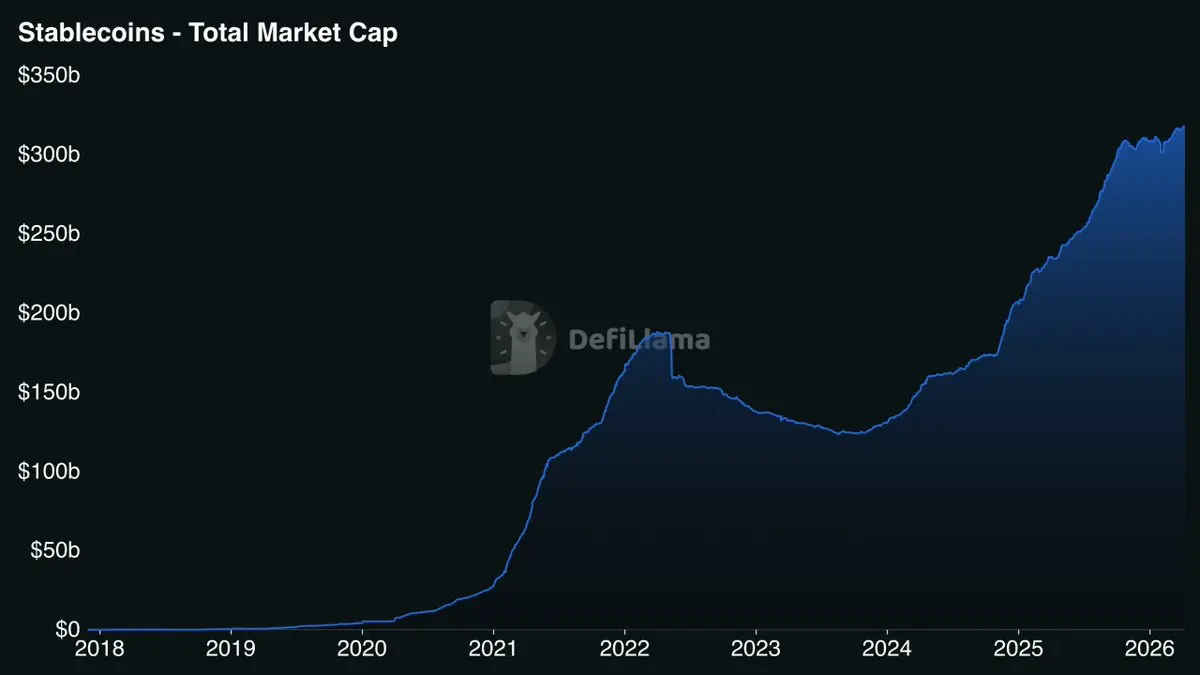
It is not mentioned enough that on-chain stablecoin supply reaches its all-time high again amid pessimism
And that the right altcoins are ready to be a black hole for the new capital entering and willing to take some risks
As usual, asset selection remains key🔴 #btc Millions of AVAX flows into Coinbase over six months; users are asking "Why?"
Avalanche is trading around $9.07, down 3.35% in 24 hours, and the price dip is just part of the story. On-chain data showing that $180 million AVAX was sent to Coinbase over the past six months raises uncomfortable questions about who is selling
BTC0.21%
AVAX-0.5%
View Original
post-image
post-image
Aguofthe
#Bitmine announces stock buyback program of $4B from $1B planned initially and uplisting to 'Big Board' #NYSE
#CryptoMarketsDipSlightly
$ETH
repost-content-media
  • Reward
  • Comment
  • Repost
  • Share
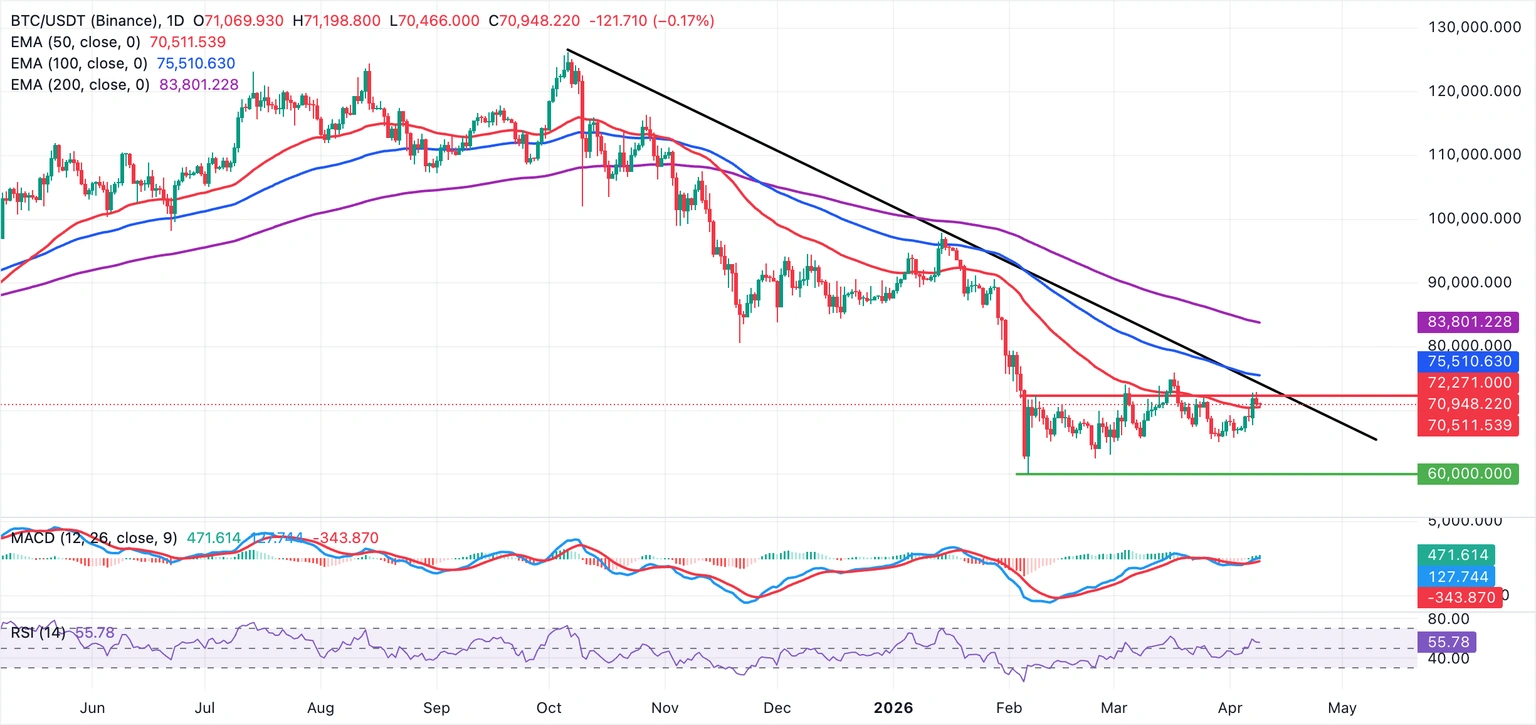
- Today’s Chart: Bitcoin Holds Above Key Support Level:
Bitcoin is currently trading around $70,950 USD at the time of writing this report on Thursday, maintaining a positive short-term upward trajectory as it holds above the 50-day exponential moving average at approximately $70,512 USD. However, Bitcoin’s price is still below the 100-day exponential moving average near $75,511 USD, and below the broader falling resistance level derived from its all-time high of $126,199 USD, so the current bullish trend is considered a recovery phase rather than a clear breakout.
The moving average convergen
BTC0.21%
AVAX-0.5%
View Original
post-image
post-image
DegenSensei
Not talked about enough how the on-chain stablecoin supply is hitting all-time highs again in the midst of the doomerism
And the right alts are ripe to be a black hole for the new capital entering that is willing to bid some risk
As usual, asset selection remains key
repost-content-media
  • Reward
  • Comment
  • Repost
  • Share
🔴 $180 One million AVAX flows to Coinbase over six months; users are asking, "Why?"
Avalanche is trading around $9.07, down 3.35% in 24 hours, and the price dip is just part of the story. On-chain data showing that $180 million AVAX was sent to Coinbase in the past six months raises uncomfortable questions about who is selling and why.
The figure represents about 1.88% of the circulating supply of AVAX, and a continuous outflow that some analysts say is one of the main reasons the token struggles to gain sustainable upward momentum despite the broader market recovery.
🔸 transfer proce
AVAX-0.5%
View Original
post-image
post-image
DegenSensei
Not talked about enough how the on-chain stablecoin supply is hitting all-time highs again in the midst of the doomerism
And the right alts are ripe to be a black hole for the new capital entering that is willing to bid some risk
As usual, asset selection remains key
repost-content-media
  • Reward
  • Comment
  • Repost
  • Share
It is not mentioned enough that the stablecoin supply on-chain reaches its highest level ever again amid pessimism
And that the right altcoins are ready to become a black hole for the new capital entering, and are willing to take on some risks
As usual, choosing assets remains key
🔴 $180 million in AVAX flows to Coinbase over six months; users are asking "Why?"
Avalanche is trading around $9.07, down 3.35% over the past 24 hours, but the weakness in price is only part of the story. On-chain data showing that $180 million AVAX was sent to Coinbase over the past six months raises unco
AVAX-0.5%
View Original
post-image
post-image
DegenSensei
Not talked about enough how the on-chain stablecoin supply is hitting all-time highs again in the midst of the doomerism
And the right alts are ripe to be a black hole for the new capital entering that is willing to bid some risk
As usual, asset selection remains key
repost-content-media
  • Reward
  • Comment
  • Repost
  • Share
- Today's Chart: Bitcoin Holds Above Key Support Level:
Bitcoin is currently trading around $70,950 USD at the time of writing this report on Thursday, maintaining a positive short-term bullish trend as it stays above the 50-day exponential moving average at approximately $70,512 USD. However, Bitcoin's price remains below the 100-day exponential moving average near $75,511 USD, and below the broader downward resistance level derived from its all-time high at $126,199 USD, so the current bullish trend is considered a recovery phase rather than a clear breakout.
The Moving Average Convergence D
BTC0.21%
View Original
post-image
post-image
Before00zero
- Today's Chart: Bitcoin Holds Above Key Support Level:
Bitcoin is currently trading at around $70,950 USD at the time of writing this report on Thursday, maintaining a positive short-term upward trend, as it stays above the 50-day exponential moving average at approximately $70,512 USD. However, Bitcoin's price remains below the 100-day exponential moving average near $75,511 USD, and below the broader downward resistance level derived from its all-time high at $126,199 USD, so the current bullish trend is considered a recovery phase rather than a clear breakout.
The Moving Average Convergence Divergence (MACD) chart shows a positive trend and expansion, while the Relative Strength Index (RSI) remains around 56 in the positive zone on the daily chart, indicating increasing bullish momentum but still requiring a decisive move above support levels to accelerate.
Daily chart of the BTC/USDT pair
The initial support level for Bitcoin is set at the 50-day exponential moving average at $70,512. A daily close below this level would indicate declining demand, opening the door for further decline. On the bullish side, immediate resistance is observed at the weekly high of $72,857, followed by the downward trendline barrier near $74,111, then the 100-day exponential moving average at around $75,511. Moreover, the 200-day exponential moving average, near $83,801, remains a distant bullish target if buyers regain control sustainably.
$BTC
repost-content-media
  • Reward
  • Comment
  • Repost
  • Share
🔴 $180 million AVAX in inflows into Coinbase over six months; users wonder "Why?"
Avalanche is trading around $9.07, down 3.35% over the past 24 hours, and the price drop is only part of the story. On-chain data showing that $180 million AVAX was sent to Coinbase over the past six months raises uncomfortable questions about who is selling and why.
The figure represents about 1.88% of AVAX’s circulating supply, an ongoing outflow that some analysts say is one of the main reasons the token is struggling to achieve sustainable upside momentum despite the broader market recovery.
🔸 The transfe
AVAX-0.5%
View Original
post-image
post-image
Moathalmahdi
🔴 $180 Millions of AVAX flows into Coinbase over six months; users are asking "Why?"
Avalanche is trading around $9.07, down 3.35% in 24 hours, and the price dip is just part of the story. On-chain data showing that $180 million AVAX was sent to Coinbase over the past six months raises uncomfortable questions about who is selling and why.
The figure represents about 1.88% of the circulating supply of AVAX, a continuous outflow that some analysts say is one of the main reasons the token struggles to gain sustainable upward momentum despite the broader market recovery.
🔸 transfer process totaling $104 million
Concerns grew after reports emerged of a single transaction moving $104 million AVAX to Coinbase at once. Large transfers to exchanges are typically interpreted as a sign of impending sell-off, and making such a large transfer in one move immediately drew attention.
A community member directly asked about the transaction, writing: "Did they send $104 million in one go?", questioning the size and what it means for the token's short-term future.
When asked who was behind it, one account replied: "You know who," adding a layer of speculation that the community has been discussing ever since.
Some considered the data as confirmation of a broader problem facing utility tokens in the current cycle.
One community member argued that the period from 2025 to 2026 was worse than 2019 for serious projects, accusing meme coins of attracting attention and capital away from tokens that were building real infrastructure but failed to deliver the price performance retail investors expect.
They pointed out that AVAX holders who stayed through the dip are in a worse position than those who sold.
#AVAX | # Avalanche | $AVAX
{spot}(AVAXUSDT)
repost-content-media
  • Reward
  • 1
  • Repost
  • Share
Winner1:
🐋
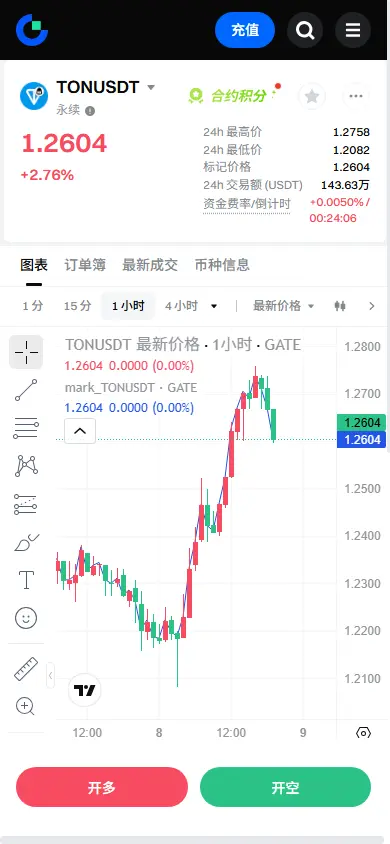
$TON Signal】Confirmation of return in 1 hour, tracking market movements
$TON After the 1-hour level rises, a correction to EMA20 occurs, and the price is trading around 1.2606. On the 4-hour level, a golden cross appears on the MACD, and the bullish trend strength continues to expand, but on the 1-hour level, the MACD histogram begins to shrink, indicating a short-term momentum slowdown. The market is experiencing frantic order cancellations, and the order depth at 1.2590 remains dense and positive, while sell orders above 1.2620 form the first resistance wall.
🎯 Trend: Correction for b
TON10.98%
BTC0.21%
ETH2.22%
SOL0.23%
View Original
post-image
post-image
EleventhQuantification
$TON Signal】1H pullback confirmation, tracking abnormal order flow
$TON 1H level surged high then pulled back to EMA20, with price ranging around 1.2606. The 4H MACD is above the zero line and forms a golden cross; bullish momentum is still expanding, but the 1H MACD histogram bars begin to contract, indicating weakening short-term momentum. The order book shows frantic order cancellations: buy-side depth is stacked aggressively and thickly below 1.2590, while sell-side forms the first resistance wall above 1.2620.
🎯 Direction: Pullback to go long
⚡ Entry/Order: 1.2580 - 1.2595
🛑 Stop Loss: 1.2440
🚀 Target 1: 1.2680
🚀 Target 2: 1.2760
🛡️ Trade Management:
- Execution Strategy: After reaching Target 1, reduce the position by 50%, and move the stop loss up to break-even. If price drops back into the entry zone, exit automatically to protect principal.
Current position size is stable; the funding rate is slightly positive, with no sign of euphoria. The 1H RSI is around 60—neither overheated nor weakening—indicating a healthy correction. In the area below, the outstanding concentration of orders from 1.2590 to 1.2580 fully exposes the market’s support intent; entering here offers a better take-profit vs. stop-loss risk-reward ratio. Key resistance above is the 4H Bollinger upper band at 1.2694 and the recent high at 1.2760.
View real-time market 👇 $TON
---
Follow me: Get more real-time analysis and insights on the crypto market! $BTC $ETH $SOL
#Gate广场四月发帖挑战 #加密市场回升 #黄金白银走高
repost-content-media
  • Reward
  • Comment
  • 1
  • Share
UBS has raised their price target from $MU to $535 from $510
We are raising our price target from ( to ) based on the same SOTP valuation method. We estimate a value of approximately $510 $535 ~#GateSquareAprilPostingChallenge for MU's core business in DRAM+NAND without HBM using a steady P/S multiple of around 3x, in line with the three-year average before C2024, when MU did not have contributions from HBM on the C27E revenue of $187.7 billion. Similarly, we estimate a value of approximately ~#CryptoMarketSeesVolatility for MU's HBM business by applying a P/S multiple of around 6x on th
View Original
post-image
post-image
Original content no longer visible
  • Reward
  • Comment
  • Repost
  • Share
#MARATransfers250BTC
Bitcoin Miner MARA (@MARA) recently transferred 250 Bitcoins, worth approximately $17.37 million, just three hours ago. This follows a series of large transactions by the company, which previously sold 15,133 Bitcoins—valued at around $1.1 billion—between March 4 and March 25. These transactions provide a clear window into miner behavior and its potential impact on market dynamics, liquidity, and investor sentiment.
From a market perspective, such large-scale miner sales can influence price movement in the short term. Large Bitcoin transfers often indicate increased suppl
BTC0.21%
View Original
post-image
post-image
Peacefulheart
#MARATransfers250BTC
Bitcoin miner MARA (@MARA) recently moved 250 BTC, valued at approximately $17.37 million USD, just three hours ago. This follows a series of large-scale transactions by the company, which previously sold 15,133 BTC—worth around $1.1 billion USD—between March 4 and March 25. These transactions provide a clear window into miner behavior and its potential impact on market dynamics, liquidity, and investor sentiment.
From a market perspective, miner sales of this magnitude can influence short-term price action. Large BTC transfers often signal increased supply entering exchanges, which can temporarily add downward pressure, particularly if demand does not absorb the inflow immediately. Traders and analysts closely watch these movements to gauge potential liquidation risk, market liquidity, and support levels. Despite Bitcoin’s long-term scarcity, concentrated selling by major miners introduces episodic volatility, as the market reacts to the sudden availability of significant coin volumes.
Operationally, miner sales are often tied to capital allocation, operational costs, or strategic hedging. Bitcoin mining is an energy-intensive activity, and fluctuations in electricity costs, equipment upgrades, or broader macroeconomic conditions can drive miners to liquidate holdings to maintain liquidity. For MARA, selling BTC in multiple tranches—including the latest 250 BTC transfer—likely reflects a strategy to manage exposure while minimizing slippage and maintaining operational stability.
On-chain analysis provides additional context. Observing the timing, size, and destination of these BTC movements can reveal whether coins are being transferred to OTC desks, exchanges, or cold storage, which in turn helps estimate the likelihood of market absorption versus immediate selling pressure. Investors often interpret repeated transfers by miners as signals of potential near-term volatility, while also considering broader trends, such as adoption, network activity, and institutional accumulation.
Key Takeaways:
Miner activity can create short-term liquidity pressure, impacting BTC price even amid bullish long-term fundamentals.
MARA’s incremental sales strategy reflects risk management and operational planning, rather than panic selling.
Tracking miner transfers is essential for understanding market structure, liquidity zones, and potential price support levels.
For traders, awareness of miner behavior helps anticipate periods of higher volatility and align trading strategies accordingly.
Final Insight:
The ongoing BTC transfers by MARA demonstrate that miner activity remains a critical factor in Bitcoin’s market ecosystem. While large-scale miner sales can temporarily influence price, they also provide transparency into how major network participants manage risk and liquidity. Monitoring these movements allows traders and investors to make informed decisions, assess short-term market dynamics, and anticipate potential opportunities or pressures in Bitcoin’s price behavior.
#GateSquareAprilPostingChallenge
#CreatorLeaderboard
repost-content-media
  • Reward
  • Comment
  • 1
  • Share
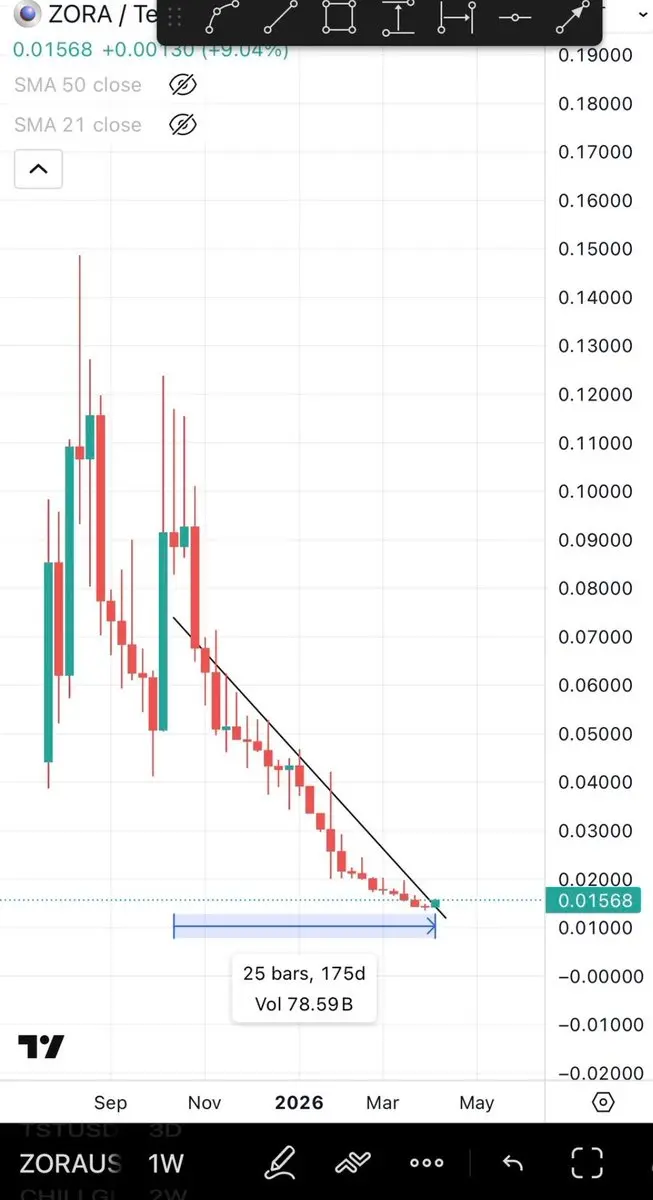
After 6 months of decline and a 90% drop, $ZORA is finally ready to shift from bearish to bullish.
Get ready for $ZORA to shine brightly in the upcoming bullish trend.
Just as I gave you explosions of $CLO and $D , I will give you this explosion on $ZORA
. I am buying @zora here.
Target 2-5x in the medium term.
ZORA-1.49%
View Original
post-image
post-image
CryptoCowboy
After 6 months of downtown & a 90% dump, $ZORA Is finally ready to turn from bearish to bullish
Get ready for $ZORA to shine big time in the next uptrend
As I gave you the $CLO & $D explosions, I will give you this explosion on $ZORA
I AM BUYING @zora here
Target 2-5x midterm
repost-content-media
  • Reward
  • Comment
  • Repost
  • Share
#PolymarketPlansNativeStablecoin
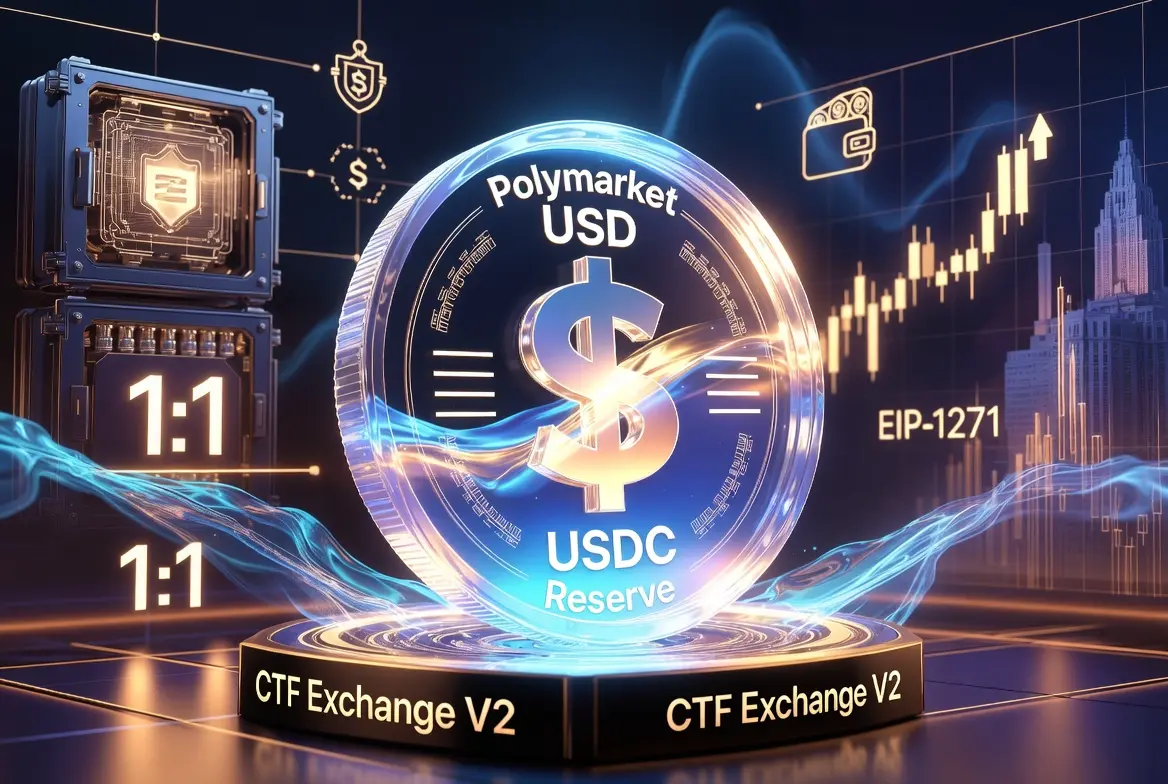
Polymarket Opens a New Era with Polymarket USD and CTF Exchange V2
Polymarket, the world's largest prediction market platform, announced a major infrastructure upgrade on April 6, 2026. This initiative focuses on launching its native collateral asset, Polymarket USD, marking a profound shift in the platform's trading architecture. By reducing reliance on wrapped assets and building a more institutionally compatible, vertically integrated system, this upgrade represents the beginning of a new phase in expanding decentralized prediction markets.
Polymarket USD i
USDC0.02%
View Original
post-image
post-image
discovery
#PolymarketPlansNativeStablecoin
Polymarket Ushers in a New Era with Polymarket USD and CTF Exchange V2
Polymarket, the world’s largest prediction market platform, announced a major infrastructure upgrade on April 6, 2026. This initiative centers on the launch of its native collateral asset, Polymarket USD, marking a profound transformation in the platform’s trading infrastructure. By reducing reliance on bridged assets and building a more institutionally aligned, vertically integrated system, this upgrade represents the beginning of a new phase in the scaling of decentralized prediction markets.
Polymarket USD is designed as a 1:1 USDC-backed collateral token issued directly by the platform. It will replace the existing bridged USDC.e (the Polygon-bridged version of USDC), eliminating third-party bridge risks and delivering a more secure and consistent settlement standard. Rather than being a speculative or tradable asset, Polymarket USD functions as a purpose-built wrapped stablecoin tailored exclusively for the platform. For most users, the transition will be seamless, with the frontend automatically handling wrapping via a one-time approval prompt. Advanced users and API traders will have the option to convert USDC or USDC.e directly through Polymarket’s collateral onramp smart contract. This shift not only strengthens the platform’s control over liquidity but also opens potential opportunities for yield generation and new revenue streams.
At the core of the upgrade lies the brand-new CTF Exchange V2 smart contract system. This complete rebuild of the trading engine adopts a hybrid central limit order book (CLOB) architecture — combining off-chain order matching with on-chain settlement. Order structures have been simplified, matching logic accelerated, and validation steps reduced. As a result, gas fees are expected to drop significantly, execution speeds will increase, and spreads will tighten. These enhancements are critical for efficiently handling the record trading volumes Polymarket has seen throughout 2026.
A standout feature for institutional participants is the addition of EIP-1271 support. This standard enables multi-signature and smart contract wallets, such as Safe, to interact directly with the platform for the first time. The removal of this long-standing friction point will greatly ease participation for DAOs, professional funds, and algorithmic trading desks. Additional technical improvements include on-chain order attribution via builder codes and a redesigned fee collection and distribution mechanism. API users will need to update to the latest version of the CLOB-Client SDK (available in TypeScript, Python, and Go).
This overhaul is closely tied to Polymarket’s broader institutional growth strategy. Intercontinental Exchange (ICE), the parent company of the New York Stock Exchange, completed its investment commitments with a $600 million cash infusion in March 2026, bringing the total to approximately $2 billion since October 2025. These funds are supporting Polymarket’s preparation for regulated environments — particularly potential U.S. expansion — and its ambition to compete with traditional derivatives exchanges. The February 2026 partnership with Circle has further strengthened USDC’s central role on the platform.
The migration will roll out progressively over the next 2–3 weeks. Existing order books will be fully refreshed, resulting in the cancellation of all open orders and a short scheduled maintenance window. Polymarket has committed to providing at least one week’s advance notice before the maintenance begins, giving traders sufficient time to manage their positions.
In summary, the launch of Polymarket USD and CTF Exchange V2 symbolizes Polymarket’s strategic evolution from relying on general-purpose DeFi components to constructing its own vertically integrated financial powerhouse. By minimizing bridge risks, lowering transaction costs, enhancing institutional access, and gaining full control over its liquidity layer, Polymarket is elevating prediction markets to a more professional and scalable level. This development stands as a significant milestone in the industry’s integration with mainstream finance.
repost-content-media
  • Reward
  • Comment
  • Repost
  • Share
#PolymarketPlansNativeStablecoin
Polymarket Opens a New Era with Polymarket USD and CTF Exchange V2
Polymarket, the world's largest prediction market platform, announced a major infrastructure upgrade on April 6, 2026. This initiative focuses on launching its native collateral asset, Polymarket USD, marking a profound shift in the platform's trading architecture. By reducing reliance on wrapped assets and building a more institutionally compatible, vertically integrated system, this upgrade represents the beginning of a new phase in expanding decentralized prediction markets.
Polymarket USD i
USDC0.02%
View Original
post-image
post-image
discovery
#PolymarketPlansNativeStablecoin
Polymarket Ushers in a New Era with Polymarket USD and CTF Exchange V2
Polymarket, the world’s largest prediction market platform, announced a major infrastructure upgrade on April 6, 2026. This initiative centers on the launch of its native collateral asset, Polymarket USD, marking a profound transformation in the platform’s trading infrastructure. By reducing reliance on bridged assets and building a more institutionally aligned, vertically integrated system, this upgrade represents the beginning of a new phase in the scaling of decentralized prediction markets.
Polymarket USD is designed as a 1:1 USDC-backed collateral token issued directly by the platform. It will replace the existing bridged USDC.e (the Polygon-bridged version of USDC), eliminating third-party bridge risks and delivering a more secure and consistent settlement standard. Rather than being a speculative or tradable asset, Polymarket USD functions as a purpose-built wrapped stablecoin tailored exclusively for the platform. For most users, the transition will be seamless, with the frontend automatically handling wrapping via a one-time approval prompt. Advanced users and API traders will have the option to convert USDC or USDC.e directly through Polymarket’s collateral onramp smart contract. This shift not only strengthens the platform’s control over liquidity but also opens potential opportunities for yield generation and new revenue streams.
At the core of the upgrade lies the brand-new CTF Exchange V2 smart contract system. This complete rebuild of the trading engine adopts a hybrid central limit order book (CLOB) architecture — combining off-chain order matching with on-chain settlement. Order structures have been simplified, matching logic accelerated, and validation steps reduced. As a result, gas fees are expected to drop significantly, execution speeds will increase, and spreads will tighten. These enhancements are critical for efficiently handling the record trading volumes Polymarket has seen throughout 2026.
A standout feature for institutional participants is the addition of EIP-1271 support. This standard enables multi-signature and smart contract wallets, such as Safe, to interact directly with the platform for the first time. The removal of this long-standing friction point will greatly ease participation for DAOs, professional funds, and algorithmic trading desks. Additional technical improvements include on-chain order attribution via builder codes and a redesigned fee collection and distribution mechanism. API users will need to update to the latest version of the CLOB-Client SDK (available in TypeScript, Python, and Go).
This overhaul is closely tied to Polymarket’s broader institutional growth strategy. Intercontinental Exchange (ICE), the parent company of the New York Stock Exchange, completed its investment commitments with a $600 million cash infusion in March 2026, bringing the total to approximately $2 billion since October 2025. These funds are supporting Polymarket’s preparation for regulated environments — particularly potential U.S. expansion — and its ambition to compete with traditional derivatives exchanges. The February 2026 partnership with Circle has further strengthened USDC’s central role on the platform.
The migration will roll out progressively over the next 2–3 weeks. Existing order books will be fully refreshed, resulting in the cancellation of all open orders and a short scheduled maintenance window. Polymarket has committed to providing at least one week’s advance notice before the maintenance begins, giving traders sufficient time to manage their positions.
In summary, the launch of Polymarket USD and CTF Exchange V2 symbolizes Polymarket’s strategic evolution from relying on general-purpose DeFi components to constructing its own vertically integrated financial powerhouse. By minimizing bridge risks, lowering transaction costs, enhancing institutional access, and gaining full control over its liquidity layer, Polymarket is elevating prediction markets to a more professional and scalable level. This development stands as a significant milestone in the industry’s integration with mainstream finance.
repost-content-media
  • Reward
  • 1
  • 1
  • Share
WesamAlbnaa:
Hold tight 💪
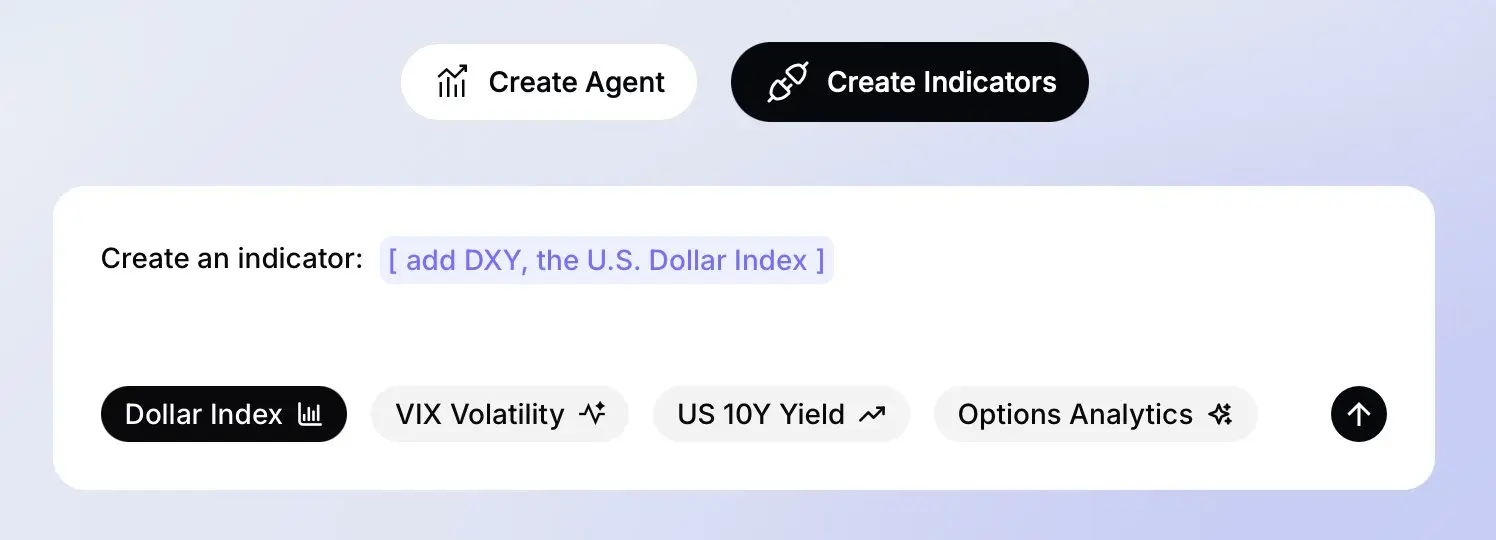
Our AI Indicator feature is now available in the beta version and is gradually reaching users.
You can program your desired indicator using popular data sources like Yahoo Finance, Alpha Vantage, FRED API, and more. Then connect it to your 24/7 AI agent monitoring the market.
More access coming soon 🚀
‍$BTC$ ETH $XRP #GOLD #Ai #GateSquareAprilPostingChallenge
BTC0.21%
ETH2.22%
View Original
post-image
post-image
TayeebaG
our AI Indicator feature is now in beta and rolling out gradually to users
you can vibe-code the indicator you want using popular data sources like Yahoo Finance, Alpha Vantage, FRED API, and more. then plug it into your 24/7 AI agent to watch the market
more access coming soon 🚀
‍$BTC$ETH $XRP #GOLD #Ai #GateSquareAprilPostingChallenge
repost-content-media
  • Reward
  • Comment
  • Repost
  • Share
April Posting Challenge at Gate Square is here! 🚀
Get ready to participate, engage, and win with the April Posting Challenge at Gate Square! This is your chance to showcase your insights, connect with the community, and earn exciting rewards. 💹🌟
How to participate:
📝 Create and Share: Post your ideas or insights about the market or your thoughts related to cryptocurrencies on Gate Square
🔥 Stay Active: Interact with other users through likes, comments, and discussions
🎁 Earn Rewards: Top contributors and active participants can unlock exclusive prizes and recognition
Why join?
🌐 Boost y
View Original
post-image
post-image
cryptoqueen001
📢✨ Gate Square April Posting Challenge is Here! 🚀
Get ready to share, engage, and win with the Gate Square April Posting Challenge! This is your chance to showcase your insights, connect with the community, and earn exciting rewards. 💹🌟
How to Participate:
📝 Create & Share: Post your thoughts, market insights, or crypto ideas on Gate Square
🔥 Stay Active: Engage with other users through likes, comments, and discussions
🎁 Earn Rewards: Top contributors and active participants can unlock exclusive prizes and recognition
Why Join?
🌐 Build your presence in the crypto community
💡 Share knowledge and learn from others
🚀 Boost your chances of earning exciting rewards
Don’t miss out—start posting and make your mark this April with Gate.io! 🌟
#GateSquareAprilPostingChallenge #GateIO #CryptoCommunity #EarnAndEngage 🚀💬
repost-content-media
  • Reward
  • 1
  • 1
  • Share
ChongChongGeGeWu:
Chong Chong GT 🚀
Events of April 3, 2026, which saw an escalation of military conflict between the United States and Iran, created a major geopolitical shock with immediate repercussions on the markets. Reported attacks on critical infrastructure—followed by retaliatory actions—led to a sharp reaction in global energy markets, especially crude oil, which surged due to fears of supply disruptions and regional instability.
This rise in oil prices has cascading macroeconomic effects. Higher energy costs directly impact global inflation expectations, increasing transportation, manufacturing, and production expense
View Original
post-image
post-image
StylishKuri
The events of April 3, 2026, involving military escalation between United States and Iran marked a significant geopolitical shock with immediate cross-market consequences. The reported strikes on critical infrastructure — followed by retaliatory actions — triggered a sharp reaction in global energy markets, particularly crude oil, which surged on fears of supply disruption and regional instability.
This spike in oil prices has a cascading macroeconomic effect. Higher energy costs feed directly into global inflation expectations, as transportation, manufacturing, and production expenses rise. For central banks already navigating fragile economic conditions, this creates additional pressure to maintain tighter monetary policies. As a result, liquidity conditions tighten — a key factor that directly impacts risk-sensitive markets, including cryptocurrencies.
Assets like Bitcoin and Ethereum tend to struggle in such environments. When inflation fears rise and interest rates remain elevated, capital often rotates away from high-volatility assets toward more traditional safe havens or cash equivalents. This shift reduces speculative demand in crypto markets and increases overall price instability.
Another critical layer of impact lies in the cost structure of Bitcoin mining. As energy prices surge, mining operations — especially those heavily dependent on fossil fuels — face significantly higher operational expenses. This can lead to:
Reduced mining profitability
Potential miner capitulation in weaker operations
Increased selling pressure if miners liquidate holdings to cover costs
These dynamics can introduce additional downside pressure on the market, particularly if sustained over time.
At the same time, the narrative around crypto as a safe-haven asset is once again being tested. Historically, during geopolitical crises, capital has flowed into assets like gold or the U.S. dollar. However, crypto’s behavior has been mixed — sometimes acting as a risk asset, other times showing resilience depending on market structure and liquidity conditions.
In this context, it becomes essential to monitor:
Whether capital flows into or out of crypto during continued geopolitical tension
Correlation between crypto and traditional safe havens
Energy price trends and their impact on mining economics
Broader risk sentiment across global markets
Final Insight:
This is not just a geopolitical event — it is a macro stress test for the entire digital asset ecosystem. Rising energy costs, tightening liquidity, and shifting investor behavior are all converging at once.
In the short term, uncertainty dominates.
In the long term, how crypto responds to these shocks will shape its role in the global financial system.
The key question now is not just where the market moves —
but how it behaves under pressure.
#OilPricesRise
#GateSquareAprilPostingChallenge
#CreatorLeaderboard
repost-content-media
  • Reward
  • Comment
  • Repost
  • Share
Opening Red SHIB Bags Through Genuine Interaction
April in the Gate Arena offers more than just activity — it provides an opportunity shaped by behavior. #GateSquareAprilPostingChallenge begins with a simple action. Create a post, and as a result, you might open a red bag filled with SHIB tokens or parking vouchers. For new users, the system eliminates uncertainty entirely. The first post guarantees a red SHIB bag, creating an immediate sense of reward and momentum.
But after that initial moment, the system becomes more selective.
Not every new post is just an action anymore; it becomes incen
SHIB-0.43%
View Original
post-image
post-image
CryptoSelf
Unlocking SHIB Red Packets Through Real Engagement
April on Gate Square introduces more than just activity — it introduces opportunity shaped by behavior. The #GateSquareAprilPostingChallenge begins with a simple action. You create a post, and in return, you may unlock a red packet filled with SHIB tokens or position vouchers. For new users, the system removes uncertainty completely. The first post guarantees a SHIB red packet, creating an immediate sense of reward and momentum.
But after that first moment, the system becomes more selective.
Each new post is no longer just an action, but a trigger with conditions. Sometimes a SHIB red packet appears, sometimes it doesn’t. At first, it may feel random, but over time, a pattern starts to reveal itself. The system responds not just to how often you post, but to how your content performs.
Engagement becomes the key factor. When your post receives likes, comments, shares, and reactions, it gains strength. That strength increases the likelihood of unlocking more SHIB red packets. A single post that captures attention can generate more reward potential than multiple posts that go unnoticed.
There is also the element of reach. Including the event link and hashtag allows your content to move beyond a limited audience and enter a wider stream. This increased visibility creates more opportunities for engagement, and with more engagement comes a higher chance of triggering SHIB rewards.
Consistency adds another layer. Posting regularly builds presence, but presence alone is not enough. Repetitive or low-effort content gradually loses impact, reducing the chances of receiving red packets. On the other hand, thoughtful and engaging posts create a cycle where visibility and interaction reinforce each other, increasing both influence and reward potential.
The system naturally filters out content that does not create response. Posts without engagement simply fade, while those that connect with people continue to circulate and grow. This makes SHIB red packets feel less like random drops and more like outcomes tied to meaningful participation.
At the same time, there is one requirement that cannot be ignored. Without completing KYC, rewards cannot be claimed. No matter how many SHIB red packets you unlock, without verification, they remain inaccessible.
What makes this challenge unique is how it connects effort with outcome. Posting is only the first step. Engagement, visibility, and consistency shape what follows. Those who understand this begin to see a clear pattern: the more value their content creates, the more the system responds.
In the end, SHIB red packets are not just rewards.
They are signals.
Signals that your content is being seen, engaged with, and carried forward within the platform.
#GateSquareAprilPostingChallenge
repost-content-media
  • Reward
  • 1
  • 1
  • Share
GateUser-9d88acee:
Buy the dip 😎
#GateSquareAprilPostingChallenge $RED Experienced strong rejection after the recent price increase, with long positions being liquidated. This indicates seller intervention, especially after the price exceeded the permitted limit.
The post suggests a sell position on RED, with entry between 0.180 – 0.185, stop loss at 0.192, and multiple take profit targets down to 0.150. The liquidation of 3.07K at 0.1823 indicates increased selling pressure.
Over the past 24 hours, $RED traded between 0.1592 and 0.2444, showing high volatility. The current price is around 0.1824, aligning with the suggeste
View Original
post-image
post-image
Hachedr9
#GateSquareAprilPostingChallenge $RED Experienced strong rejection after the recent price increase, with long positions being liquidated. This indicates seller intervention, especially after the price exceeded the permitted limit.
The post suggests a sell position on RED, with entry between 0.180 – 0.185, stop loss at 0.192, and multiple take profit targets down to 0.150. The liquidation of 3.07K at 0.1823 indicates increased selling pressure.
Over the past 24 hours, $RED traded between 0.1592 and 0.2444, showing high volatility. The current price is around 0.1824, aligning with the suggested sell entry zone. If the price remains below 0.185, it is likely to move further downward, consistent with the outlined strategy.
repost-content-media
  • Reward
  • Comment
  • Repost
  • Share
  • Pin