#TraditionalFinanceAcceleratesTokenization
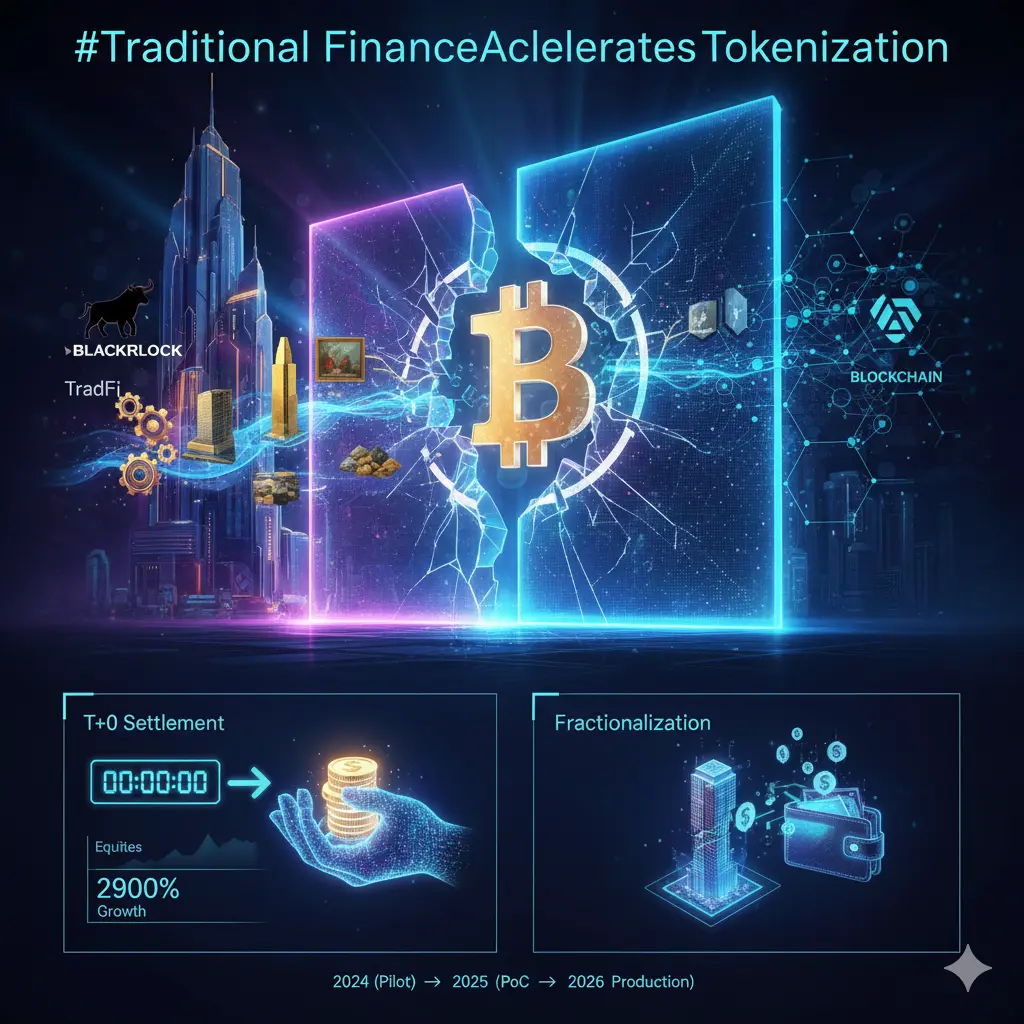
#TraditionalFinanceAcceleratesTokenization – February 26, 2026 Update 🚀
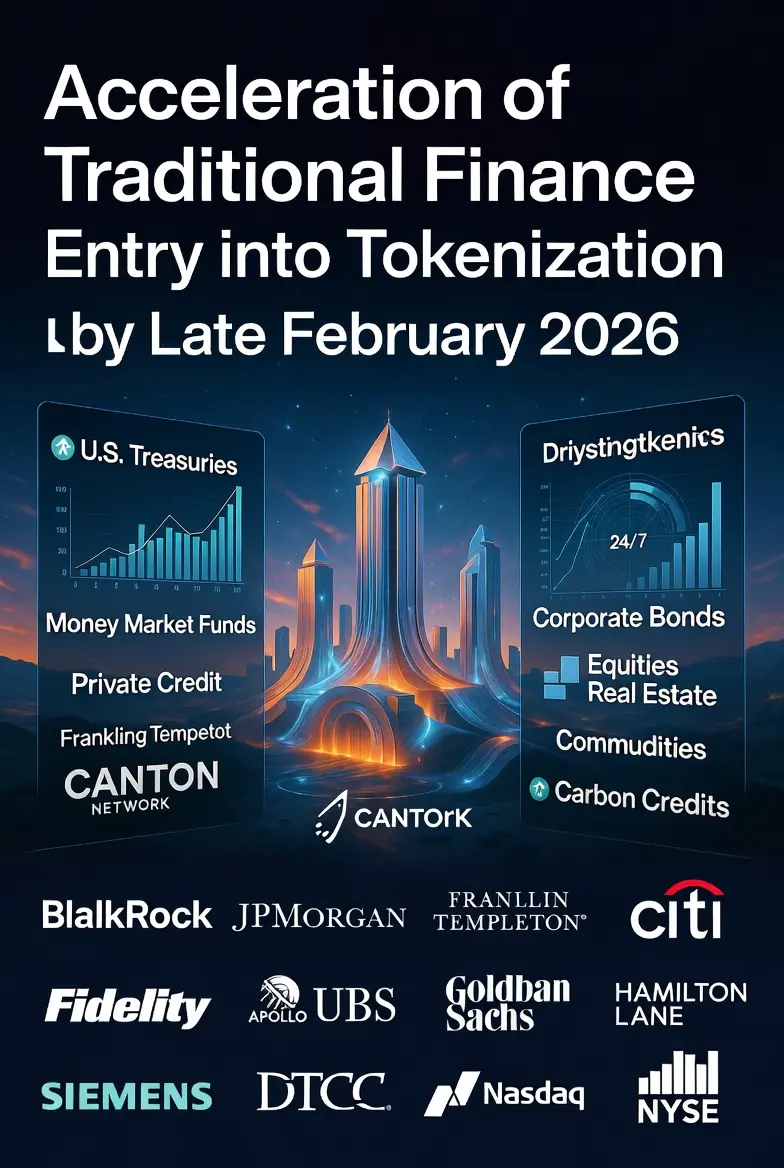
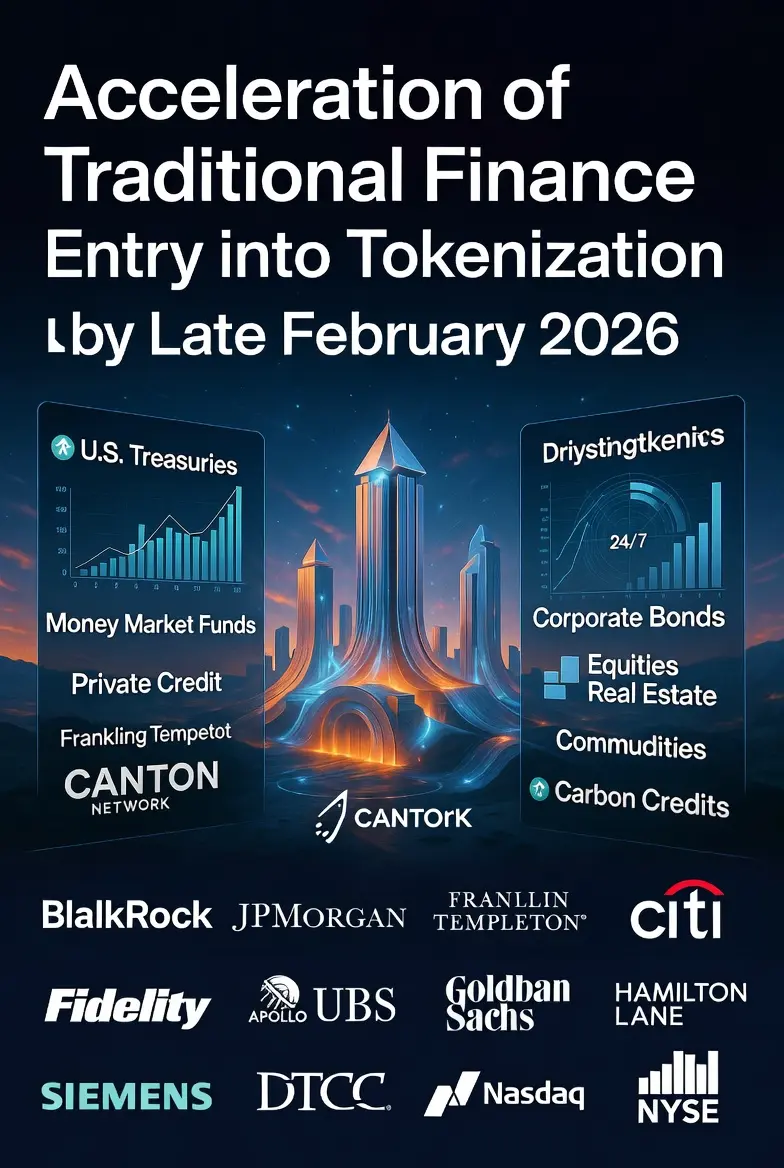
The tokenization wave in traditional finance (TradFi) is no longer a concept—it’s live, growing, and reshaping global markets. As of late February 2026, institutional adoption is accelerating at unprecedented speed. Major banks, asset managers, and exchanges are moving beyond pilot programs, launching real-world products, and scaling infrastructure to handle trillions in tokenized assets over the coming years.
What Tokenization Means Today
Tokenization converts ownership rights of physical and financial assets into secure, blockchain-based digital tokens. This covers bonds, equities, real estate, commodities, funds, private credit, and more, enabling 24/7 trading, instant settlement, fractional ownership, and full auditability. The distributed on-chain value of real-world assets (RWAs) now stands at $25.23B, with represented assets approaching $370B, reflecting institutional scale.
Why Acceleration Is Happening in 2026
Regulatory Clarity – U.S. frameworks like the GENIUS Act and Clarity Act are defining tokenized asset rules, reducing uncertainty and unlocking institutional flows.
Mature Tech & Infrastructure – Ethereum, Solana, Polygon, Avalanche, and Canton networks deliver high-speed, compliant, secure execution.
Institutional Demand for Efficiency – TradFi suffers from slow settlement (T+2), high intermediaries, and limited trading hours. Tokenization offers near-instant settlement, transparency, and improved yields.
Explosive Growth – After 266% growth in 2025, projections suggest $100B+ on-chain by end-2026 and long-term estimates reaching $2–30T+ by 2030–2034.
Leading TradFi Examples
BlackRock BUIDL – $2.2–$2.4B AUM, listed on public chains for DeFi liquidity; tokenized Treasuries category leader.
JPMorgan MONY – Public Ethereum launch of tokenized money market fund; JPM Coin expanding to private equity & collateral networks.
Franklin Templeton – Tokenized funds across 6+ blockchains; USD fund scaled to hundreds of millions.
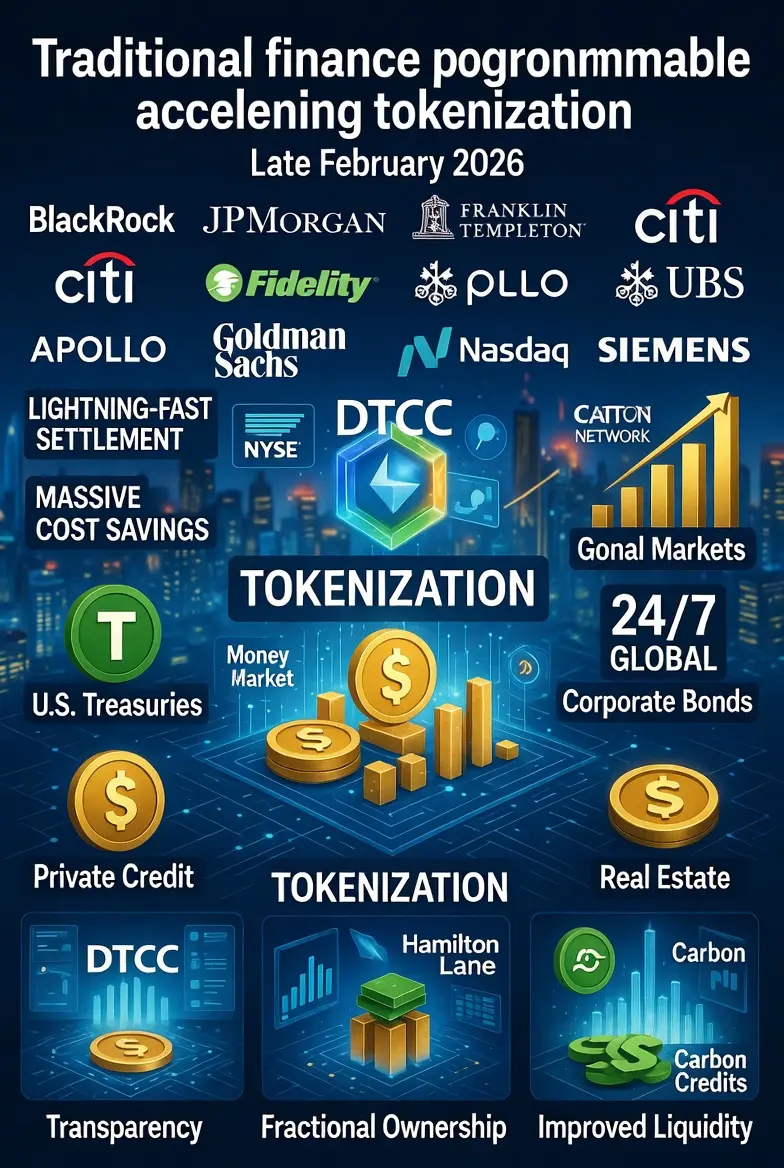
Citi, Fidelity, Apollo, UBS, Goldman Sachs – Expanding tokenized product offerings in payments, lending, and securities.
Emerging DeFi Bridges – Mantle + Aave surpassing $575M institutional DeFi volume; Canton network enabling cross-border repos.
Core Benefits of Tokenization
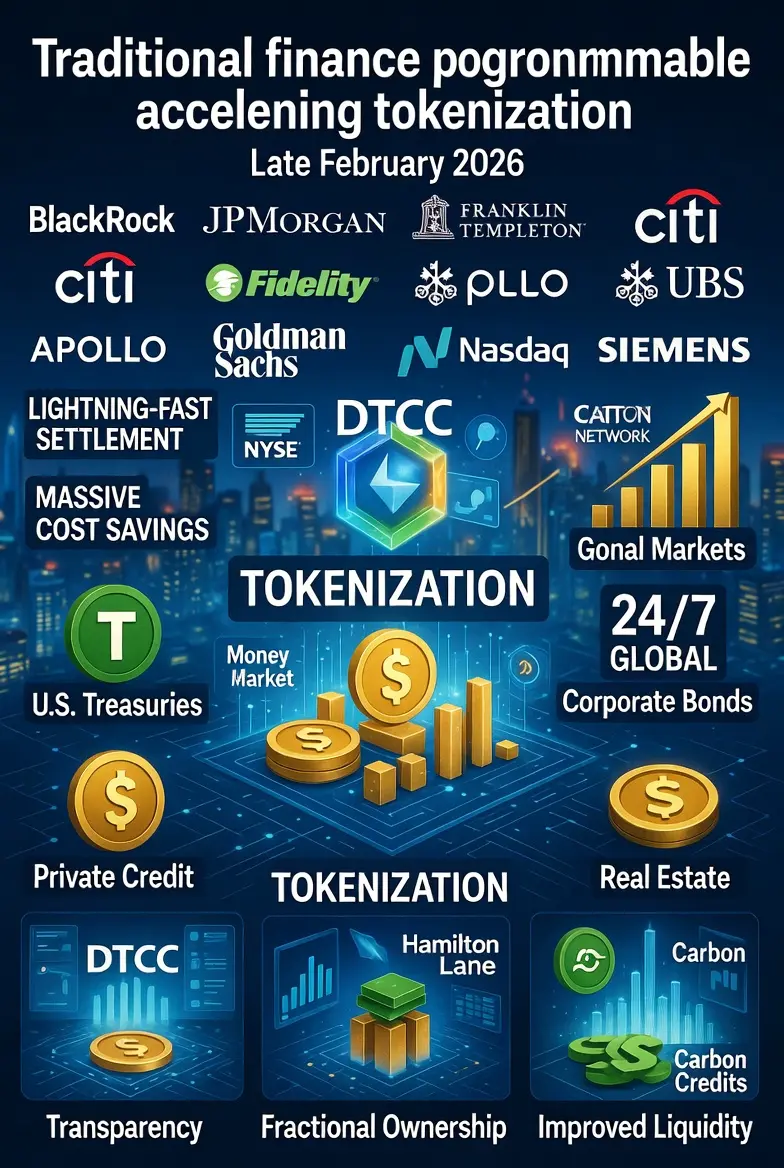
Instant Settlement – Seconds/minutes vs. days.
Cost Efficiency – Removes intermediaries and paperwork.
24/7 Global Markets – Trade anytime, worldwide.
Transparency & Security – Immutable on-chain records.
Fractional Ownership – Democratizes access to high-value assets.
Improved Liquidity – Illiquid assets become tradable.
Programmable Features – Smart contracts enforce compliance, payments, and collateral automatically.
TradFi-DeFi Convergence – Institutions integrate blockchain without leaving legacy systems.
Challenges in 2026
Retail adoption limited due to KYC/compliance requirements.
Liquidity uneven—strong in Treasuries, weaker in niche assets.
Permissioned vs. open DeFi tension—regulatory oversight slows fully decentralized flows.
Scaling to trillions requires interoperability, deeper pools, and harmonized global regulations.
Outlook & Future Vision
Tokenization is moving from experimental to mainstream for asset managers.
Expanding classes: equities, private markets, trade finance, and real estate are next waves.
Mainstream liquidity: 24/7 trading venues, seamless on/off ramps, higher volumes.
Full convergence of TradFi + DeFi, powered by tokenized deposits and stablecoins.
End-2026 projections: $100B+ on-chain value realistic; long-term $2–30T+ depending on scope.
Final Takeaway
This is a structural shift in global finance. TradFi giants are embracing tokenization to solve inefficiencies, reduce costs, democratize access, and unlock new liquidity. Late February 2026 marks a production-phase milestone: billions actively moving on-chain, trillions clearly in sight.
Tokenization isn’t just technology—it’s strategy. Traders, investors, and institutions now have new levers for yield, liquidity, and innovation. The fusion of TradFi scale with blockchain flexibility is transforming not just finance, but the very way capital moves.
#TraditionalFinanceAcceleratesTokenization – February 26, 2026 Update 🚀
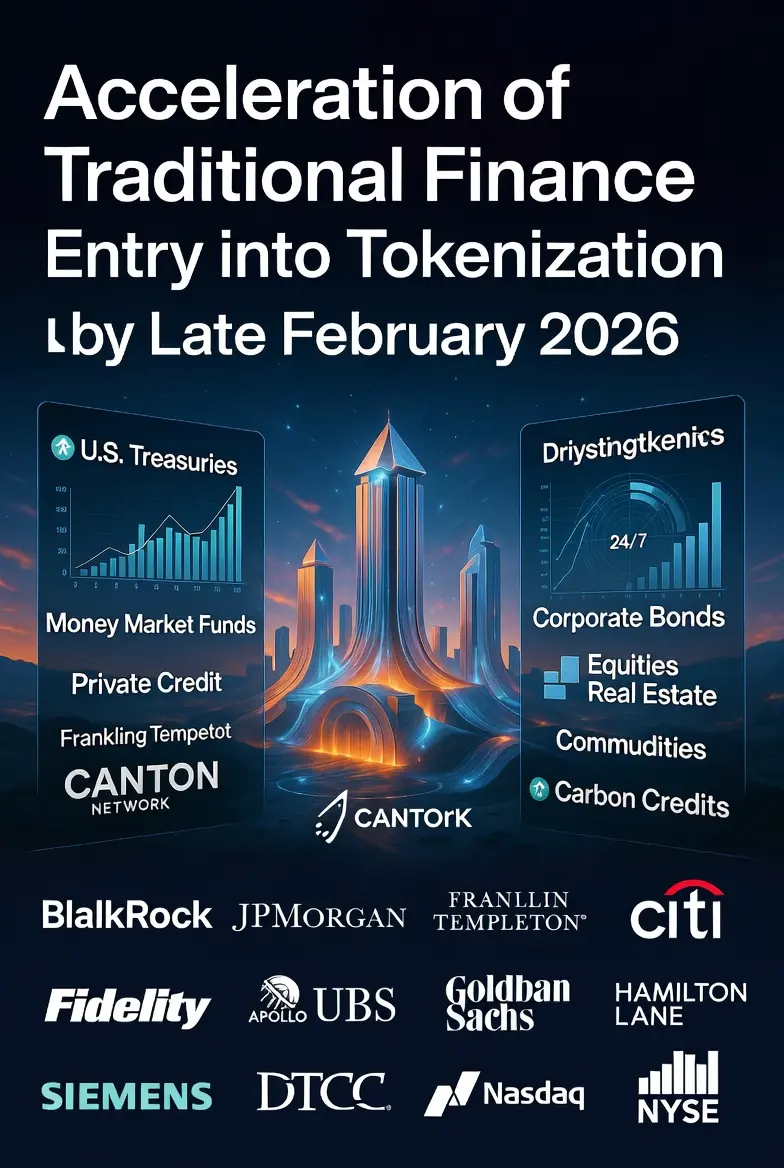
The tokenization wave in traditional finance (TradFi) is no longer a concept—it’s live, growing, and reshaping global markets. As of late February 2026, institutional adoption is accelerating at unprecedented speed. Major banks, asset managers, and exchanges are moving beyond pilot programs, launching real-world products, and scaling infrastructure to handle trillions in tokenized assets over the coming years.
What Tokenization Means Today
Tokenization converts ownership rights of physical and financial assets into secure, blockchain-based digital tokens. This covers bonds, equities, real estate, commodities, funds, private credit, and more, enabling 24/7 trading, instant settlement, fractional ownership, and full auditability. The distributed on-chain value of real-world assets (RWAs) now stands at $25.23B, with represented assets approaching $370B, reflecting institutional scale.
Why Acceleration Is Happening in 2026
Regulatory Clarity – U.S. frameworks like the GENIUS Act and Clarity Act are defining tokenized asset rules, reducing uncertainty and unlocking institutional flows.
Mature Tech & Infrastructure – Ethereum, Solana, Polygon, Avalanche, and Canton networks deliver high-speed, compliant, secure execution.
Institutional Demand for Efficiency – TradFi suffers from slow settlement (T+2), high intermediaries, and limited trading hours. Tokenization offers near-instant settlement, transparency, and improved yields.
Explosive Growth – After 266% growth in 2025, projections suggest $100B+ on-chain by end-2026 and long-term estimates reaching $2–30T+ by 2030–2034.
Leading TradFi Examples
BlackRock BUIDL – $2.2–$2.4B AUM, listed on public chains for DeFi liquidity; tokenized Treasuries category leader.
JPMorgan MONY – Public Ethereum launch of tokenized money market fund; JPM Coin expanding to private equity & collateral networks.
Franklin Templeton – Tokenized funds across 6+ blockchains; USD fund scaled to hundreds of millions.
Citi, Fidelity, Apollo, UBS, Goldman Sachs – Expanding tokenized product offerings in payments, lending, and securities.
Emerging DeFi Bridges – Mantle + Aave surpassing $575M institutional DeFi volume; Canton network enabling cross-border repos.
Core Benefits of Tokenization
Instant Settlement – Seconds/minutes vs. days.
Cost Efficiency – Removes intermediaries and paperwork.
24/7 Global Markets – Trade anytime, worldwide.
Transparency & Security – Immutable on-chain records.
Fractional Ownership – Democratizes access to high-value assets.
Improved Liquidity – Illiquid assets become tradable.
Programmable Features – Smart contracts enforce compliance, payments, and collateral automatically.
TradFi-DeFi Convergence – Institutions integrate blockchain without leaving legacy systems.
Challenges in 2026
Retail adoption limited due to KYC/compliance requirements.
Liquidity uneven—strong in Treasuries, weaker in niche assets.
Permissioned vs. open DeFi tension—regulatory oversight slows fully decentralized flows.
Scaling to trillions requires interoperability, deeper pools, and harmonized global regulations.
Outlook & Future Vision
Tokenization is moving from experimental to mainstream for asset managers.
Expanding classes: equities, private markets, trade finance, and real estate are next waves.
Mainstream liquidity: 24/7 trading venues, seamless on/off ramps, higher volumes.
Full convergence of TradFi + DeFi, powered by tokenized deposits and stablecoins.
End-2026 projections: $100B+ on-chain value realistic; long-term $2–30T+ depending on scope.
Final Takeaway
This is a structural shift in global finance. TradFi giants are embracing tokenization to solve inefficiencies, reduce costs, democratize access, and unlock new liquidity. Late February 2026 marks a production-phase milestone: billions actively moving on-chain, trillions clearly in sight.
Tokenization isn’t just technology—it’s strategy. Traders, investors, and institutions now have new levers for yield, liquidity, and innovation. The fusion of TradFi scale with blockchain flexibility is transforming not just finance, but the very way capital moves.