


Futures
Access hundreds of perpetual contracts
TradFi
Gold
One platform for global traditional assets
Options
Hot
Trade European-style vanilla options
Unified Account
Maximize your capital efficiency
Demo Trading
Introduction to Futures Trading
Learn the basics of futures trading
Futures Events
Join events to earn rewards
Demo Trading
Use virtual funds to practice risk-free trading
Launch
CandyDrop
Collect candies to earn airdrops
Launchpool
Quick staking, earn potential new tokens
HODLer Airdrop
Hold GT and get massive airdrops for free
Launchpad
Be early to the next big token project
Alpha Points
Trade on-chain assets and earn airdrops
Futures Points
Earn futures points and claim airdrop rewards


More


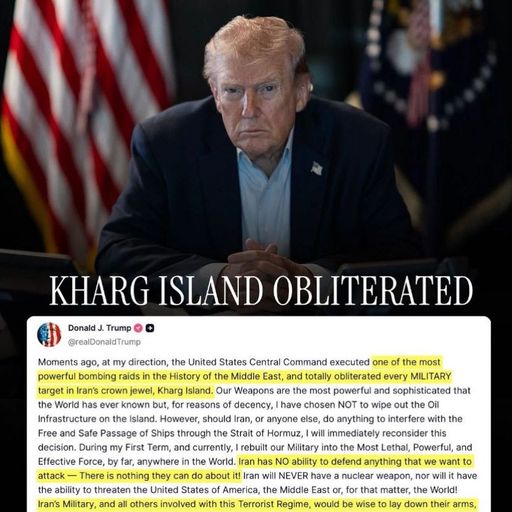



United States Launches Historic 172 Million Barrel Oil Release from Strategic Reserve
WASHINGTON - In a landmark move to combat rising energy prices amid the ongoing conflict with Iran, the United States has officially begun the process of releasing 172 million barrels of oil from the Strategic Petroleum Reserve (SPR). The authorization, announced by U.S. Secretary of Energy Chris Wright, marks one of the largest drawdowns in the reserve\'s history and is a central part of a coordinated international effort to stabilize global energy markets .
A Coordinated International Effort
The U.S. release is the cornerstone of a broader initiative by the International Energy Agency (IEA). On March 11, 2026, the 32 member nations of the IEA unanimously agreed to President Donald Trump\'s request to lower energy prices through a coordinated action. In total, the alliance will release 400 million barrels of oil and refined products from their respective emergency stockpiles. This represents the largest emergency oil reserve release in the IEA\'s 50-year history, surpassing even the response to the conflict in Ukraine in 2022 .
As part of this effort, President Trump authorized the Department of Energy to release 172 million barrels from the SPR, which accounts for 43% of the total IEA commitment. The operation began this week, with the first shipments expected to reach the market shortly .
Mechanics of the Release: A Loan, Not a Sale
In a crucial detail for market analysts and traders, the U.S. Department of Energy has clarified that this release will be structured as an exchange, rather than an outright sale .
Essentially, the government is lending the oil to energy companies. These companies will be required to return the borrowed crude to the SPR at a future date, plus additional barrels as a premium or "interest." The first phase of this exchange involves an initial release of 86 million barrels, expected to begin moving into the market imminently .
This mechanism allows for an immediate increase in commercial supply to lower prices for consumers while ensuring the strategic reserve is not permanently depleted. The Energy Department has stated that this method will allow the U.S. to replenish the reserve with approximately 200 million barrels within the next year—20% more than what is being drawn down—and at no cost to taxpayers .
Why the Release? The Strait of Hormuz Factor
The emergency action is a direct response to the spiraling energy costs triggered by the war with Iran. The conflict has effectively paralyzed the Strait of Hormuz, a vital chokepoint through which roughly 20% of the world\'s oil (approximately 20 million barrels per day) typically passes .
With tanker traffic at a standstill due to the threat of attacks, global supply has been severely crimped, sending shockwaves through the market. U.S. gasoline prices have surged to an average of nearly $3.6 per gallon, a spike of over 20% since the conflict began, putting immense pressure on American consumers .
Market Reaction: Why Did Oil Prices Rise?
In a twist that surprised many casual observers, the announcement of the massive reserve release did not cause oil prices to fall. Instead, prices rallied sharply. Following the IEA\'s announcement, Brent crude futures climbed toward $92 a barrel, and U.S. crude briefly neared the $94 mark .
Analysts suggest this counterintuitive reaction is due to market skepticism. Traders view the 4 billion barrel release as insufficient to cover the scale of the disruption. While the release is massive, it will only hit the market at a rate of roughly 1.2 to 1.4 million barrels per day over 120 days. This covers only a fraction of the 12 to 15 million barrels per day currently trapped by the closure of the Strait of Hormuz .
"The market is still in panic mode," noted Bob McNally, President of Rapidan Energy Group. The IEA\'s drastic action was interpreted by some traders not as a solution, but as confirmation of just how severe the supply crisis has become .
Timeline and Logistics
· Start Date: The release process officially began the week of March 16, 2026 .
· Duration: The deliveries are scheduled to take approximately 120 days to complete, based on planned discharge rates .
· First Tranche: A tender for the first 86 million barrels has been issued, with this oil expected to be in the market by the end of March .
Strategic Replenishment
The administration has emphasized that this move is a short-term measure to ensure energy security, not a permanent reduction of the nation\'s emergency stockpile. The SPR currently holds approximately 415 million barrels, or about 58% of its total capacity .
"We have arranged to more than replace these strategic reserves," Secretary Wright stated, confirming the government\'s commitment to refilling the reserve to ensure America\'s long-term energy security remains "as strong