


Futures
Access hundreds of perpetual contracts
TradFi
Gold
One platform for global traditional assets
Options
Hot
Trade European-style vanilla options
Unified Account
Maximize your capital efficiency
Demo Trading
Introduction to Futures Trading
Learn the basics of futures trading
Futures Events
Join events to earn rewards
Demo Trading
Use virtual funds to practice risk-free trading
Launch
CandyDrop
Collect candies to earn airdrops
Launchpool
Quick staking, earn potential new tokens
HODLer Airdrop
Hold GT and get massive airdrops for free
Launchpad
Be early to the next big token project
Alpha Points
Trade on-chain assets and earn airdrops
Futures Points
Earn futures points and claim airdrop rewards


More




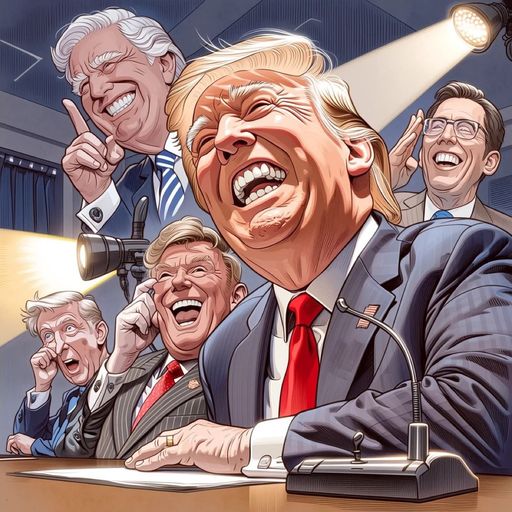

#SECAndCFTCSignMOU The financial regulatory landscape in the United States is witnessing a historic collaboration as the Securities and Exchange Commission (SEC) and the Commodity Futures Trading Commission (CFTC) have officially signed a Memorandum of Understanding (MOU), signaling a new era of coordination and oversight in the rapidly evolving financial markets. This agreement is particularly timely given the increasing complexity of financial products, the rise of digital assets, and the growing demand for investor protection.
Traditionally, the SEC and CFTC have had distinct regulatory mandates. The SEC primarily oversees securities markets, including stocks, bonds, and certain investment products, while the CFTC regulates commodity futures, options, and derivatives trading. However, the line between securities and commodities has increasingly blurred, especially with the emergence of cryptocurrencies, tokenized assets, and decentralized financial instruments. The signing of this MOU reflects the recognition that a more unified approach is essential for effectively monitoring these hybrid financial instruments.
Under the MOU, both agencies have agreed to share critical information, coordinate investigations, and align enforcement actions to prevent regulatory gaps. This collaborative framework is expected to reduce duplication of efforts, improve the efficiency of regulatory oversight, and provide a clearer, more predictable environment for market participants. Importantly, it also strengthens the protection of investors and market integrity by ensuring that manipulative practices, fraud, or misconduct are identified and addressed promptly across both securities and derivatives markets.
Analysts view this move as a proactive response to recent challenges in the financial ecosystem, including increased retail trading, algorithmic trading, and the integration of digital assets into mainstream investment portfolios. By working together, the SEC and CFTC can establish consistent regulatory standards, mitigate systemic risks, and maintain public confidence in U.S. financial markets. This cooperation may also facilitate smoother cross-border collaboration with international regulators, further enhancing the global credibility and stability of U.S. markets.
Market participants and industry experts are likely to welcome the clarity brought by this MOU. It provides guidance on how overlapping jurisdictions will be handled and reduces the legal uncertainty for firms operating in sectors that span both securities and commodities. For instance, crypto exchanges offering derivatives products or tokenized securities will benefit from knowing how regulatory expectations are aligned between the two agencies.
Ultimately, the SEC-CFTC MOU is more than just a formal agreement; it represents a strategic alignment designed to foster innovation while safeguarding investors. It highlights the regulators’ commitment to staying ahead of market developments and emphasizes the importance of collaboration in an era where financial markets are increasingly interconnected and technologically sophisticated. As implementation progresses, industry stakeholders will be closely monitoring how this partnership shapes regulatory enforcement, policy development, and the broader evolution of financial markets.
This agreement marks a significant milestone in U.S. financial regulation, promising a future where regulatory clarity, investor protection, and market integrity go hand in hand.