


Futures
Access hundreds of perpetual contracts
TradFi
Gold
One platform for global traditional assets
Options
Hot
Trade European-style vanilla options
Unified Account
Maximize your capital efficiency
Demo Trading
Introduction to Futures Trading
Learn the basics of futures trading
Futures Events
Join events to earn rewards
Demo Trading
Use virtual funds to practice risk-free trading
Launch
CandyDrop
Collect candies to earn airdrops
Launchpool
Quick staking, earn potential new tokens
HODLer Airdrop
Hold GT and get massive airdrops for free
Launchpad
Be early to the next big token project
Alpha Points
Trade on-chain assets and earn airdrops
Futures Points
Earn futures points and claim airdrop rewards


More

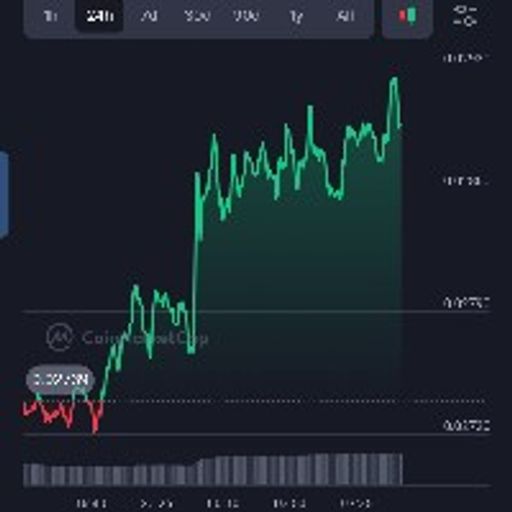



#数字资产市场动态 Friends who have been trading cryptocurrencies for over a year without achieving a breakthrough in wealth, this set of methodologies might inspire you. During multiple bull and bear cycles of $BTC and $ETH, I have summarized the following core strategies——
First, let's talk about capital management. If your principal is within 200,000 yuan, you only need to seize one main upward wave each year to achieve your profit goals. There's no need to be fully invested and fighting relentlessly at all times. On the contrary, idle cash is crucial; it’s your ammunition depot for bottom-fishing at lows.
Mentality building is equally vital. You can never earn money beyond your level of understanding. Consider practicing on a demo account first to develop your true courage. Demo accounts allow unlimited failures, but a single drawdown in a real account might wipe you out entirely, or even cause you to stay away from the market for years.
At the operational level, the moment when major good news is realized often marks the start of a reversal——if you don’t sell off that day, remember that if the price opens high the next day, you must sell decisively. The week before holidays should also be used to reduce or even completely clear your positions, as historical data shows adjustments are inevitable during holidays.
The essence of medium- to long-term trading is rolling operations of high selling and low buying. Always keep cash reserves on hand; sell at highs during rallies, and buy back decisively during dips. Repeating this cycle is the best strategy.
For short-term trading, focus on volume and chart patterns. Stocks with volatile K-line shapes and active trading can be traded; avoid obscure currencies. When the decline accelerates, rebounds will also surge rapidly; when the decline is gentle, rebounds tend to be slow——the strength of the trend determines the rebound intensity.
If you make a wrong buy, don’t blame yourself. Stop-loss is fundamental to survival. Pay attention to 15-minute K-line charts and KDJ indicators, which can help you pinpoint more precise buy and sell points. Lastly——no matter how many trading techniques you learn, mastering 2-3 sets is enough; greed for more will only cause confusion. Skill is not about breadth but about precision.
Talking about demo accounts again. In reality, a single drawdown in a real account can instantly blow your mind. No matter how many demos you do, it’s useless.
Sell when good news is realized? Why do I always operate in the opposite way and end up holding until my position is cut in half?
The cycle of selling high and buying low, I’ve heard it a hundred times, but I just can’t stop executing it.
A 200,000 annualized return with just one main upward wave? The problem is most people haven't even caught one wave.
Stop-loss is easy to say, but when it’s time to cut losses, the gambling instinct still kicks in.
Master 2-3 sets of methods? I haven’t even fully understood one, and I still want to play everything.
It's always about buying low and selling high, easy to say but hard to do... That mental hurdle is really hard to get over.
Demo accounts and real accounts are completely different; losing a few tens of thousands instantly makes you clear-headed.
Reducing positions before holidays is somewhat effective; historical data indeed supports this.
Stop-loss is the real life-saving straw. I wasted over half a year because I couldn't bear to cut losses.
To put it simply, it's still a cognitive ceiling that gets stuck; no matter how many technical indicators there are, they are useless.