


Futures
Access hundreds of perpetual contracts
TradFi
Gold
One platform for global traditional assets
Options
Hot
Trade European-style vanilla options
Unified Account
Maximize your capital efficiency
Demo Trading
Introduction to Futures Trading
Learn the basics of futures trading
Futures Events
Join events to earn rewards
Demo Trading
Use virtual funds to practice risk-free trading
Launch
CandyDrop
Collect candies to earn airdrops
Launchpool
Quick staking, earn potential new tokens
HODLer Airdrop
Hold GT and get massive airdrops for free
Launchpad
Be early to the next big token project
Alpha Points
Trade on-chain assets and earn airdrops
Futures Points
Earn futures points and claim airdrop rewards


More




#密码资产动态追踪 Want to survive longer in the crypto market? The first lesson is never about how to make money — but knowing when to hold back.
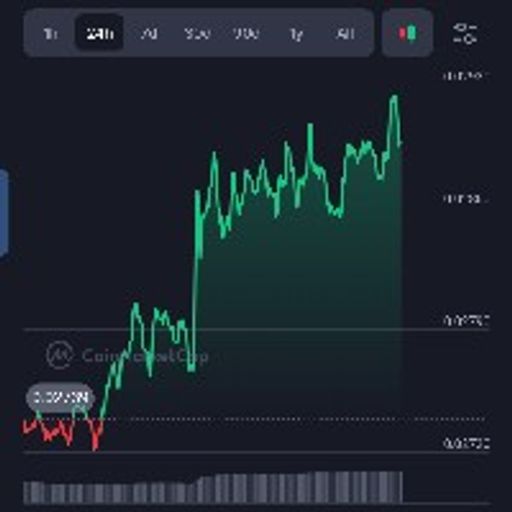
Currencies like $RIVER fluctuate daily, and the biggest mistake beginners make is to be unable to sit still. It seems that without continuous trading, the account shrinks, but what’s truly scarce in the market isn’t the courage to trade, but the patience to stay in cash and wait.
Sideways movement without a clear direction, in essence, is just wearing down traders. When the account doesn’t grow, the mindset is first shattered. The real big trend? That’s only after the trend has been established.
And there’s a trap to remember: never get emotionally attached to a certain coin. When it’s hot, everyone is hyping it; when the heat cools down, funds flee faster than anyone. Participation is fine, but you must stay clear-headed and be ready to withdraw at any moment. If you’re a beat late, you could become the bag holder in minutes.
Getting nervous and running at the first sign of volume breakout? Actually, that’s often just the prelude to a trend.
Once a trend is formed, minor pullbacks are perfectly normal. The real regret isn’t the correction itself, but being scared out of the market.
Conversely, when the market is soaring continuously and everyone is celebrating, that’s actually the time to start shrinking positions. Why? Because emotions are peaking, and a shakeout is probably not far off.
Trading isn’t as complicated as it seems. As long as the key support levels aren’t broken, consider going long; when prices reach resistance zones and become uncertain, proactively reduce your position a bit. Short-term trading isn’t about who’s predictions are more accurate, but about who maintains a steadier rhythm.
Never go all-in at once. Start with small orders to test the waters, and once the direction is confirmed, gradually increase your position — that’s the way to survive.
Ultimately, whether you can make money depends on one thing: how long you can stick in the market. The market is always there, but your account capital isn’t. Being more cautious and slower can actually help you laugh last.
Those who can stay calm and steady can make money; those who can't sit still are just giving money to others.
When the bottom rebounds, people think they are the bottom-fishing geniuses, but it's just luck. The key is to have patience and not be brainwashed by stories of tenfold gains in a day.
I have deep experience in emotional trading; after a few losses, I realized that cryptocurrencies are just currencies, there's no need to fall in love with them.
When the whole network is celebrating, it's often a signal of distribution; remember this.
---
Waiting in a flat position is really the hardest, it's a psychological battle.
---
All-in is gone, I'm serious.
---
It's the same logic again, but execution is the dividing line.
---
The emotional peak that was hit was exactly the point where I lost money every time.
---
Steady rhythm > accurate prediction, there's no doubt about that.
---
I've been a bagholder before, now I've learned to run.
---
It's easy to say, but doing it is hell. Have you tried?
---
Trying this small order water test is still reliable.
---
How long to persist vs capital protection, balancing is really difficult.
---
The biggest mistake beginners make is being too eager, afraid to miss any wave, but in the end, they get cut the worst.
---
I totally agree with the advice of not getting emotionally attached to a coin. I've seen too many people hold on to a coin just because it was hot for a while, only to end up as a bag holder.
---
Breaking out with high volume and then running—how inexperienced can you be... most of the time, that's just the appetizer.
---
When emotions peak, it's really the best signal to reduce positions. When everyone is celebrating online, that's when you should be cautious. I've learned this the hard way.
---
The key is to keep the rhythm steady; no matter how accurate your predictions are, it’s useless. I've seen too many smart people end up dead because they relied on certainty.
---
Never go all-in at once; small tests are the only way to preserve your capital.
---
It's really a mindset issue—who can endure, wins.
---
Not being able to stay idle is really a sign of poverty, got it.
---
It's always like this. When there's a celebration at high levels, it's time to run, but I just can't help it.
---
I agree with trying this small-scale approach, anyway I can't afford to lose everything in a full position.
---
As long as the key support isn't broken, hold on tightly. If it breaks, run immediately. It's easy to say but really difficult to do.
---
Not getting emotionally attached to coins, it's easy to say but really tough to do. When you're trapped, how can you think of that?
---
Steady rhythm > accurate prediction. This phrase needs to be engraved in my mind.
---
The daily routine of a bagholder is watching the limit-up and rushing in, only to regret it in five minutes.
---
Waiting in cash is a hundred times harder than trading. Why? Because of psychological torment.
While others are skyrocketing, I'm still debating whether to chase or not. As a result, I missed out, and I got washed out right after.
The key is to distinguish between what is a trend and what is a trap. It's really not easy.