


Futures
Access hundreds of perpetual contracts
TradFi
Gold
One platform for global traditional assets
Options
Hot
Trade European-style vanilla options
Unified Account
Maximize your capital efficiency
Demo Trading
Introduction to Futures Trading
Learn the basics of futures trading
Futures Events
Join events to earn rewards
Demo Trading
Use virtual funds to practice risk-free trading
Launch
CandyDrop
Collect candies to earn airdrops
Launchpool
Quick staking, earn potential new tokens
HODLer Airdrop
Hold GT and get massive airdrops for free
Launchpad
Be early to the next big token project
Alpha Points
Trade on-chain assets and earn airdrops
Futures Points
Earn futures points and claim airdrop rewards


More


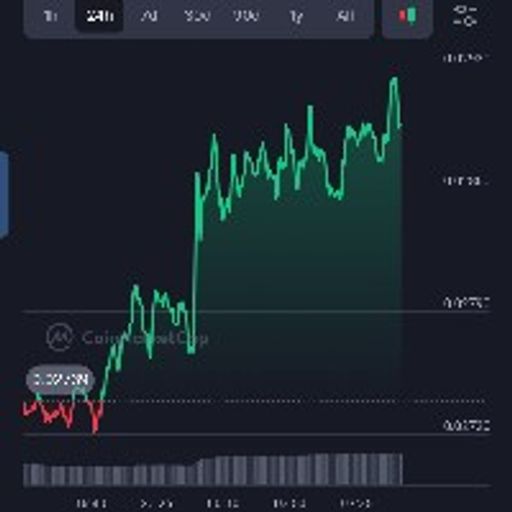



Recently, I noticed an interesting phenomenon while monitoring the market. BNB has been on a soaring rise, but Lista has been oscillating within a narrow range of 0.36 to 0.38, appearing to do nothing. But looking at it from a different perspective, this pattern actually hides some secrets.
By observing the order book details, you can spot the clues. Below 0.36, the buy orders are stacked very thick, and every large sell order is quickly absorbed. This is a typical characteristic of major players controlling the market. I have seen similar patterns multiple times — last year, PENDLE was range-bound around $1.8 for nearly two months. There was a lot of criticism at the time, but who would have thought it would later surge sixfold?
Why am I optimistic about Lista’s prospects within the BNB ecosystem? The core reason lies in demand. One of the most urgent issues on the BNB chain is the lack of native stablecoins. Currently, circulating USDT and USDC are cross-chain assets, whereas USD1 is an on-chain native stablecoin solution. This difference in identity is very significant.
Lista’s product logic is worth deeper consideration — staking BNB to obtain USD1, while earning LSWAP rewards and on-chain yields. This forms a diversified income structure. It’s like buying property that can generate rental income and also enjoy related incentives. Once this model scales on-chain, the potential for TVL growth is substantial.
Currently, Lista’s market cap is still outside the top 200, which in itself indicates that it is still in the early stages of development. The stablecoin sector is a long-term demand, and native ecosystem products tend to command higher premiums more easily.
The BNB ecosystem lacks native stablecoins, which is a real demand. USD1's position is too critical. Early projects should have accumulated silently like this.
Lista is now outside the top 200 and still bottoming out. Once the TVL rises, it will be a completely different story. The stablecoin track is all about patience.
After two months of sideways movement, comparing it to PENDLE's 6x increase seems a bit far-fetched. Data shows which capital party was behind PENDLE back then?
I agree with the demand for stablecoins, but why must it be endogenous within the ecosystem? Historical data shows that this line of reasoning has been heard many times.
After research and analysis, I suggest paying attention to the movements of these wallet addresses before making a decision. Don't be greedy.
Is there a problem with the tokenomics design on the list? The yield structure looks too attractive, which actually makes it a bit suspicious.