
 :
:

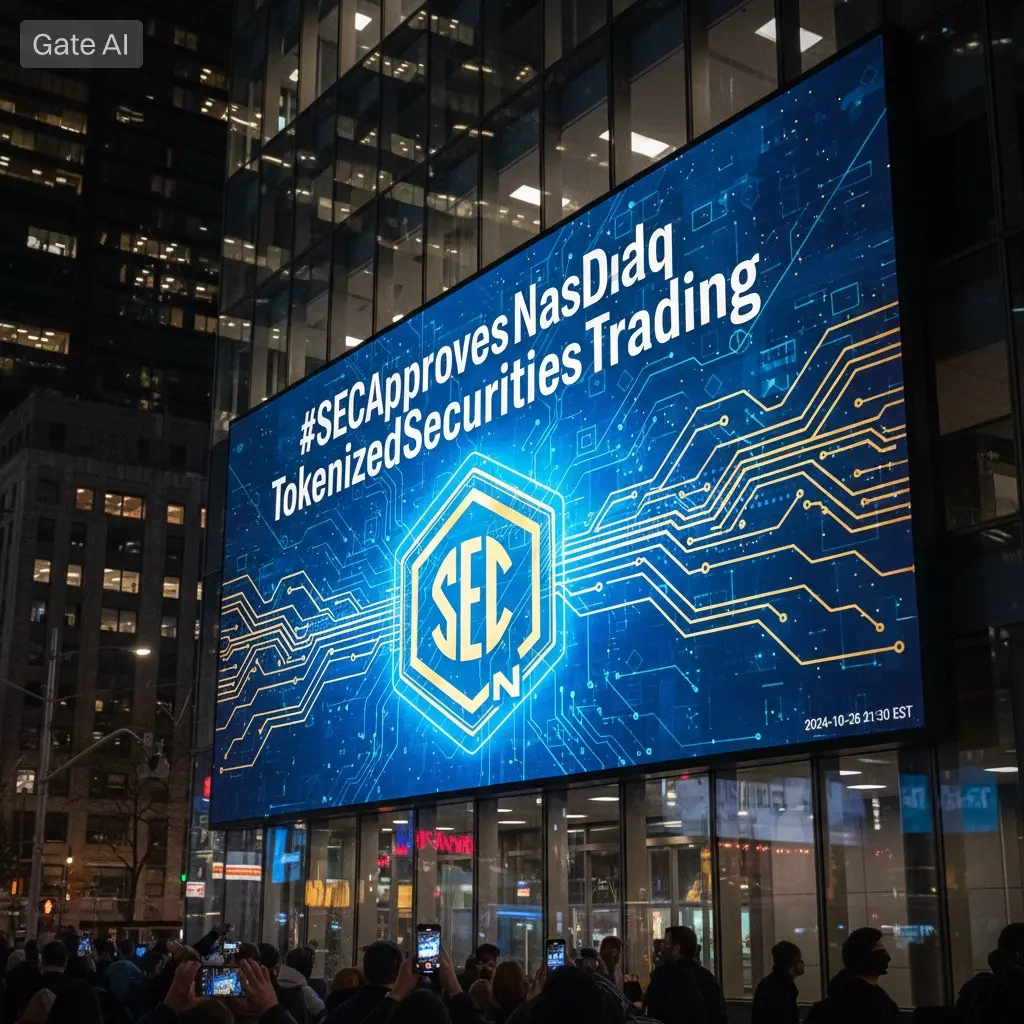
#SECApprovesNasdaqTokenizedSecuritiesTrading
SEC Approves Nasdaq Tokenized Securities Trading A New Era in Finance
The global financial landscape is undergoing a profound transformation as tokenized securities move from concept to reality. The recent development under #SECApprovesNasdaqTokenizedSecuritiesTrading marks a significant milestone in this evolution, signaling that blockchain technology is no longer peripheral but actively shaping the future of regulated financial markets. This convergence of traditional finance and decentralized infrastructure reflects a broader trend: the digitization of assets, enhanced transparency, and democratization of investment opportunities.
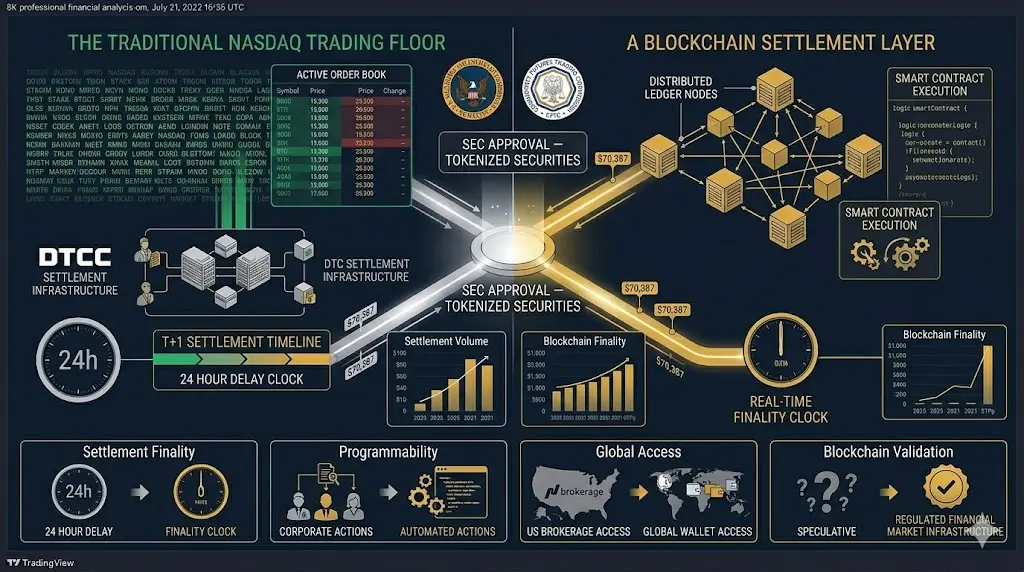
Tokenized securities convert traditional financial instruments including stocks, bonds, and ETFs into digital tokens that exist on a blockchain. Each token represents ownership of an underlying asset, enabling near-instantaneous, 24/7 trading, faster settlement, and reduced reliance on multiple intermediaries that slow down traditional markets. This shift has the potential to unlock liquidity, enhance market efficiency, and broaden global investor participation, particularly for retail and cross-border investors who previously faced high entry barriers.
The regulatory clarity provided by the SEC is a key enabler of this transformation. By defining how tokenized securities fit within existing frameworks, the SEC ensures that investor protections, transparency, and market integrity remain intact. Institutional investors, who have often remained cautious due to legal uncertainty, can now engage with tokenized assets with greater confidence. This also sets a precedent for other jurisdictions, demonstrating that blockchain integration can coexist with robust regulatory oversight.
Nasdaq, as one of the world’s leading stock exchanges, is positioning itself at the forefront of this digital transformation. By exploring tokenized securities trading, Nasdaq is not just digitizing assets but reimagining the very infrastructure of capital markets. Blockchain enables automated compliance, faster settlement, and reduced transaction costs, creating a more efficient and globally accessible system. Institutions and retail investors alike could benefit from fractional ownership, where high-value assets can be purchased in smaller units, lowering the barrier to entry and fostering broader market participation.
Beyond efficiency and accessibility, tokenized securities enhance transparency and trust. Every transaction is recorded on a distributed ledger, reducing the risk of fraud and making audits, compliance checks, and corporate actions such as dividend distributions more seamless. Smart contracts automate these processes, eliminating human error and creating predictable, reliable outcomes for investors.
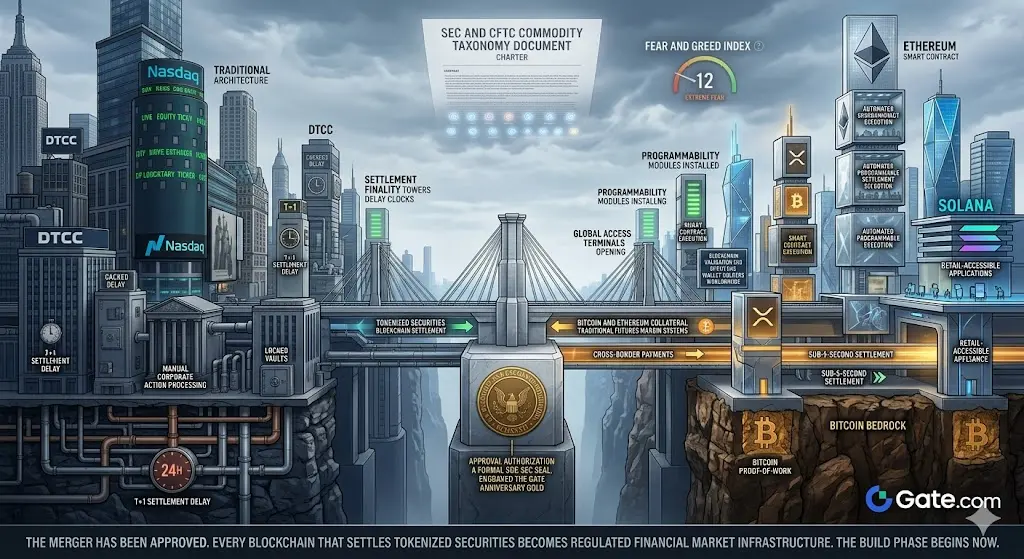
The impact on markets is multi-layered. For the crypto sector, tokenized securities represent institutional validation and a pathway to mainstream adoption. Traditional finance (TradFi), on the other hand, gains the efficiency, automation, and liquidity advantages historically associated with DeFi, signaling a convergence of TradFi and DeFi. Over time, this integration could reshape global financial infrastructure, creating a system that is more interconnected, inclusive, and resilient.
However, the transition is not without challenges. Regulatory harmonization across jurisdictions remains a critical concern. Tokenized securities issued on one blockchain may face conflicting rules in different countries, requiring continuous oversight and international coordination. Cybersecurity risks, platform reliability, and investor education are additional factors that must be addressed to ensure sustainable growth. Regulators like the SEC play a crucial role in balancing innovation with protection, ensuring that technological advances do not compromise market integrity.
From an investment perspective, tokenized securities open new strategic opportunities. Fractional ownership allows retail investors to access previously inaccessible assets, ETFs can be issued as tokens with real-time settlement, and liquidity can be dynamically managed across multiple markets. For institutional players, tokenized assets offer new avenues for portfolio diversification, automated compliance, and cross-border capital allocation. The ability to trade tokenized securities on regulated blockchain networks bridges the gap between traditional market infrastructure and the fast-evolving digital asset ecosystem.
Looking ahead, the SEC and Nasdaq’s initiatives are more than a regulatory milestone; they signal a structural transformation in global finance. As blockchain technology matures and adoption scales, tokenized securities could become a standard component of capital markets, alongside traditional equities and bonds. This transformation promises to make financial markets more efficient, globally inclusive, and resilient to operational bottlenecks, while providing both retail and institutional investors with unprecedented access to liquidity and investment opportunities.
In conclusion, the approval of tokenized securities trading under regulatory oversight represents a turning point in financial history. Institutions like the SEC and Nasdaq are not merely observing blockchain innovation; they are actively integrating it into the financial system. Investors, traders, and institutions now have a clearer path toward a digital, decentralized, and globally accessible market. The era of tokenized finance has arrived, and with it, a new paradigm for investment, trading, and capital allocation one that is efficient, transparent, and built for the future.
SEC Approves Nasdaq Tokenized Securities Trading A New Era in Finance
The global financial landscape is undergoing a profound transformation as tokenized securities move from concept to reality. The recent development under #SECApprovesNasdaqTokenizedSecuritiesTrading marks a significant milestone in this evolution, signaling that blockchain technology is no longer peripheral but actively shaping the future of regulated financial markets. This convergence of traditional finance and decentralized infrastructure reflects a broader trend: the digitization of assets, enhanced transparency, and democratization of investment opportunities.
Tokenized securities convert traditional financial instruments including stocks, bonds, and ETFs into digital tokens that exist on a blockchain. Each token represents ownership of an underlying asset, enabling near-instantaneous, 24/7 trading, faster settlement, and reduced reliance on multiple intermediaries that slow down traditional markets. This shift has the potential to unlock liquidity, enhance market efficiency, and broaden global investor participation, particularly for retail and cross-border investors who previously faced high entry barriers.
The regulatory clarity provided by the SEC is a key enabler of this transformation. By defining how tokenized securities fit within existing frameworks, the SEC ensures that investor protections, transparency, and market integrity remain intact. Institutional investors, who have often remained cautious due to legal uncertainty, can now engage with tokenized assets with greater confidence. This also sets a precedent for other jurisdictions, demonstrating that blockchain integration can coexist with robust regulatory oversight.
Nasdaq, as one of the world’s leading stock exchanges, is positioning itself at the forefront of this digital transformation. By exploring tokenized securities trading, Nasdaq is not just digitizing assets but reimagining the very infrastructure of capital markets. Blockchain enables automated compliance, faster settlement, and reduced transaction costs, creating a more efficient and globally accessible system. Institutions and retail investors alike could benefit from fractional ownership, where high-value assets can be purchased in smaller units, lowering the barrier to entry and fostering broader market participation.
Beyond efficiency and accessibility, tokenized securities enhance transparency and trust. Every transaction is recorded on a distributed ledger, reducing the risk of fraud and making audits, compliance checks, and corporate actions such as dividend distributions more seamless. Smart contracts automate these processes, eliminating human error and creating predictable, reliable outcomes for investors.
The impact on markets is multi-layered. For the crypto sector, tokenized securities represent institutional validation and a pathway to mainstream adoption. Traditional finance (TradFi), on the other hand, gains the efficiency, automation, and liquidity advantages historically associated with DeFi, signaling a convergence of TradFi and DeFi. Over time, this integration could reshape global financial infrastructure, creating a system that is more interconnected, inclusive, and resilient.
However, the transition is not without challenges. Regulatory harmonization across jurisdictions remains a critical concern. Tokenized securities issued on one blockchain may face conflicting rules in different countries, requiring continuous oversight and international coordination. Cybersecurity risks, platform reliability, and investor education are additional factors that must be addressed to ensure sustainable growth. Regulators like the SEC play a crucial role in balancing innovation with protection, ensuring that technological advances do not compromise market integrity.
From an investment perspective, tokenized securities open new strategic opportunities. Fractional ownership allows retail investors to access previously inaccessible assets, ETFs can be issued as tokens with real-time settlement, and liquidity can be dynamically managed across multiple markets. For institutional players, tokenized assets offer new avenues for portfolio diversification, automated compliance, and cross-border capital allocation. The ability to trade tokenized securities on regulated blockchain networks bridges the gap between traditional market infrastructure and the fast-evolving digital asset ecosystem.
Looking ahead, the SEC and Nasdaq’s initiatives are more than a regulatory milestone; they signal a structural transformation in global finance. As blockchain technology matures and adoption scales, tokenized securities could become a standard component of capital markets, alongside traditional equities and bonds. This transformation promises to make financial markets more efficient, globally inclusive, and resilient to operational bottlenecks, while providing both retail and institutional investors with unprecedented access to liquidity and investment opportunities.
In conclusion, the approval of tokenized securities trading under regulatory oversight represents a turning point in financial history. Institutions like the SEC and Nasdaq are not merely observing blockchain innovation; they are actively integrating it into the financial system. Investors, traders, and institutions now have a clearer path toward a digital, decentralized, and globally accessible market. The era of tokenized finance has arrived, and with it, a new paradigm for investment, trading, and capital allocation one that is efficient, transparent, and built for the future.
 :
: