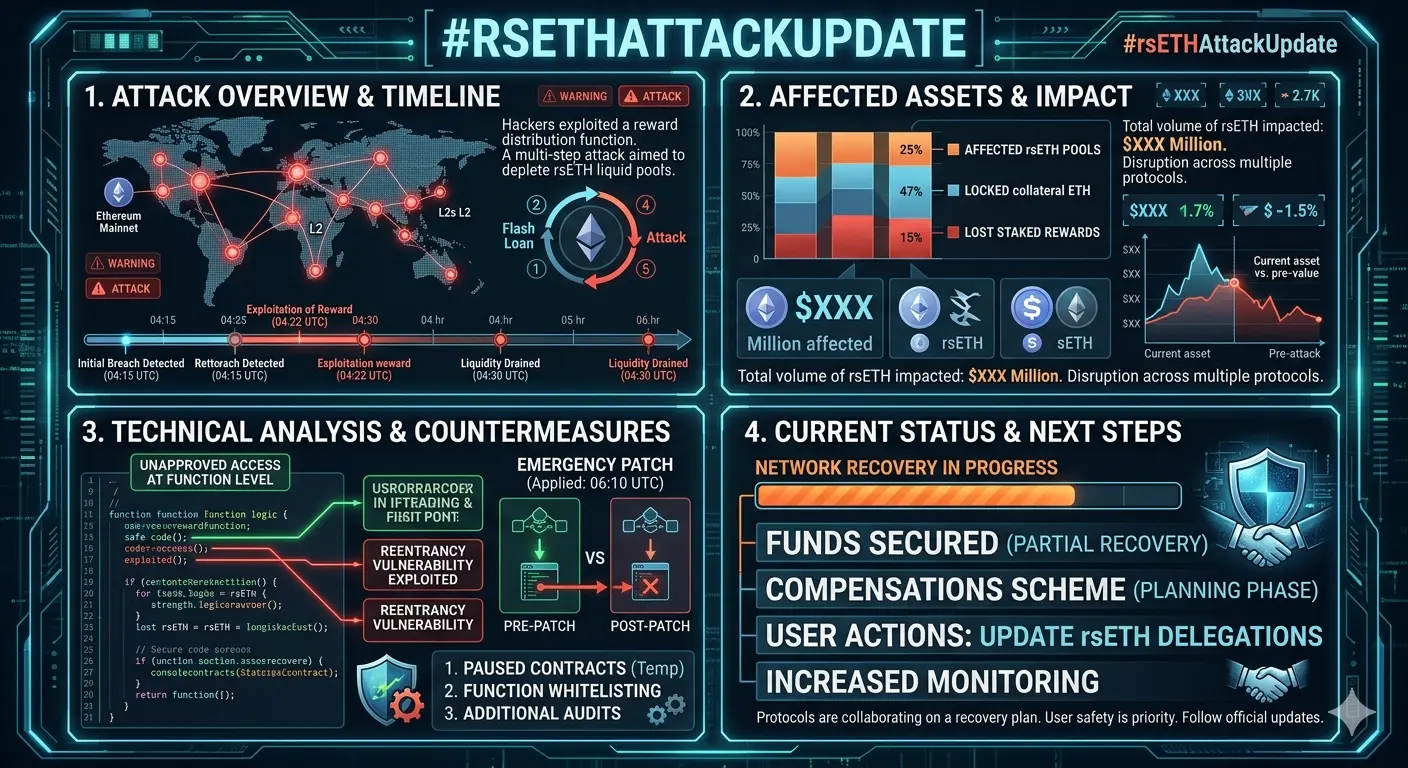

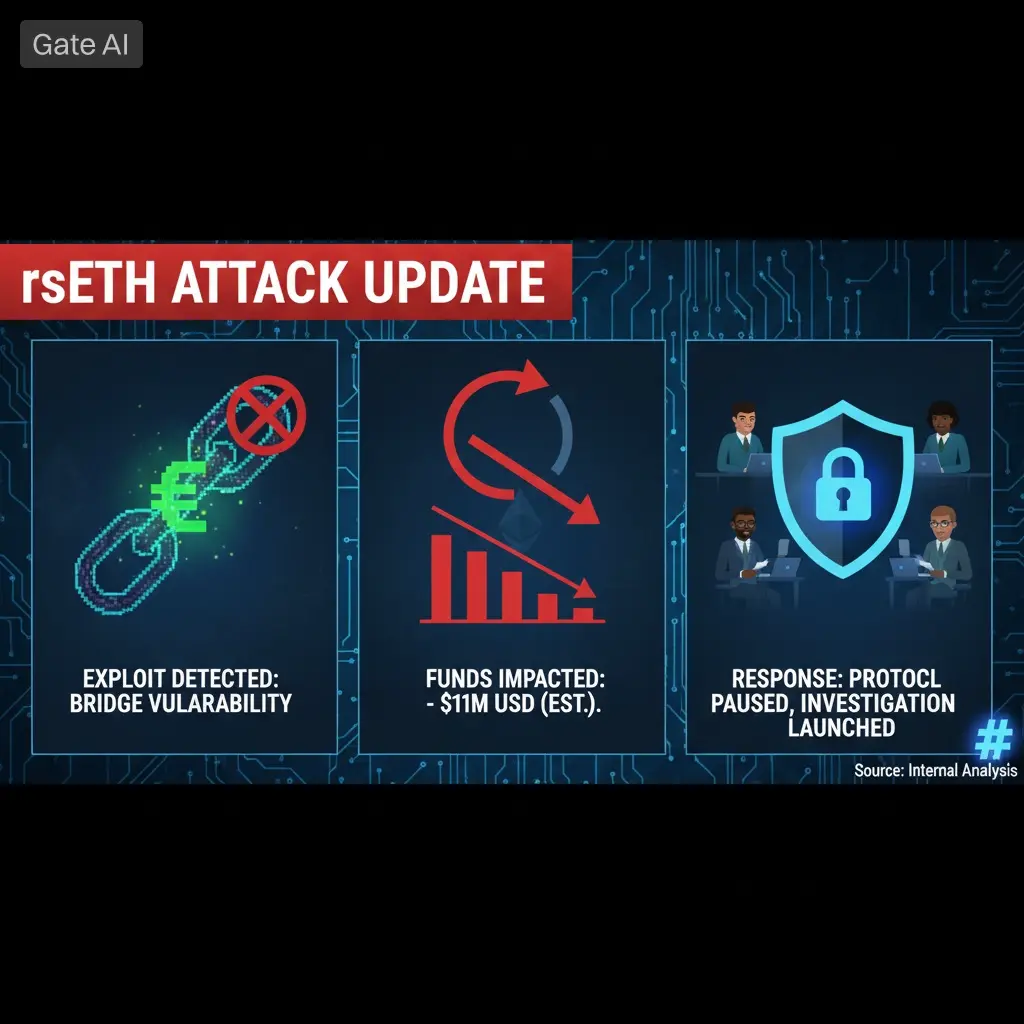
#rsETHAttackUpdate
🚨 rsETH Incident 2026 – The Day DeFi Didn’t Break… But Everyone Realized It Can
There are days in crypto when nothing really changes — charts move, traders trade, noise continues — and then there are days like this, when suddenly the market goes quiet for a moment, not because nothing is happening, but because everyone is thinking at the same time, trying to process whether what just happened is a temporary disruption… or a deeper warning about the system itself.
The rsETH incident was not just another event — it was a reality check, a moment where confidence didn’t collapse, but it paused, where belief didn’t disappear, but it questioned itself, and where the biggest realization wasn’t about loss… but about how easily trust can be tested in a system built on layers of assumptions.
🔥 Let’s Be Honest — This Wasn’t “Just Another Incident”
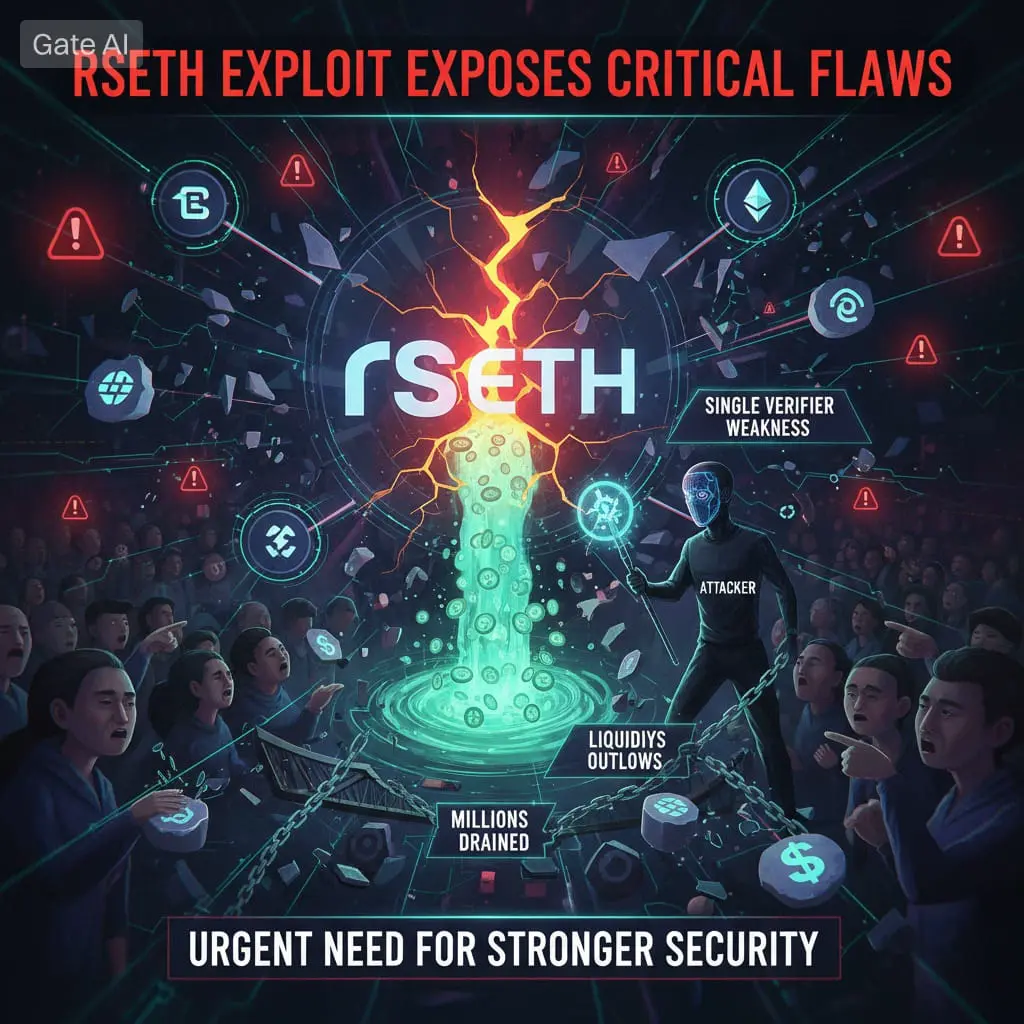
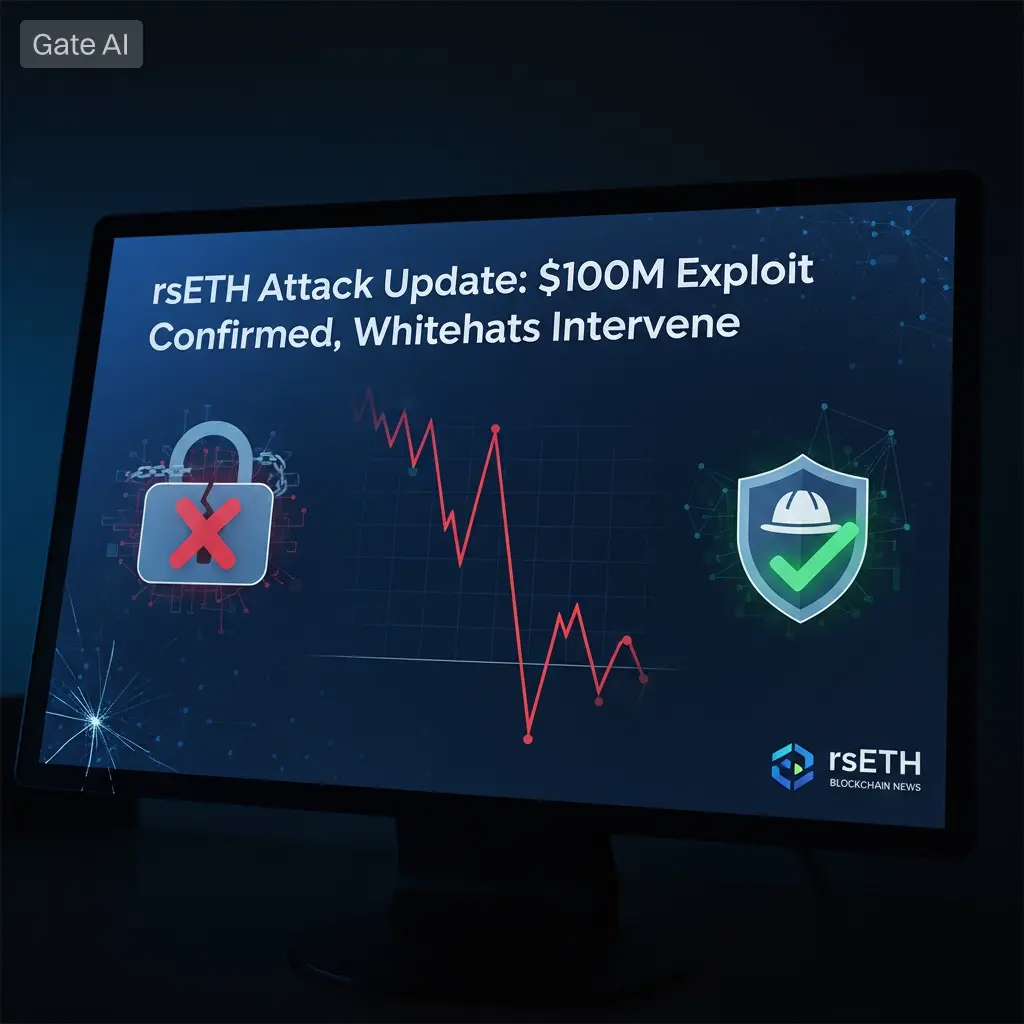
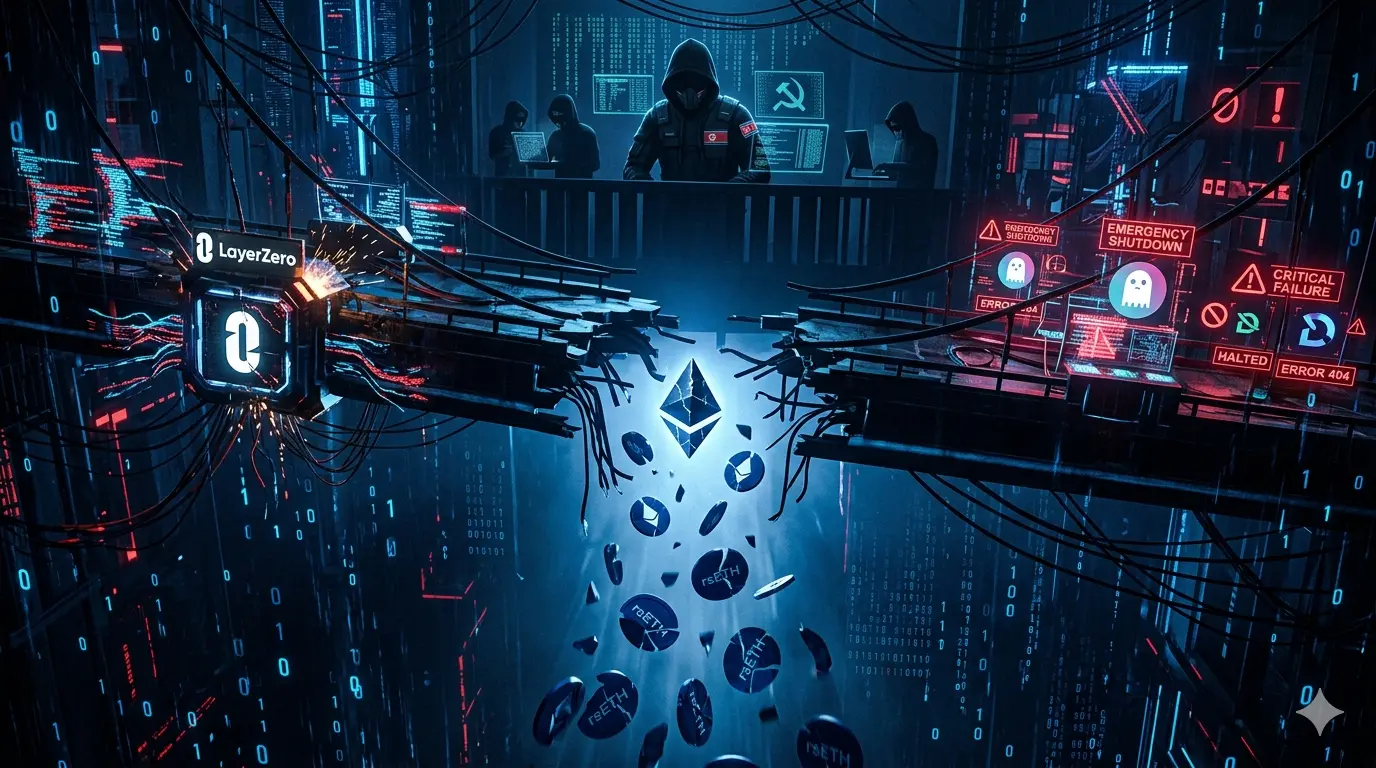
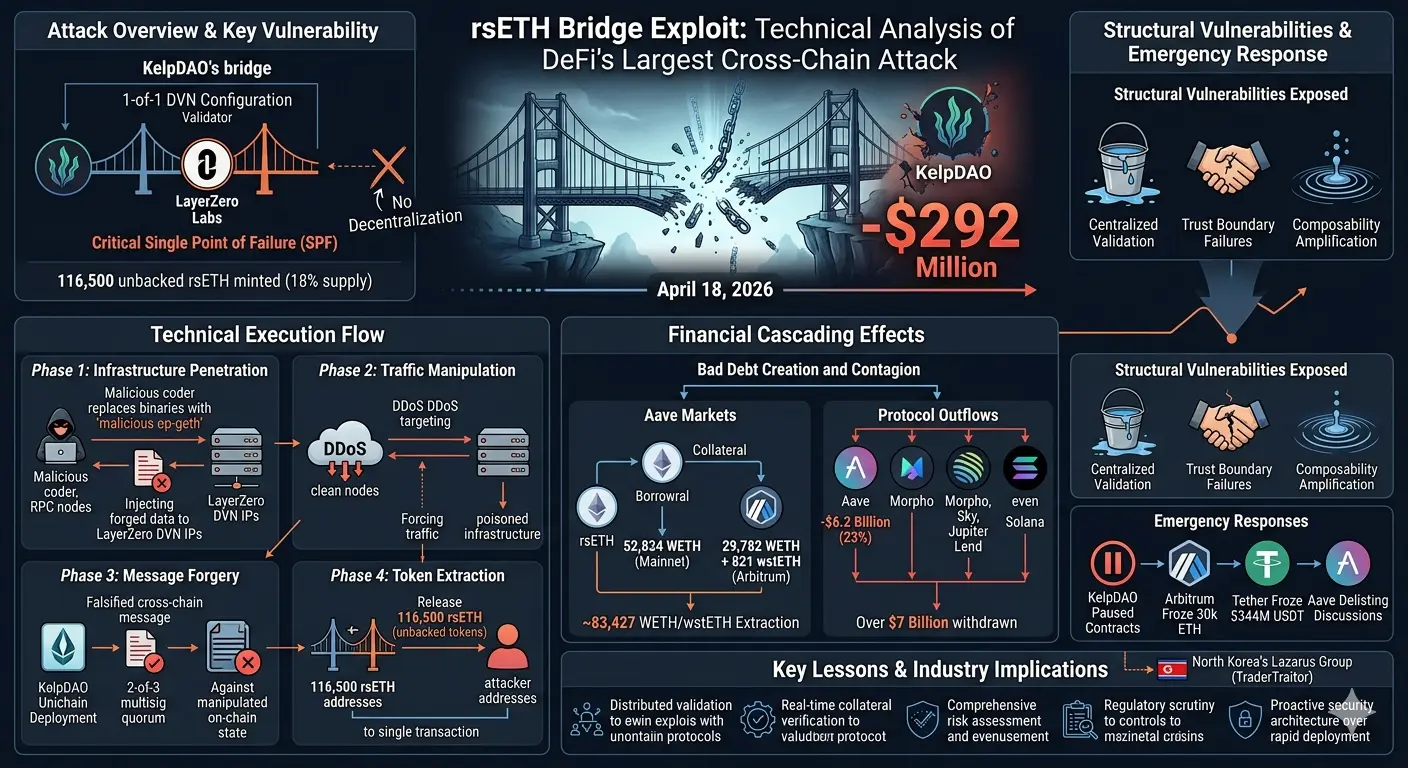
At the surface, it looks like a technical issue tied to rsETH, with an impact crossing $290 million, but if you reduce it to just numbers, you completely miss the point — because what actually happened here was something far more important:
👉 The system accepted something it shouldn’t have
👉 The ecosystem reacted after the fact
👉 And users realized how much they rely on things they never fully analyze
And that creates a very uncomfortable thought:
How many other risks exist that simply haven’t been triggered yet?
⚠️ The Part Nobody Likes To Talk About
We often celebrate DeFi for being permissionless, open, and innovative — but we rarely talk about the trade-off:
👉 More freedom = more responsibility
👉 More innovation = more unknowns
👉 More yield = more hidden complexity
And this incident exposed exactly that — not loudly, not dramatically, but quietly and effectively — by showing that sometimes the biggest risks are not in what we see… but in what we assume is safe without questioning it.
🧠 The Debate That’s Dividing The Market Right Now
Let’s address the elephant in the room — because this is where things get interesting.
🔴 Side A — “This Is A Structural Warning”
This side isn’t panicking — they’re observing carefully, and their argument is simple but powerful:
If one weak point in a system can allow invalid value to move across protocols, interact with liquidity, and influence markets, then maybe the system is not as robust as we think — maybe complexity has moved faster than security, and maybe users are operating in environments where the true risk is not visible at the surface level.
And their biggest concern is not this incident —
It’s the next one.
🟢 Side B — “This Is Exactly How Systems Improve”
The other side sees this completely differently — not as a failure, but as a necessary stress event, because no system becomes strong without being tested, and no weakness gets fixed until it is exposed.
From this perspective, what happened is not the breakdown of DeFi — it is the process of refining it, strengthening it, and forcing it to evolve beyond theoretical security into real-world resilience.
💡 So Who’s Right? Here’s The Truth…
Both sides are right — and that’s what makes this moment so important.
Because this isn’t a black-and-white situation.
👉 DeFi is not broken
👉 DeFi is not perfect
👉 DeFi is being tested
And the outcome of this test will define the next phase of the market.
📊 Now Let’s Talk About What Really Matters — PRICE
Because in the end, markets don’t lie — sentiment, fear, confidence… everything shows up in price.
💰 Ethereum Current Price: ~$2318
Now pause for a second and think about this…
After a major DeFi shock, after headlines, after uncertainty…
👉 ETH is still holding above $2300
👉 Monthly trend is still positive (~+16%)
👉 Market structure is still intact
That is not weakness.
That is controlled strength.
🔍 Expanded Price Zones (Where The Game Is Being Played)
📍 Support Levels (Where Buyers Defend):
• $2300 → Key psychological level
• $2280 → Short-term reaction zone
• $2250 → Strong support (if tested, high attention area)
📍 Resistance Levels (Where Sellers React):
• $2332 → Immediate breakout trigger
• $2360 → Supply pressure zone
• $2400 → Major psychological barrier
• $2500 → Momentum expansion target
📈 What The Chart Is Really Saying
This is not a trending market…
This is not a collapsing market…
👉 This is a decision zone
Price is compressing, volatility is tightening, and the market is preparing for a move — the only question is direction.
And here’s the key insight most traders miss:
👉 Big moves don’t start with noise
👉 They start with silence and compression
🏦 Smart Money Isn’t Loud — But It’s Active
While retail traders are reacting emotionally, smart money is doing something very different:
👉 Not rushing in
👉 Not running away
👉 Just positioning quietly
This is what rebalancing looks like — not panic, not hype, but calculated patience.
⚡ The Brutal Truth Most Traders Ignore
Let’s be real for a second —
Most people in DeFi are not losing money because of hacks…
They’re losing because they:
• Don’t understand what they’re using
• Chase returns without thinking
• Ignore risk until it hits
And this incident didn’t create that problem —
It just exposed it.
📈 Strategy Right Now — This Is Where You Win Or Lose
This is not the time to be emotional.
This is the time to be precise.
🟢 If You’re Careful:
Wait for confirmation above $2332 — don’t guess, react
🟡 If You’re Strategic:
Look at $2300 zone for controlled entries with risk defined
🔴 If You’re Aggressive:
Trade short-term, take profits fast, don’t overstay
👉 One rule above all:
Survive first. Profit second.
🚀 What Happens Next — The Bigger Picture
This moment will shape the future of DeFi, not because something went wrong, but because now:
• Builders will tighten systems
• Investors will think deeper
• Risk will be priced more accurately
• Weak structures will get exposed
👉 And that’s how systems evolve.
💬 Final Thought — Read This Carefully
The biggest danger in crypto is not volatility.
It’s not even technical failure.
👉 It’s false confidence.
🚨 rsETH Incident 2026 – The Day DeFi Didn’t Break… But Everyone Realized It Can
There are days in crypto when nothing really changes — charts move, traders trade, noise continues — and then there are days like this, when suddenly the market goes quiet for a moment, not because nothing is happening, but because everyone is thinking at the same time, trying to process whether what just happened is a temporary disruption… or a deeper warning about the system itself.
The rsETH incident was not just another event — it was a reality check, a moment where confidence didn’t collapse, but it paused, where belief didn’t disappear, but it questioned itself, and where the biggest realization wasn’t about loss… but about how easily trust can be tested in a system built on layers of assumptions.
🔥 Let’s Be Honest — This Wasn’t “Just Another Incident”
At the surface, it looks like a technical issue tied to rsETH, with an impact crossing $290 million, but if you reduce it to just numbers, you completely miss the point — because what actually happened here was something far more important:
👉 The system accepted something it shouldn’t have
👉 The ecosystem reacted after the fact
👉 And users realized how much they rely on things they never fully analyze
And that creates a very uncomfortable thought:
How many other risks exist that simply haven’t been triggered yet?
⚠️ The Part Nobody Likes To Talk About
We often celebrate DeFi for being permissionless, open, and innovative — but we rarely talk about the trade-off:
👉 More freedom = more responsibility
👉 More innovation = more unknowns
👉 More yield = more hidden complexity
And this incident exposed exactly that — not loudly, not dramatically, but quietly and effectively — by showing that sometimes the biggest risks are not in what we see… but in what we assume is safe without questioning it.
🧠 The Debate That’s Dividing The Market Right Now
Let’s address the elephant in the room — because this is where things get interesting.
🔴 Side A — “This Is A Structural Warning”
This side isn’t panicking — they’re observing carefully, and their argument is simple but powerful:
If one weak point in a system can allow invalid value to move across protocols, interact with liquidity, and influence markets, then maybe the system is not as robust as we think — maybe complexity has moved faster than security, and maybe users are operating in environments where the true risk is not visible at the surface level.
And their biggest concern is not this incident —
It’s the next one.
🟢 Side B — “This Is Exactly How Systems Improve”
The other side sees this completely differently — not as a failure, but as a necessary stress event, because no system becomes strong without being tested, and no weakness gets fixed until it is exposed.
From this perspective, what happened is not the breakdown of DeFi — it is the process of refining it, strengthening it, and forcing it to evolve beyond theoretical security into real-world resilience.
💡 So Who’s Right? Here’s The Truth…
Both sides are right — and that’s what makes this moment so important.
Because this isn’t a black-and-white situation.
👉 DeFi is not broken
👉 DeFi is not perfect
👉 DeFi is being tested
And the outcome of this test will define the next phase of the market.
📊 Now Let’s Talk About What Really Matters — PRICE
Because in the end, markets don’t lie — sentiment, fear, confidence… everything shows up in price.
💰 Ethereum Current Price: ~$2318
Now pause for a second and think about this…
After a major DeFi shock, after headlines, after uncertainty…
👉 ETH is still holding above $2300
👉 Monthly trend is still positive (~+16%)
👉 Market structure is still intact
That is not weakness.
That is controlled strength.
🔍 Expanded Price Zones (Where The Game Is Being Played)
📍 Support Levels (Where Buyers Defend):
• $2300 → Key psychological level
• $2280 → Short-term reaction zone
• $2250 → Strong support (if tested, high attention area)
📍 Resistance Levels (Where Sellers React):
• $2332 → Immediate breakout trigger
• $2360 → Supply pressure zone
• $2400 → Major psychological barrier
• $2500 → Momentum expansion target
📈 What The Chart Is Really Saying
This is not a trending market…
This is not a collapsing market…
👉 This is a decision zone
Price is compressing, volatility is tightening, and the market is preparing for a move — the only question is direction.
And here’s the key insight most traders miss:
👉 Big moves don’t start with noise
👉 They start with silence and compression
🏦 Smart Money Isn’t Loud — But It’s Active
While retail traders are reacting emotionally, smart money is doing something very different:
👉 Not rushing in
👉 Not running away
👉 Just positioning quietly
This is what rebalancing looks like — not panic, not hype, but calculated patience.
⚡ The Brutal Truth Most Traders Ignore
Let’s be real for a second —
Most people in DeFi are not losing money because of hacks…
They’re losing because they:
• Don’t understand what they’re using
• Chase returns without thinking
• Ignore risk until it hits
And this incident didn’t create that problem —
It just exposed it.
📈 Strategy Right Now — This Is Where You Win Or Lose
This is not the time to be emotional.
This is the time to be precise.
🟢 If You’re Careful:
Wait for confirmation above $2332 — don’t guess, react
🟡 If You’re Strategic:
Look at $2300 zone for controlled entries with risk defined
🔴 If You’re Aggressive:
Trade short-term, take profits fast, don’t overstay
👉 One rule above all:
Survive first. Profit second.
🚀 What Happens Next — The Bigger Picture
This moment will shape the future of DeFi, not because something went wrong, but because now:
• Builders will tighten systems
• Investors will think deeper
• Risk will be priced more accurately
• Weak structures will get exposed
👉 And that’s how systems evolve.
💬 Final Thought — Read This Carefully
The biggest danger in crypto is not volatility.
It’s not even technical failure.
👉 It’s false confidence.