

Trade
Basic
Futures
Futures
Hundreds of contracts settled in USDT or BTC
TradFi
Gold
Trade global traditional assets with USDT in one place
Options
Hot
Trade European-style vanilla options
Unified Account
Maximize your capital efficiency
Demo Trading
Futures Kickoff
Get prepared for your futures trading
Futures Events
Participate in events to win generous rewards
Demo Trading
Use virtual funds to experience risk-free trading
Earn
Launch
CandyDrop
Collect candies to earn airdrops
Launchpool
Quick staking, earn potential new tokens
HODLer Airdrop
Hold GT and get massive airdrops for free
Launchpad
Be early to the next big token project
Alpha Points
Trade on-chain assets and enjoy airdrop rewards!
Futures Points
Earn futures points and claim airdrop rewards
Investment
Simple Earn
Earn interests with idle tokens
Auto-Invest
Auto-invest on a regular basis
Dual Investment
Buy low and sell high to take profits from price fluctuations
Soft Staking
Earn rewards with flexible staking
Crypto Loan
0 Fees
Pledge one crypto to borrow another
Lending Center
One-stop lending hub
VIP Wealth Hub
Customized wealth management empowers your assets growth
Private Wealth Management
Customized asset management to grow your digital assets
Quant Fund
Top asset management team helps you profit without hassle
Staking
Stake cryptos to earn in PoS products
Smart Leverage
New
No forced liquidation before maturity, worry-free leveraged gains
GUSD Minting
Use USDT/USDC to mint GUSD for treasury-level yields

More





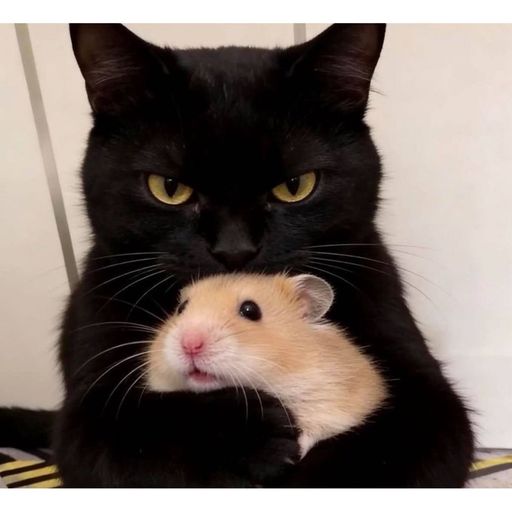
When Monkey Investing Beat Wall Street: How Animals Outperformed Financial Experts
The question might sound absurd, but history offers some compelling answers: Can animals actually outperform professional investors? This exploration into monkey investing and unexpected portfolio management reveals a fascinating pattern that has puzzled the financial world for decades. The premise traces back to a bold hypothesis, but the real evidence comes from surprisingly successful animals that challenged conventional investing wisdom.
The Theory That Started It All
The seeds of monkey investing were planted long before any actual animals touched a stock portfolio. In 1973, economist Burton Malkiel published A Random Walk Down Wall Street, proposing a controversial idea: “A blindfolded monkey throwing darts at a newspaper’s financial pages could select a portfolio that would do just as well as one carefully selected by experts.” This wasn’t merely theoretical speculation. Malkiel was making an argument that would become increasingly relevant—the claim that beating the market consistently remains remarkably difficult, and the average so-called expert doesn’t actually achieve this feat.
For decades after Malkiel’s book, people have attempted to test this hypothesis in various ways. Some used actual darts. Others recruited unexpected participants with four legs, fur, or tails. What began as intellectual curiosity transformed into a series of real-world experiments that would test whether monkey investing could genuinely rival human expertise.
The Feline Investor: Orlando’s Unexpected Success
Before monkeys entered the arena, a cat named Orlando demonstrated that beating professionals might not require advanced degrees or decades of experience. In 2013, the London Observer conducted an experiment that would challenge everything about conventional stock picking: they pitted a cat against a team of professional stock-picking experts and university students.
Orlando selected stocks using an unconventional method—he threw his favorite toy mouse onto a grid of numbers, each representing different FTSE-listed companies. Meanwhile, the professionals deployed decades of accumulated knowledge and traditional analytical methods. Each portfolio started with approximately 5,000 pounds invested across five companies.
When the year ended, the results astonished observers. Orlando the cat achieved a 4.2% average return, accumulating about 5,500 pounds. The professionals, by contrast, managed returns of roughly 5,200 pounds. The cat had outperformed the experts. This wasn’t a narrow margin—this was a clear demonstration that random selection could rival deliberate expertise.
Monkey Investing Takes Center Stage: Primates as Portfolio Managers
If one cat could beat professionals, perhaps other animals deserved consideration. History provides several remarkable examples of monkey investing success that challenged assumptions about the relationship between expertise and investment returns.
In 1999, a chimpanzee named Raven entered market history by throwing ten darts at a dartboard displaying 133 internet-related companies. This was the height of the dot-com boom—a period when internet stocks seemed to only move upward. Raven’s monkey investing approach outperformed more than 6,000 internet and technology money managers, generating an astonishing 213% return. MarketWatch.com’s headline captured the moment: “Chimp '99 champ! Makes monkey of Wall Street.”
The success proved so remarkable that financial professionals created the Monkeydex—an actual index based entirely on Raven’s dart-throwing selections. This wasn’t parody; it was serious market recognition that a random selection method had achieved what most professionals could not.
Other animals continued the tradition. Lusha, a circus chimpanzee working in Russia, compiled a portfolio that outperformed 94% of Russia’s mutual funds. Meanwhile, Adam Monk—a Brazilian cinnamon ringtail cebus monkey employed by the Chicago Sun-Times—selected stocks by circling them in newspapers with a red pen. From 2003 to 2006, Adam Monk outperformed major market indexes four consecutive years. When 2008’s financial crisis devastated most portfolios, his remained relatively intact, losing only 14% compared to professional money managers’ typical 35%+ losses.
Why Monkey Investing Actually Works (And Why It Doesn’t)
The question naturally follows: Why would monkey investing succeed at all? Research Affiliates conducted simulations revealing an important mechanism. By chance, random selection disproportionately chooses smaller companies. Historically, smaller companies have demonstrated superior returns compared to larger ones. When darts land randomly across a stock grid or a cat tosses toys across numbered companies, they inadvertently recreate a small-cap-weighted portfolio—which happens to have beaten larger-company portfolios over extended periods.
However, this success carries critical limitations. Raven’s phenomenal 2,100% return evaporated following the dot-com crash. A finance professional summarized the lesson: “Any monkey with a dart can potentially make money in a rising market.” Success during bull markets doesn’t translate to all market conditions.
The Essential Limitation: Short-Term Performance Tells Little
Tom Gardner, founder and CEO of The Motley Fool, offered perspective on these monkey investing experiments. When presented with Orlando’s success, he responded, “I find these stories kind of funny, but mostly absurd. One year tells me nothing as an investor. You put that cat up against Charlie Munger over 10 years and it will be begging for mercy.”
This insight reveals the fundamental limitation of monkey investing comparisons. Stock picking professionals themselves acknowledge uncertainty about the next six to twelve months. Measuring any performer—human, feline, or primate—over a single year or brief period generates meaningless conclusions. The financial industry recognizes that short-term luck dominates short-term results.
Extended testing would provide more meaningful assessment. Yet the market data remains clear: monkey investing, while entertaining and thought-provoking, succeeds primarily during specific market conditions and timeframes. A monkey with a dart might beat professional indexing through random small-company selection during bull markets, but consistent long-term outperformance requires something beyond luck.
What Monkey Investing Reveals About Markets and Expertise
The deeper lesson transcends the amusing image of primates and felines managing portfolios. Monkey investing experiments validate Malkiel’s assertion that beating markets consistently proves extraordinarily difficult. They demonstrate that randomness and luck play substantial roles, particularly in shorter timeframes. They suggest that some professional investors may not add sufficient value to justify their fees.
Yet these same experiments also expose their limitations. One year of returns—even remarkable returns—provides insufficient evidence for investment strategy. Beating the market occasionally differs fundamentally from beating the market reliably over decades. The evidence suggests that monkey investing succeeds through small-company bias and market luck, not through superior selection methodology.
For individual investors, the takeaway isn’t necessarily to embrace monkey investing. Instead, these experiments point toward understanding market efficiency, recognizing luck’s role in short-term results, and questioning whether consistently beating the market remains realistic. The animals succeeded not because they possessed investing wisdom, but because randomness occasionally aligns with favorable market conditions.
The surprising success of monkey investing—from Orlando’s cat toys to Raven’s darts to Adam Monk’s red pen—reminds us that markets remain more influenced by chance, timing, and hidden structural factors than many professionals would prefer to admit.