

Trade
Basic
Futures
Futures
Hundreds of contracts settled in USDT or BTC
TradFi
Gold
Trade global traditional assets with USDT in one place
Options
Hot
Trade European-style vanilla options
Unified Account
Maximize your capital efficiency
Demo Trading
Futures Kickoff
Get prepared for your futures trading
Futures Events
Participate in events to win generous rewards
Demo Trading
Use virtual funds to experience risk-free trading
Earn
Launch
CandyDrop
Collect candies to earn airdrops
Launchpool
Quick staking, earn potential new tokens
HODLer Airdrop
Hold GT and get massive airdrops for free
Launchpad
Be early to the next big token project
Alpha Points
Trade on-chain assets and enjoy airdrop rewards!
Futures Points
Earn futures points and claim airdrop rewards
Investment
Simple Earn
Earn interests with idle tokens
Auto-Invest
Auto-invest on a regular basis
Dual Investment
Buy low and sell high to take profits from price fluctuations
Soft Staking
Earn rewards with flexible staking
Crypto Loan
0 Fees
Pledge one crypto to borrow another
Lending Center
One-stop lending hub
VIP Wealth Hub
Customized wealth management empowers your assets growth
Private Wealth Management
Customized asset management to grow your digital assets
Quant Fund
Top asset management team helps you profit without hassle
Staking
Stake cryptos to earn in PoS products
Smart Leverage
New
No forced liquidation before maturity, worry-free leveraged gains
GUSD Minting
Use USDT/USDC to mint GUSD for treasury-level yields

More


XRP Price Crashes 70% From ATH: Ripple CEO Cites Warren Buffett as Whale Moves 534M Tokens
21h ago
Cardano Price at Critical $0.25 Support: Will CME Futures & Hoskinson's New AI Spark a Rally?
21h ago
Trending Topics
View More124.38K Popularity
24.34K Popularity
390.14K Popularity
9.96K Popularity
8.66K Popularity
Hot Gate Fun
View More- MC:$2.49KHolders:20.06%
- MC:$2.52KHolders:20.40%
- MC:$0.1Holders:00.00%
- MC:$0.1Holders:10.00%
- MC:$2.48KHolders:00.00%
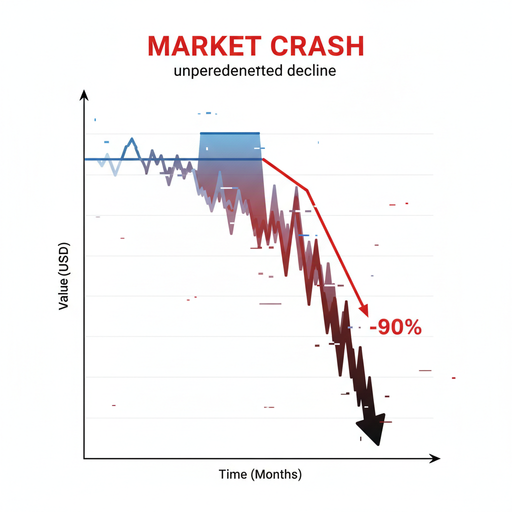



XRP Falls to $1.12 — Is the Spot ETF Forcing Institutions Out?
XRP price plummeted to $1.12 on February 5, 2026, its lowest level since October 2025, before rebounding 18% to $1.32. This volatility was triggered by weak U.S. jobs data and fears over massive AI corporate spending, but exposes a deeper conflict: U.S. institutions are simultaneously preparing for a spot XRP ETF while dumping the underlying token to avoid regulatory stigma. This analysis breaks down the economic catalysts, the critical “legal clarity” catch-22 facing banks, and what this schism means for XRP’s path to a regulated future.
XRP Price Plunge: A Perfect Storm of Macro Fear and AI Anxiety
On February 5, 2026, the digital asset market witnessed a sharp, broad-based sell-off. XRP was not spared, experiencing a violent drop to $1.12, a level not seen since the flash crash of October 2025. This move represented a stark decline from its pre-news trading level of $1.36. While the token managed a significant 18% recovery to stabilize near $1.32, the plunge sent a clear signal: crypto assets remain acutely sensitive to traditional economic indicators and sector-wide tech shocks. The event was not an isolated altcoin collapse but part of a market-wide deleveraging, with the total crypto market cap falling 12.69% on the same day.
The immediate trigger was a one-two punch from conventional and technological fronts. First, U.S. labor market data revealed cracks in the economy’s foundation. Initial jobless claims jumped to 231,000, surpassing estimates, while the JOLTS report showed job openings falling significantly to 6.524 million in December. For markets, this data paints a picture of a cooling economy, which traditionally dampens risk appetite. Second, and perhaps more impactful for growth-oriented tech and crypto assets, was Amazon’s staggering announcement of a planned $200 billion capital expenditure for 2026, heavily focused on artificial intelligence infrastructure. This colossal figure, far above analyst expectations, triggered a fundamental reevaluation. Investors began questioning the return on investment for the AI arms race, leading to a sell-off in Amazon shares and spilling over into speculative assets like cryptocurrency. XRP, often caught in cross-currents of market sentiment, declined nearly 20% on the day, underperforming the broader market.
This price action underscores a matured, albeit painful, reality. The cryptocurrency market of 2026 is deeply interwoven with global macro sentiment and the fortunes of the technology sector. Negative economic data weakens the thesis for speculative investment, while sector-specific fears in big tech can cause a rapid flight from all high-growth, high-risk assets. The speed of XRP’s drop and partial recovery highlights a market with thin liquidity, where automated selling can exacerbate moves, but where underlying demand at key psychological levels (like $1.20 and $1.00) can still provide a floor.
The Institutional Schism: ETF Preparation vs. Direct Token Exodus
Beneath the surface-level price volatility lies a far more revealing and paradoxical trend in institutional behavior. Six months after the SEC’s landmark settlement with Ripple, which provided celebrated “legal clarity,” a strange divergence has emerged. On one hand, the path to a U.S. spot XRP ETF appears nearly cemented. Filings from giants like Bitwise and WisdomTree have been updated, and Grayscale has filed to convert its trust product (GXRP). Approval odds are widely estimated above 95%, targeting a Q2 2026 launch. This is the bullish narrative fueling medium-term price targets of $2.50 to $3.00.
On the other hand, a starkly different story is told by on-chain data and futures markets. Institutional wallets have shown persistent net outflows, with one snapshot revealing $405,000 leaving in just 24 hours during the sell-off. More dramatically, institutional Futures Open Interest (OI) for XRP has collapsed by approximately 73% since the August 2025 settlement. This is not the behavior of a market confidently building positions ahead of a transformative financial product. This divergence is not a sign of bearishness on XRP’s future, but a strategic and compliance-driven rotation.
The key to understanding this lies in the precise wording of Judge Analisa Torres’s 2023 ruling, which was cemented by the 2025 settlement. The court drew a critical distinction: while sales of XRP on public exchanges are not securities, direct, institutional sales of XRP *are*. For a U.S. bank or regulated entity, this creates a toxic label. Holding XRP directly on a balance sheet can still be construed as dealing with a security under the “institutional sales” framework. Despite the more favorable stance of new SEC Chair Paul Atkins and his “Project Crypto,” the legal risk remains a compliance nightmare for traditional finance desks.
The ETF as a Compliance Washing Machine
Legal Clarity’s Bitter Catch: Why Banks Fear the Torres Label
The optimism following the SEC-Ripple settlement has been tempered by a harsh operational reality. The “legal clarity” achieved is binary and has created a perverse incentive structure. For retail investors and exchanges, the clarity that public sales are not securities was a huge win. For institutional players, particularly banks with deep regulatory oversight, the reaffirmation that direct sales are securities acts as a powerful deterrent.
This creates a liquidity vacuum in the direct market. As banks and certain funds purge their balance sheets of XRP to avoid any potential regulatory scrutiny, the sell-side pressure increases without a corresponding institutional buy-side to absorb it, contributing to price weakness and thin order books. This activity is largely invisible to the public but is detectable through on-chain analysis of known institutional wallets and the dramatic unwind of futures positions on regulated platforms like the CME.
The delay of the comprehensive Market Structure Bill to spring 2026 exacerbates this situation. This bill promised to clarify the roles of the SEC and CFTC and could have provided broader, more forgiving frameworks for digital asset securities. Its postponement leaves banks operating under the old, harsh dichotomy established by the Torres ruling. The stalemate between traditional banks (fearing deposit flight to high-yield stablecoins) and the crypto industry is a key reason for the delay, leaving XRP in a regulatory purgatory: legally clearer, yet practically more complicated for its most desired adopters.
XRP Technical Analysis: Navigating Bearish Terrain
From a chart perspective, XRP’s recovery to $1.32 does little to alter its bearish technical posture. The token currently trades decisively below both its 50-day Simple Moving Average (SMA), situated near $1.87, and its 200-day SMA, hovering around $2.21. This configuration, known as a “death cross” pattern when the 50-day crosses below the 200-day, typically indicates entrenched bearish momentum and defines a downward trend. The moving averages now act as dynamic resistance layers that any sustained recovery must conquer.
The immediate price action is confined within a tight range. Initial resistance is firm at the $1.32-$1.38 zone, which aligns with a descending trendline visible on hourly charts. A decisive break above $1.38 could open a path toward the more significant psychological resistance at $1.50. Reclaiming $1.50 is widely viewed by analysts as the minimum requirement to signal a potential trend reversal and begin a credible test of the 50-day SMA. On the downside, the recent low of $1.12 establishes a critical short-term support level. Below that, the psychological $1.00 mark represents a major defense line. A weekly close below $1.00 would be a severely bearish development, potentially triggering a sell-off toward the October 2025 flash crash low of $0.77.
The volume profile during the drop and recovery will be key to watch. A recovery on low volume suggests a lack of conviction and a higher probability of revisiting lower prices. Conversely, increasing volume on upward moves would indicate stronger accumulation. For now, the technical structure advises caution, with the burden of proof squarely on the bulls to recapture key levels and rebuild the damaged chart pattern.
The Road to Q2 2026: Catalysts and Future Scenarios
The narrative for XRP is now split between a challenging present and a promising, yet complex, future. The medium-term outlook hinges on a sequence of catalysts expected to unfold through 2026. The primary event is the anticipated approval and launch of a U.S. spot XRP ETF in the second quarter. This event is expected to be a monumental liquidity moment, analogous to the Bitcoin ETF launches of 2024, providing a regulated, accessible conduit for billions in institutional capital that is currently sidelined.
However, the price path leading to that launch is uncertain and presents two primary scenarios. In the Bullish Reconciliation Scenario, the market begins to front-run the ETF approval months in advance. Positive updates from issuers or the SEC could spark a momentum shift, allowing XRP to break above its key resistance levels. The current institutional sell-off of direct tokens is viewed as a temporary clearing event, and price stabilizes or climbs as ETF anticipation builds. Approval would then trigger massive inflows, validating the long-term holding strategy.
In the Prolonged Purgatory Scenario, the institutional overhang and regulatory ambiguity continue to suppress price. The ETF approval, while likely, could be priced in minimally or even met with a “sell the news” reaction if the direct token dump continues concurrently. XRP struggles to hold $1.00, and the launch of the ETF becomes more of a relief valve for selling pressure than a catalyst for new buying, at least initially. Its success would then depend on sustained ETF inflows over subsequent quarters.
Additional factors influencing these paths include the Federal Reserve’s interest rate policy—with cuts likely providing a tailwind for risk assets—and the eventual passage of the Market Structure Bill, which could further ease institutional concerns. For now, the market is in a holding pattern, balancing short-term regulatory friction against long-term financial innovation.
What is Ripple (XRP)? Understanding the Protocol and the Lawsuit
What is Ripple? It is crucial to distinguish between Ripple, the company, and XRP, the digital asset. Ripple Labs is a fintech company that utilizes the open-source XRP Ledger (XRPL) to build payment settlement and liquidity solutions for financial institutions. XRP is the native cryptocurrency of the XRPL, designed to act as a fast, low-cost bridge currency for cross-border transactions. It is pre-mined, with a finite supply of 100 billion tokens, a significant portion of which is held by Ripple and released on an escrow schedule.
The Landmark SEC Lawsuit: In December 2020, the U.S. Securities and Exchange Commission sued Ripple Labs, alleging that the company’s sale of XRP constituted an unregistered securities offering worth over $1.3 billion. The core of the case revolved around the Howey Test, used to determine what constitutes an “investment contract.” In a pivotal July 2023 summary judgment, Judge Analisa Torres ruled that while Ripple’s institutional sales of XRP did violate securities law, programmatic sales (public sales on exchanges) did not. This partial victory for Ripple set a crucial precedent for the industry. The case was finally settled in August 2025, with Ripple paying a $125 million penalty for historical institutional sales, and the SEC dropping all appeals, cementing the legal clarity.
Tokenomics and Roadmap: XRP’s tokenomics are centered around utility within the XRPL for transaction fees and bridging assets. Ripple’s business roadmap focuses on expanding its On-Demand Liquidity (ODL) product, which uses XRP as a bridge currency. The broader XRPL community development roadmap includes advancements like the native Automated Market Maker (AMM) and further scalability improvements. The settlement and potential ETF have shifted the project’s positioning from a legal battleground to a potential bridge between traditional finance and blockchain efficiency, albeit with the unique institutional compliance challenges now coming to light.
Final Analysis: A Necessary Detour on the Path to Legitimacy
The crash to $1.12 and the subsequent institutional paradox reveal a market in transition. XRP is experiencing the growing pains of legitimacy. The settlement ended a war but left behind a complex minefield of regulatory definitions that traditional finance is unwilling to tread. The simultaneous preparation for an ETF and dumping of the underlying asset is not hypocrisy; it is a rational, if frustrating, adaptation to an imperfect regulatory environment.
For investors, this period demands nuance. The short-term technical picture is bearish, weighed down by both macro forces and institutional repositioning. However, the medium-term catalyst of an ETF is one of the strongest fundamental developments any digital asset can have. The current price action may represent a final shakeout of weak hands and compliance-conscious institutions before a new, more stable foundation is built via regulated products.
Ultimately, the events of early February 2026 highlight that in crypto, legal wins are only the first step. The subsequent operational and strategic realignments can be just as volatile and revealing as the court battles themselves. XRP’s journey from a disputed security to a mainstream ETF will be a case study in how digital assets navigate the gap between judicial clarity and practical adoption. The road to Q2 2026 will be a critical test of this thesis.