Revolutionizing Ethereum: Discover the Power of Layer 2 Solutions with Mantle Blockchain
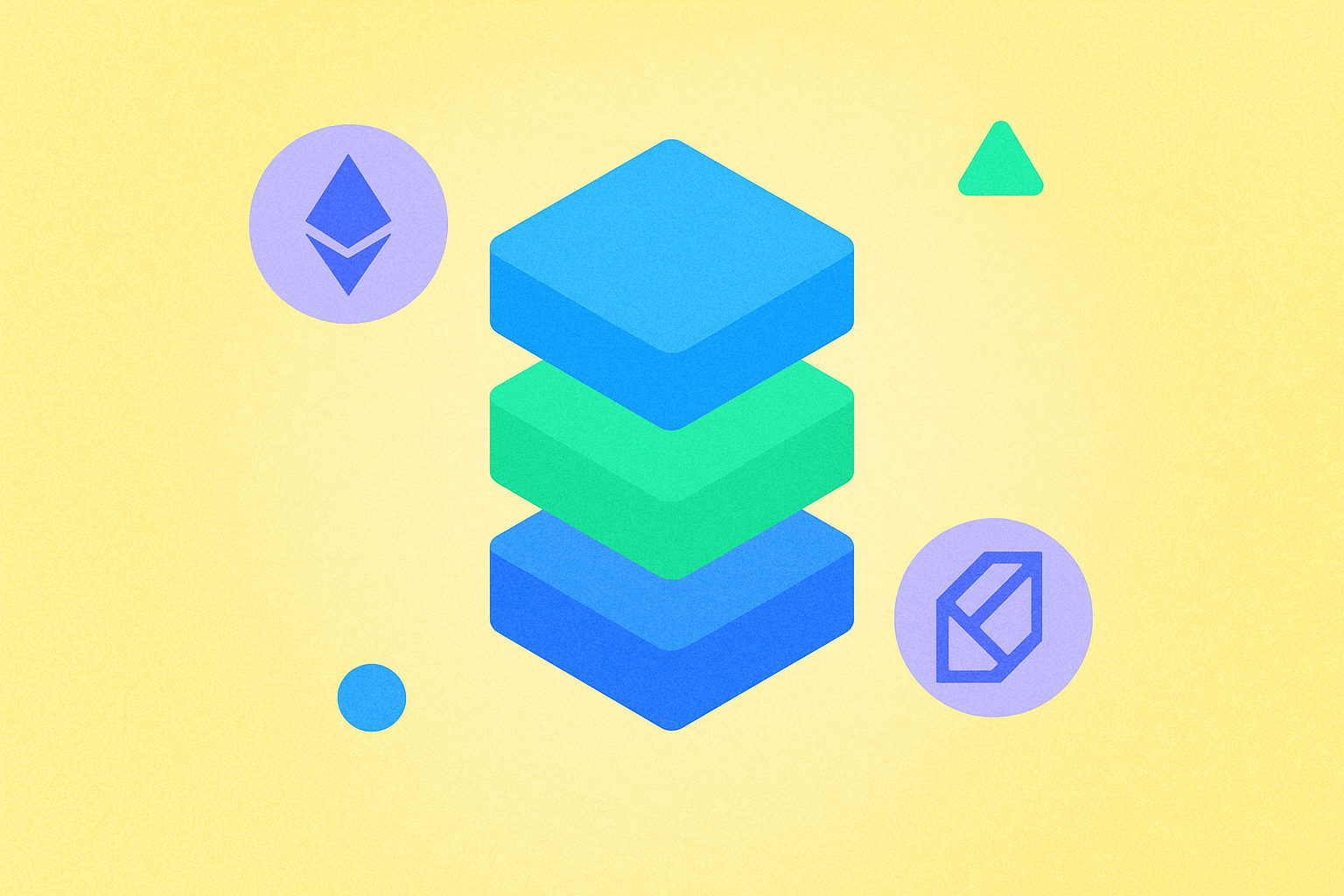
What is Mantle Network (MNT): exploring Ethereum's first modular Layer-2 solution
Mantle Network represents a groundbreaking advancement in blockchain scalability, positioning itself as Ethereum's first modular Layer-2 solution. As Ethereum continues to face scalability challenges, Mantle Network offers an innovative approach to increase transaction throughput while reducing costs, making decentralized applications more accessible to users worldwide.
TL;DR
Mantle Network addresses Ethereum's scalability challenges through several key innovations. The network employs a unique modular design that separates execution, consensus, settlement, and storage functions, effectively tackling the blockchain trilemma of scalability, security, and decentralization. By utilizing Optimistic Rollup technology, Mantle blockchain significantly accelerates transaction processing while reducing gas fees. Originally established as BitDAO, the project now benefits from backing from a major cryptocurrency exchange, providing robust financial support and ensuring EVM compatibility for seamless integration of existing Ethereum contracts. The network's primary objective is to enhance the user experience of decentralized applications by lowering transaction costs and increasing processing speeds. At the core of the ecosystem is the MNT token, which serves multiple purposes including network security, governance participation, and supporting the overall efficiency of the platform.
What is Mantle Network?
Mantle Network is a sophisticated Layer-2 scaling solution specifically designed for the Ethereum blockchain. The Mantle blockchain leverages Optimistic Rollup technology to dramatically improve transaction speeds while simultaneously reducing the gas fees that have historically plagued Ethereum users. The fundamental approach involves processing transactions off the main Ethereum chain while still benefiting from Ethereum's proven security infrastructure for final settlement.
The project's origins trace back to BitDAO, and it currently operates with substantial backing from a prominent cryptocurrency exchange. This strategic relationship provides Mantle Network with significant financial resources and access to a large, established user base, positioning it as a formidable competitor within the increasingly crowded Layer-2 ecosystem.
What distinguishes Mantle blockchain from other blockchain solutions is its innovative modular architecture. Rather than following the traditional monolithic blockchain design, Mantle Network separates core blockchain functions—execution, consensus, settlement, and storage—into specialized, independent modules. This architectural decision enhances both scalability and performance while maintaining full compatibility with the Ethereum Virtual Machine (EVM). Consequently, developers can migrate their existing Ethereum applications to Mantle Network with minimal code modifications, significantly reducing the barriers to adoption.
The network's implementation of Optimistic Rollup technology operates on a presumption of validity, assuming transactions are legitimate unless proven otherwise. This approach substantially improves operational efficiency by eliminating the need to verify every transaction immediately. Additionally, Mantle blockchain incorporates advanced data availability solutions such as EigenLayer, which reduces security fragmentation across Ethereum-based applications while bolstering overall security. For end users, these technological choices translate into more affordable data storage costs without compromising the security guarantees inherited from Ethereum's mainnet.
How Mantle Network works, and its advantages
Mantle blockchain's architecture comprises several sophisticated components working in concert to enhance Ethereum's scalability at Layer-2. Understanding these mechanisms reveals the network's comprehensive approach to solving blockchain scalability challenges.
Validator Nodes and Transaction Compression: Validator nodes form the backbone of Mantle Network's operational structure. These nodes collect individual user transactions and bundle them into compressed blocks, significantly reducing the data footprint of each transaction batch. This compression mechanism directly translates to lower gas fees for users while simultaneously increasing the network's overall transaction throughput capacity.
Optimistic Rollup Technology: The network's implementation of Optimistic Rollups represents a paradigm shift in transaction validation. By assuming transactions are valid by default and only performing verification when challenges arise, Mantle blockchain can process substantially higher transaction volumes at reduced costs. When a batch of transactions completes processing, it's published to the Ethereum mainnet as "calldata," a more economical storage method that maintains data accessibility without overwhelming Ethereum's network capacity. Should any user suspect fraudulent activity, they can submit a fraud proof, triggering the Ethereum mainnet to verify the disputed transaction. If fraud is confirmed, the responsible validator's bond is slashed, creating strong economic incentives for honest participation.
Ethereum Compatibility and Modular Architecture: Mantle Network maintains full compatibility with Ethereum contracts and development tools, enabling developers to migrate their decentralized applications with minimal friction. The Mantle blockchain's modular architecture further enhances efficiency by compartmentalizing execution, consensus, settlement, and data availability functions into distinct operational layers. This separation of concerns not only improves overall performance but also provides a structured approach to addressing the blockchain trilemma—the perpetual challenge of balancing scalability, security, and decentralization.
Data Availability and Security: To ensure transaction data remains both accessible and secure, Mantle blockchain integrates EigenLayer's EigenDA solution. This advanced data availability layer provides high throughput capabilities while maintaining rigorous data integrity standards, ensuring that all network participants can access and verify transaction data when needed.
What are the drawbacks of Mantle Network?
While Mantle blockchain offers numerous advantages, potential users and developers should be aware of several limitations and challenges inherent to the platform.
Complexity of Optimistic Rollups: The Optimistic Rollup mechanism, while efficient, introduces complexity that can impact user experience. The presumption of transaction validity means that disputed transactions may face delays during the fraud-proofing process. For applications requiring immediate transaction finality, this challenge window can present significant operational constraints.
Centralization Risks: A notable concern involves potential centralization, particularly regarding sequencer control in Optimistic Rollup systems. During the network's development stages, sequencer operations may be centralized, creating potential security vulnerabilities and single points of failure. Although Mantle Network has outlined plans for sequencer decentralization, the transition period itself may expose the network to additional risks.
Ethereum Dependency: Mantle blockchain's reliance on Ethereum for security creates a double-edged situation. While the network benefits from Ethereum's robust security infrastructure, it also inherits Ethereum's challenges. During periods of mainnet congestion or elevated gas prices, Mantle Network's performance and cost-effectiveness can be adversely affected, potentially diminishing its value proposition during peak usage periods.
Competitive Landscape: The Layer-2 ecosystem has become increasingly competitive, with established solutions vying for market share. To maintain its competitive position, Mantle blockchain must continuously innovate and expand its ecosystem, requiring substantial resources and unwavering commitment to development.
Developer Learning Curve: The modular architecture, while offering flexibility, introduces complexity that may challenge developers. Understanding and effectively utilizing the network's various components requires additional time and resources, potentially slowing the pace of application development and deployment on the platform.
What's the role of the MNT token in Mantle Network?
The MNT token serves as the native cryptocurrency of Mantle blockchain, playing multiple critical roles within the ecosystem. Notably, tokens held in the Mantle Treasury are considered outside of circulation, with distribution managed through the Mantle Governance process.
The token's multifaceted utility includes several key functions. In terms of governance, MNT token holders exercise voting rights on crucial network decisions, including protocol upgrades, funding allocations, and other significant matters. Each token represents one vote, ensuring a community-driven approach to network evolution and maintaining decentralization principles. For transaction fees, the Mantle blockchain utilizes MNT tokens as payment for network operations, providing essential utility and supporting ongoing network maintenance. Through staking mechanisms, token holders can lock their MNT tokens to support network security and validation processes, contributing to the network's overall integrity while earning rewards. Additionally, MNT tokens fund ecosystem growth initiatives, supporting new projects through grants and development activities that expand the Mantle Network ecosystem, fostering innovation and adoption.
What's next for Mantle Network?
Looking forward, Mantle blockchain has outlined several strategic development priorities that will shape its evolution.
Technological enhancements remain at the forefront, with particular emphasis on refining the modular architecture. This design philosophy enables seamless upgrades and scalability improvements without requiring disruptive hard forks, as different functional layers can be enhanced independently. Decentralization continues to be a fundamental priority, with Mantle Network's identity as the first DAO-based Layer-2 solution driving its governance philosophy. Token holders maintain decision-making authority over protocol upgrades and fund allocations, ensuring that development aligns with community interests. The planned decentralization of the sequencer will further enhance network resilience, security, and censorship resistance.
The Mantle Liquidity Staking Protocol (LSP) represents another significant development area, enabling users to stake ETH in exchange for yield-bearing mETH tokens. This enhancement increases network utility while providing additional incentives for community participation. Strategic partnerships aimed at enhancing interoperability and expanding the ecosystem continue to strengthen, connecting Mantle blockchain with various DeFi protocols and Web3 applications to solidify its market position.
Expansion into messaging platform-based mini-applications demonstrates Mantle Network's commitment to accessibility and mainstream adoption. The success of gaming applications on the Mantle blockchain showcases the platform's capability to support major applications. By leveraging popular communication platforms, Mantle blockchain aims to lower entry barriers and introduce blockchain technology's benefits—including digital ownership and transparent rewards—to broader audiences, driving Web3 adoption through engaging, accessible experiences.
Conclusion
Mantle Network represents a significant advancement in addressing Ethereum's well-documented scalability challenges. Through its innovative combination of Optimistic Rollup technology, modular architecture, and strategic backing, the platform offers a compelling solution for accelerating transactions and reducing costs on the Ethereum network. The Mantle blockchain's compatibility with existing Ethereum applications, coupled with its efficiency-focused design, positions it as an attractive option for both users and developers seeking to leverage Ethereum's ecosystem without its traditional limitations.
As the blockchain landscape continues to evolve with increasing competition from both established and emerging projects, Layer-2 solutions like Mantle blockchain provide compelling reasons to build on and utilize the Ethereum network. The platform's ongoing development priorities—including enhanced decentralization, expanded staking mechanisms, strategic partnerships, and innovative approaches to mainstream adoption—demonstrate a clear vision for sustainable growth. For stakeholders in the Ethereum ecosystem, Mantle Network offers a promising pathway toward achieving the scalability and efficiency necessary for widespread blockchain adoption while maintaining the security and decentralization principles that define the space.
FAQ
What is mantle blockchain?
Mantle is a modular blockchain integrating execution, consensus, settlement, and data availability solutions. It offers a flexible, scalable infrastructure for decentralized applications, with easy upgrades through its modular design.
Is mantle a good crypto?
Yes, Mantle is considered a good crypto. It has shown strong growth, rising popularity, and momentum in the market, making it a promising investment option for 2025 and beyond.
Who is the CEO of Mantle XYZ?
Pascal Leblanc is the CEO of Mantle XYZ. He also serves as the CTO and founder.
Share
Content
How to Buy Cryptocurrency


Trending Cryptocurrencies



XZXX: A Comprehensive Guide to the BRC-20 Meme Token in 2025

Bitcoin Fear and Greed Index: Market Sentiment Analysis for 2025

Top Crypto ETFs to Watch in 2025: Navigating the Digital Asset Boom

5 ways to get Bitcoin for free in 2025: Newbie Guide

Bitcoin Market Cap in 2025: Analysis and Trends for Investors
2025 Bitcoin Price Prediction: Trump's Tariffs' Impact on BTC

Is Falcon Finance (FF) a good investment?: A Comprehensive Analysis of Returns, Risks, and Market Potential
Is Zebec Protocol (ZBCN) a good investment?: A Comprehensive Analysis of Tokenomics, Use Cases, and Market Potential in 2024
Is Audiera (BEAT) a good investment?: A Comprehensive Analysis of Tokenomics, Market Potential, and Risk Factors

Is zkSync (ZK) a good investment?: A Comprehensive Analysis of Layer 2 Scaling Solutions and Future Prospects

TBC vs MANA: A Comprehensive Comparison of Two Leading Blockchain Governance Tokens