GTBTC vs GMX: A Comparative Analysis of Two Innovative Crypto Trading Platforms

Introduction: GTBTC vs GMX Investment Comparison
In the cryptocurrency market, the comparison between GTBTC vs GMX has been an unavoidable topic for investors. The two not only show significant differences in market cap ranking, application scenarios, and price performance but also represent different positioning in crypto assets.
GTBTC (GTBTC): Since its launch, it has gained market recognition for its on-chain BTC yield-generating asset backed by Gate's BTC reserves.
GMX (GMX): Established as a decentralized and sustainable exchange, it has been recognized for its utility and governance token features.
This article will comprehensively analyze the investment value comparison between GTBTC vs GMX, focusing on historical price trends, supply mechanisms, institutional adoption, technological ecosystems, and future predictions, attempting to answer the question most concerning to investors:
"Which is the better buy right now?"
I. Price History Comparison and Current Market Status
GTBTC (Coin A) and GMX (Coin B) Historical Price Trends
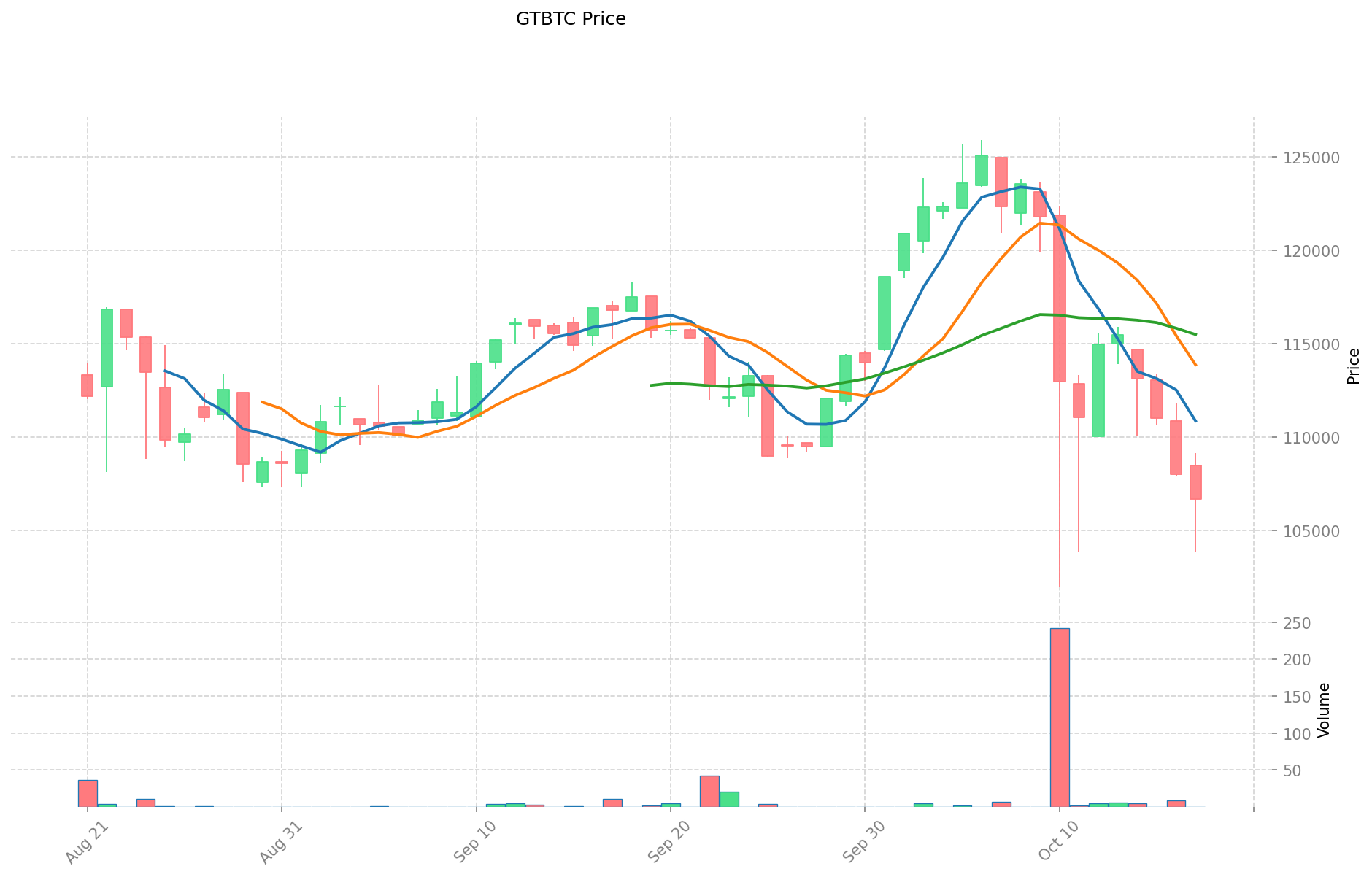
- 2025: GTBTC reached its all-time high of $125,918.6 on October 6, 2025, and its all-time low of $101,942 on October 10, 2025.
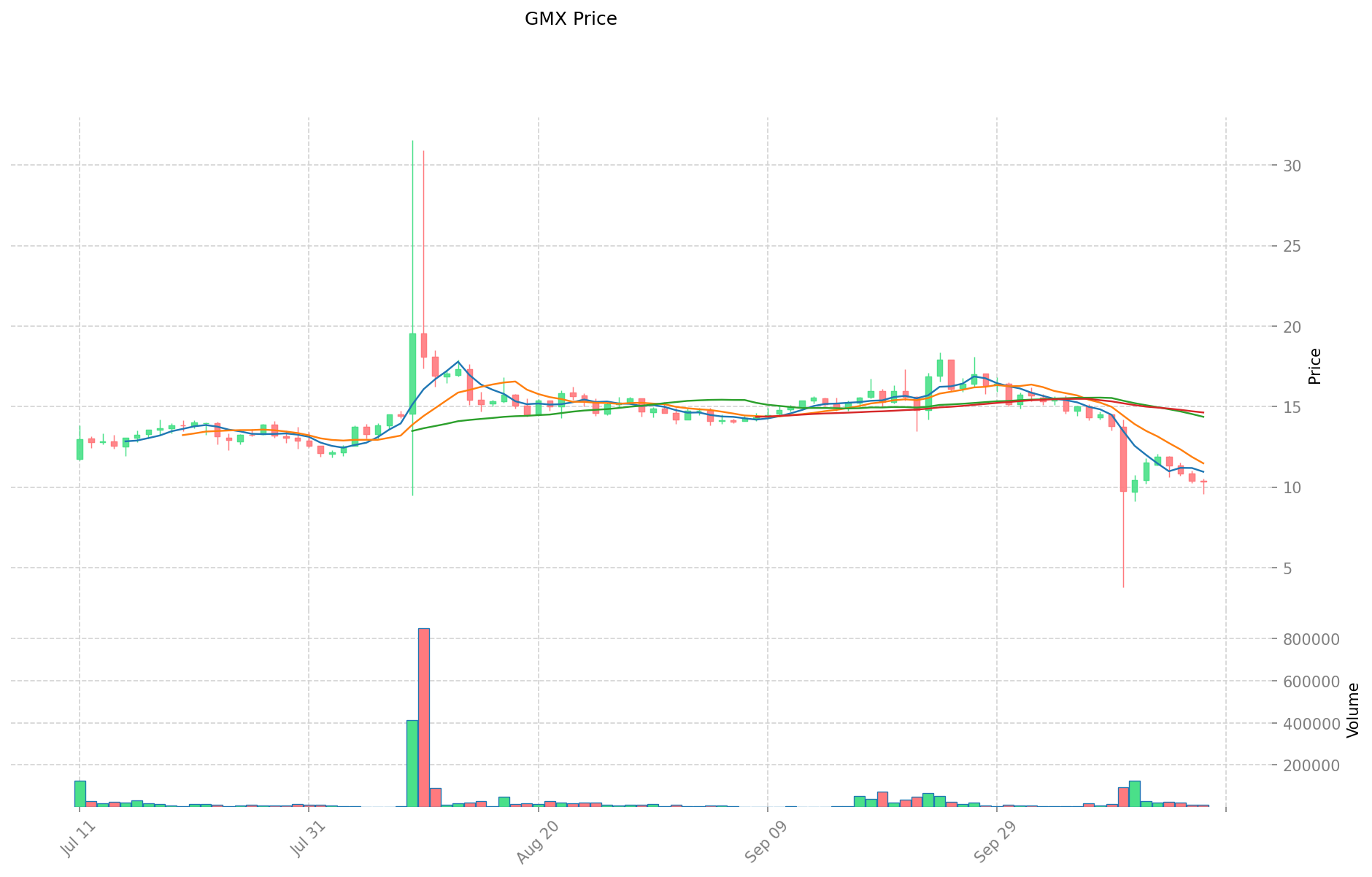
- 2023: GMX reached its all-time high of $91.07 on April 18, 2023.
- Comparative analysis: In recent market cycles, GTBTC experienced significant volatility within a short period in October 2025, while GMX has shown a long-term downtrend from its 2023 high.
Current Market Situation (2025-10-18)
- GTBTC current price: $106,669.5
- GMX current price: $10.33
- 24-hour trading volume: GTBTC $16,276.577853 vs GMX $119,877.99468
- Market Sentiment Index (Fear & Greed Index): 22 (Extreme Fear)
Click to view real-time prices:
- View GTBTC current price Market Price
- View GMX current price Market Price
II. Key Factors Affecting Investment Value of GTBTC vs GMX
Supply Mechanism Comparison (Tokenomics)
-
GTBTC: Fixed supply model with a maximum cap of 21 million tokens, mirroring Bitcoin's supply model
-
GMX: Inflationary model with emissions for staking rewards, but includes fee distribution and partial token burning mechanisms
-
📌 Historical Pattern: Fixed supply models like GTBTC's tend to create scarcity-driven price appreciation during bull markets, while GMX's partial burning mechanism helps balance inflation with usage-based deflation.
Institutional Adoption and Market Applications
- Institutional Holdings: GMX has gained more traction among institutional investors due to its proven revenue model and established position in the DeFi derivatives space
- Enterprise Adoption: GMX has stronger integration with trading platforms and DeFi protocols, while GTBTC remains primarily a speculative asset with less actual enterprise usage
- Regulatory Stance: Both face regulatory scrutiny, but GMX's DeFi infrastructure may face more targeted regulation as derivatives trading comes under increased oversight
Technical Development and Ecosystem Building
- GTBTC Technical Upgrades: Limited development activity with focus on maintaining Bitcoin-mirroring functionality
- GMX Technical Development: Continuous improvements to trading infrastructure, with enhanced liquidity management and cross-chain expansion initiatives
- Ecosystem Comparison: GMX has a robust DeFi ecosystem with real yield generation, trading utilities, and multi-chain presence, while GTBTC has a more limited ecosystem primarily focused on Bitcoin exposure
Macroeconomic Factors and Market Cycles
- Performance During Inflation: GMX has demonstrated some inflation resistance through fee generation, while GTBTC's value proposition as a Bitcoin proxy makes it sensitive to Bitcoin's inflation hedge narrative
- Macro Monetary Policy: Both tokens are affected by interest rate changes and dollar strength, with risk-off environments typically impacting GMX more severely due to reduced trading volumes
- Geopolitical Factors: Cross-border trading demand benefits GMX's decentralized derivatives platform, while GTBTC benefits indirectly from Bitcoin's appeal during currency instability
III. 2025-2030 Price Prediction: GTBTC vs GMX
Short-term Prediction (2025)
- GTBTC: Conservative $75,735 - $106,670 | Optimistic $106,670 - $148,271
- GMX: Conservative $8.75 - $10.29 | Optimistic $10.29 - $14.51
Mid-term Prediction (2027)
- GTBTC may enter a growth phase, with an estimated price range of $139,656 - $166,635
- GMX may enter a bullish market, with an estimated price range of $8.44 - $22.00
- Key drivers: Institutional capital inflow, ETF, ecosystem development
Long-term Prediction (2030)
- GTBTC: Base scenario $201,895 - $278,615 | Optimistic scenario $278,615+
- GMX: Base scenario $25.35 - $32.71 | Optimistic scenario $32.71+
Disclaimer: The above predictions are based on historical data and market analysis. Cryptocurrency markets are highly volatile and subject to change. This information should not be considered as financial advice. Always conduct your own research before making investment decisions.
GTBTC:
| 年份 | 预测最高价 | 预测平均价格 | 预测最低价 | 涨跌幅 |
|---|---|---|---|---|
| 2025 | 148270.605 | 106669.5 | 75735.345 | 0 |
| 2026 | 189930.378225 | 127470.0525 | 118547.148825 | 19 |
| 2027 | 166635.226130625 | 158700.2153625 | 139656.189519 | 48 |
| 2028 | 229361.486252653125 | 162667.7207465625 | 136640.8854271125 | 52 |
| 2029 | 207775.47970958428125 | 196014.6034996078125 | 113688.47002977253125 | 83 |
| 2030 | 278615.157414342544687 | 201895.041604596046875 | 183724.487860182402656 | 89 |
GMX:
| 年份 | 预测最高价 | 预测平均价格 | 预测最低价 | 涨跌幅 |
|---|---|---|---|---|
| 2025 | 14.5089 | 10.29 | 8.7465 | 0 |
| 2026 | 17.7312135 | 12.39945 | 8.927604 | 20 |
| 2027 | 21.995384355 | 15.06533175 | 8.43658578 | 45 |
| 2028 | 23.904161887725 | 18.5303580525 | 16.862625827775 | 79 |
| 2029 | 29.491991358456375 | 21.2172599701125 | 13.579046380872 | 105 |
| 2030 | 32.707467106926924 | 25.354625664284437 | 20.790793044713238 | 145 |
IV. Investment Strategy Comparison: GTBTC vs GMX
Long-term vs Short-term Investment Strategies
- GTBTC: Suitable for investors focused on Bitcoin exposure and long-term value storage
- GMX: Suitable for investors interested in DeFi yield and trading infrastructure potential
Risk Management and Asset Allocation
- Conservative investors: GTBTC: 70% vs GMX: 30%
- Aggressive investors: GTBTC: 40% vs GMX: 60%
- Hedging tools: Stablecoin allocation, options, cross-currency portfolios
V. Potential Risk Comparison
Market Risk
- GTBTC: High correlation with Bitcoin price volatility
- GMX: Susceptible to DeFi market trends and trading volume fluctuations
Technical Risk
- GTBTC: Scalability, network stability
- GMX: Smart contract vulnerabilities, liquidity risks
Regulatory Risk
- Global regulatory policies may have different impacts on both, with GMX potentially facing more scrutiny due to its derivatives trading platform
VI. Conclusion: Which Is the Better Buy?
📌 Investment Value Summary:
- GTBTC advantages: Bitcoin-backed stability, potential for long-term appreciation
- GMX advantages: DeFi utility, real yield generation, ecosystem growth potential
✅ Investment Advice:
- New investors: Consider a higher allocation to GTBTC for Bitcoin exposure with lower complexity
- Experienced investors: Balance between GTBTC and GMX, leveraging GMX's DeFi features
- Institutional investors: Explore GMX for its DeFi infrastructure potential while maintaining GTBTC for Bitcoin-correlated holdings
⚠️ Risk Warning: The cryptocurrency market is highly volatile. This article does not constitute investment advice. None
FAQ
Q1: What are the main differences between GTBTC and GMX? A: GTBTC is an on-chain BTC yield-generating asset backed by Gate's BTC reserves, while GMX is a decentralized exchange token with utility and governance features. GTBTC has a fixed supply model mirroring Bitcoin, whereas GMX has an inflationary model with partial burning mechanisms.
Q2: Which token has performed better historically? A: GTBTC reached its all-time high of $125,918.6 in October 2025, while GMX's all-time high was $91.07 in April 2023. GTBTC has shown higher price points but also more volatility, while GMX has demonstrated a long-term downtrend from its 2023 high.
Q3: How do institutional adoption and market applications differ between GTBTC and GMX? A: GMX has gained more traction among institutional investors due to its proven revenue model and established position in the DeFi derivatives space. It also has stronger integration with trading platforms and DeFi protocols, while GTBTC remains primarily a speculative asset with less actual enterprise usage.
Q4: What are the key factors affecting the investment value of GTBTC and GMX? A: Key factors include supply mechanisms, institutional adoption, technical development, ecosystem building, macroeconomic factors, and market cycles. GMX tends to have a more robust DeFi ecosystem and real yield generation, while GTBTC is more closely tied to Bitcoin's performance.
Q5: What are the long-term price predictions for GTBTC and GMX? A: By 2030, GTBTC is predicted to reach a base scenario of $201,895 - $278,615, with an optimistic scenario exceeding $278,615. GMX is predicted to reach a base scenario of $25.35 - $32.71, with an optimistic scenario exceeding $32.71.
Q6: How should investors allocate their assets between GTBTC and GMX? A: Conservative investors might consider allocating 70% to GTBTC and 30% to GMX, while aggressive investors might allocate 40% to GTBTC and 60% to GMX. The specific allocation should be based on individual risk tolerance and investment goals.
Q7: What are the potential risks associated with investing in GTBTC and GMX? A: Both tokens face market risks, technical risks, and regulatory risks. GTBTC is highly correlated with Bitcoin price volatility, while GMX is susceptible to DeFi market trends and trading volume fluctuations. GMX may face more regulatory scrutiny due to its derivatives trading platform.
Share
Content
Introduction: GTBTC vs GMX Investment Comparison
I. Price History Comparison and Current Market Status
II. Key Factors Affecting Investment Value of GTBTC vs GMX
III. 2025-2030 Price Prediction: GTBTC vs GMX
IV. Investment Strategy Comparison: GTBTC vs GMX
V. Potential Risk Comparison
VI. Conclusion: Which Is the Better Buy?
FAQ
How to Buy Cryptocurrency


Trending Cryptocurrencies



How Does ANOME's Liquidity Mechanism Impact Fund Flow and Investor Holdings?

Bitcoin Staking Guide 2025: How to Secure High Returns

Best Bitcoin Staking Methods in 2025: Yield Comparison and Security Strategies
On-Chain BTC Staking: A Guide for Bitcoin Investors in 2025

Bitcoin And AUD
Will Crypto Recover in 2025?

Tomarket Daily Combo 18 december 2025

Top Anticipated NFT Projects to Watch in 2024
How to Withdraw Funds to Your Bank Account from a Crypto Platform

Discovering NFT Value and Rarity with Innovative Tools
Seamless Ethereum Transfer to Arbitrum: A Step-by-Step Guide