


Básico
Spot
Opera con criptomonedas libremente
Margen
Multiplica tus beneficios con el apalancamiento
Convertir e Inversión automática
0 Fees
Opera cualquier volumen sin tarifas ni deslizamiento
ETF
Obtén exposición a posiciones apalancadas de forma sencilla
Trading premercado
Opera nuevos tokens antes de su listado
Contrato
Accede a cientos de contratos perpetuos
TradFi
Oro
Plataforma global de activos tradicionales
Opciones
Hot
Opera con opciones estándar al estilo europeo
Cuenta unificada
Maximiza la eficacia de tu capital
Trading de prueba
Introducción al trading de futuros
Prepárate para operar con futuros
Eventos de futuros
Únete a eventos para ganar recompensas
Trading de prueba
Usa fondos virtuales para probar el trading sin asumir riesgos
Lanzamiento
CandyDrop
Acumula golosinas para ganar airdrops
Launchpool
Staking rápido, ¡gana nuevos tokens con potencial!
HODLer Airdrop
Holdea GT y consigue airdrops enormes gratis
Launchpad
Anticípate a los demás en el próximo gran proyecto de tokens
Puntos Alpha
Opera activos on-chain y recibe airdrops
Puntos de futuros
Gana puntos de futuros y reclama recompensas de airdrop
Inversión
Simple Earn
Genera intereses con los tokens inactivos
Inversión automática
Invierte automáticamente de forma regular
Inversión dual
Aprovecha la volatilidad del mercado
Staking flexible
Gana recompensas con el staking flexible
Préstamo de criptomonedas
0 Fees
Usa tu cripto como garantía y pide otra en préstamo
Centro de préstamos
Centro de préstamos integral
Centro de patrimonio VIP
Planes de aumento patrimonial prémium
Gestión patrimonial privada
Asignación de activos prémium
Quant Fund
Estrategias cuantitativas de alto nivel
Staking
Haz staking de criptomonedas para ganar en productos PoS
Apalancamiento inteligente
New
Apalancamiento sin liquidación
Acuñación de GUSD
Acuña GUSD y gana rentabilidad de RWA


Más



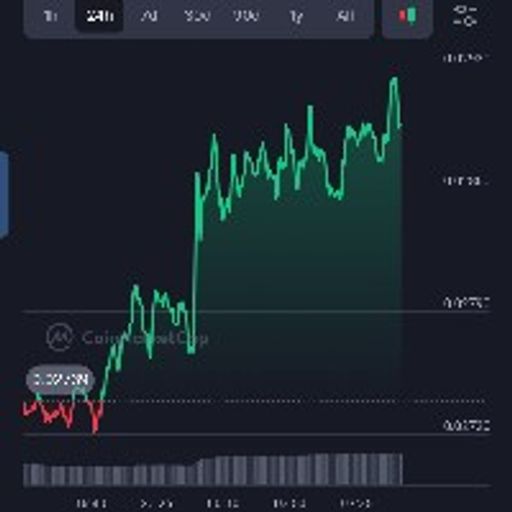


#比特币站上七万美元 Bitcoin broke through the $72,500 level on Friday and continued to rise, with Bitcoin moving against the trend despite escalating geopolitical tensions, declines in Asian stock markets, and S&P 500 futures falling, demonstrating a clear decoupling from traditional risk assets.
Previous buying operations pushed prices out of the consolidation zone below $70,000, achieving a breakthrough of the $72,000 level. Ethereum followed with a pullback, with intraday highs touching close to $2,157. Mainstream altcoins such as XRP, Solana, and BNB also recorded gains at key levels.
Analysts believe Bitcoin's recent gains stem from its resilience following the Israel-U.S. strikes on Iran. Despite concerns about closing the Strait of Hormuz pushing up oil prices and increasing inflation risks, on-chain data indicates that whales have accumulated at lower price levels.
The cryptocurrency market has essentially absorbed the initial impact of the Iran conflict, with analysts pointing out that Bitcoin is experiencing a new round of decoupling from broader risk asset sentiment. As this momentum accumulates, Bitcoin is pointing toward the highest level in two weeks.
Recent trend review: February 28 low of $63,000 → March 4 high exceeding $74,000 → decline to $65,000 after four consecutive down candles → subsequent sustained rise, if today records a fifth up candle, could break through $73,000, opening the $75,000-$78,000 range. The next resistance level is the 100-day simple moving average ( at approximately $81,162 ).
Why might Bitcoin experience a sharp decline?
Downside risks remain, primarily stemming from geopolitical uncertainty and global oil price pressures. Analysts warn: rising oil prices reinforce inflation risks, leading to rising yields and a stronger dollar, suppressing risk appetite. Meanwhile, expectations for immediate Federal Reserve rate cuts have fallen sharply. Glassnode noted on X: "The $62,000-$72,000 range constitutes an accumulation cluster, but with reduced intensity compared to the previous phase driving sustained growth.
Confidence is increasing, but the foundation for mid-term breakthroughs is currently weak."
Investors may opt to take profits. The first downside support level is the psychological price of $70,000, with stronger support around $66,250 near previous lows.
Market lesson: Despite sustained oil price increases and ongoing Middle East conflict creating macroeconomic pressure, this Bitcoin pullback demonstrates the transformation of cryptocurrencies from "risk asset followers" to "independent resilient assets," particularly with limited downside after whale accumulation and leverage liquidations. If geopolitical risks ( cool or oil prices fall ), breaking through 73K will open new upside space; otherwise, if oil prices re-escalate or inflation data deteriorates, near-term downside risks will increase.
The 2026 cryptocurrency market continues to test "macroeconomic resilience": Bitcoin is no longer merely a stock follower, but increasingly like a "vitality chart of global liquidity + safe-haven expectations."
One-sentence summary: In oil price panic, Bitcoin not only didn't fall but rose to 72.5K—this "decoupling curse" may be the strongest evidence of cryptocurrency after the Iran crisis: worst-case scenarios have been partially priced in, and the next major move will occur in the confrontation of breaking through 73K and the Federal Reserve's trajectory!