PLSPAD vs SOL: A batalha das plataformas de blockchain pelo protagonismo nas finanças descentralizadas

Introdução: Comparativo de Investimento PLSPAD vs SOL
No universo das criptomoedas, comparar PulsePad e Solana é uma pauta inevitável para investidores. Ambos se diferenciam expressivamente em ranking de valor de mercado, aplicações e desempenho de preços, além de representarem propostas distintas no cenário dos criptoativos.
PulsePad (PLSPAD): Desde o lançamento, consolidou-se como a principal plataforma de IDO para projetos baseados em PulseChain.
Solana (SOL): Lançada no final de 2017, tornou-se referência como protocolo blockchain de alta performance, desenhado para escalar sem abrir mão da descentralização ou segurança.
Neste artigo, você confere uma análise completa do valor de investimento de PLSPAD e SOL, abordando histórico de preços, tokenomics, adoção institucional, ecossistemas tecnológicos e projeções futuras, buscando responder à principal dúvida dos investidores:
"Qual é o melhor investimento agora?"
I. Histórico de Preços e Status Atual do Mercado
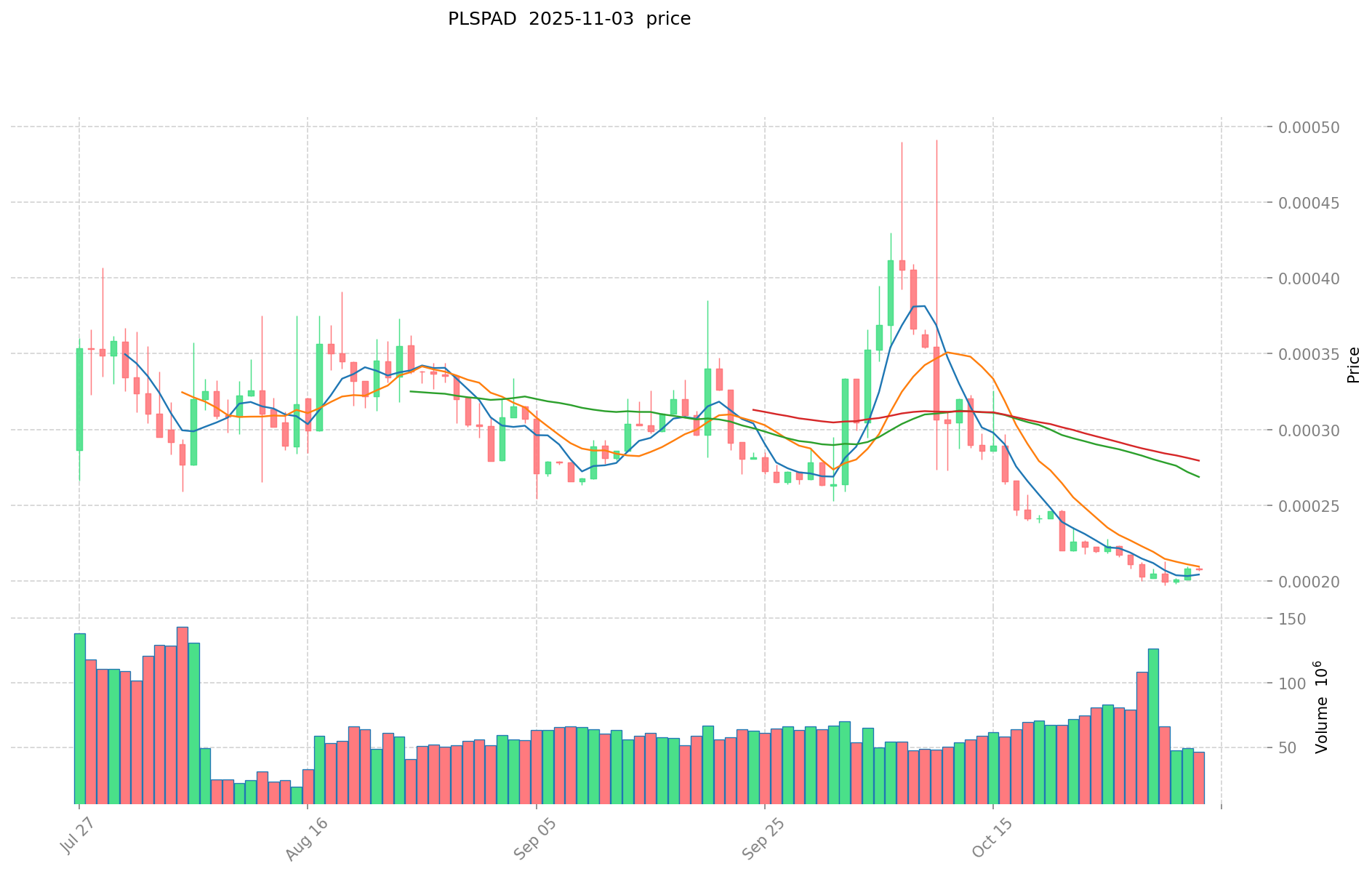
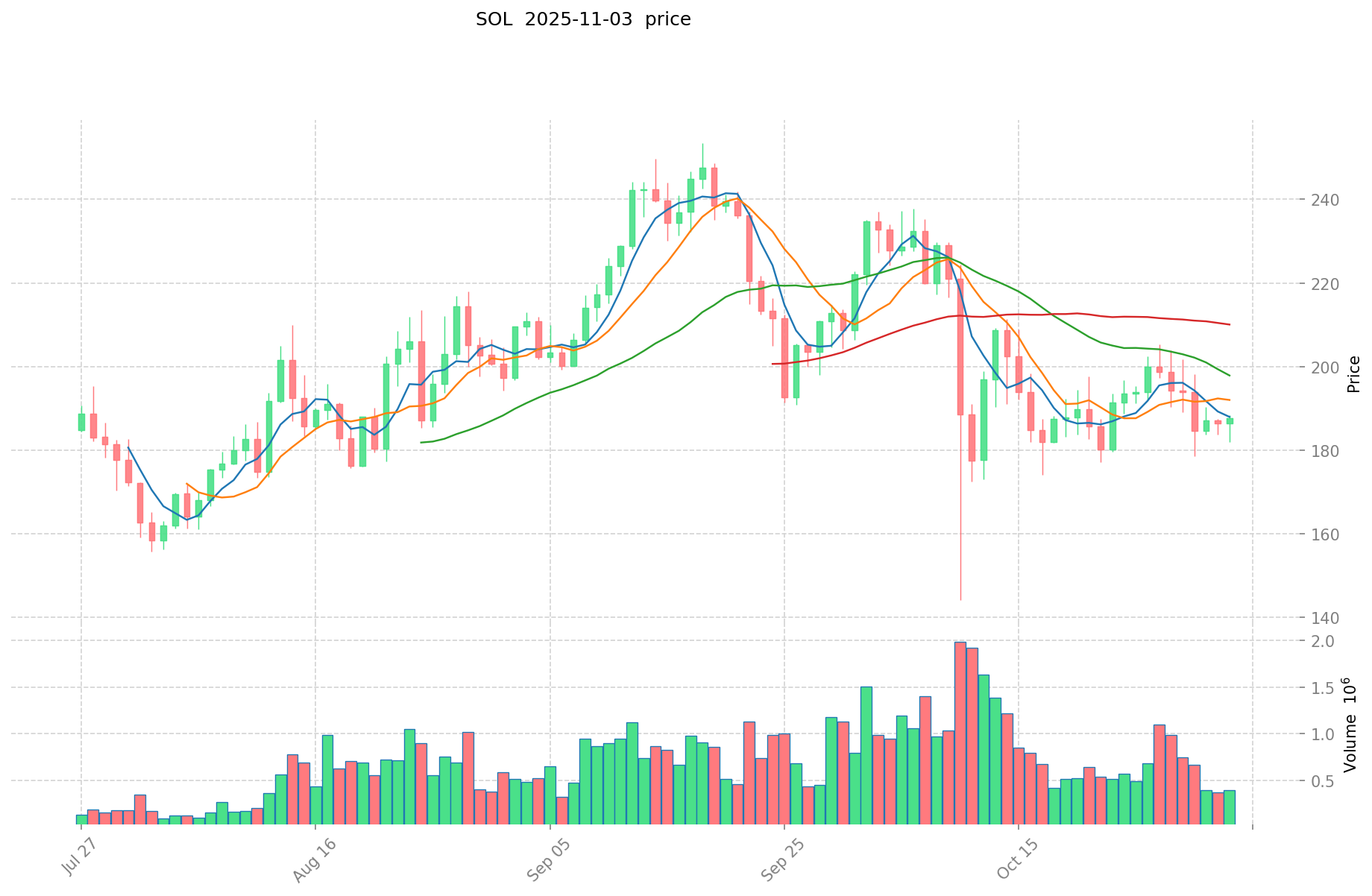
PulsePad (PLSPAD) e Solana (SOL): Evolução de Preços
- 2021: PLSPAD atingiu o topo histórico de US$0,447594 em 13 de novembro de 2021.
- 2022: SOL enfrentou forte volatilidade acompanhando o cenário geral do mercado cripto.
- Análise comparativa: No bear market de 2022, PLSPAD recuou do topo para próximo da mínima histórica, enquanto SOL demonstrou maior resiliência, apesar de quedas acentuadas.
Status de Mercado Atual (03 de novembro de 2025)
- Preço atual PLSPAD: US$0,0002077
- Preço atual SOL: US$186,66
- Volume negociado em 24h: PLSPAD US$9.626,37 | SOL US$77.731.656,39
- Índice de Sentimento de Mercado (Fear & Greed Index): 42 (Medo)
Clique para acompanhar os preços em tempo real:
- Veja o preço atual do PLSPAD Preço de Mercado
- Veja o preço atual do SOL Preço de Mercado
II. Fatores-Chave que Impactam o Valor de Investimento em PLSPAD e SOL
Comparativo de Tokenomics
- PLSPAD: Oferta limitada, com distribuição voltada à dinâmica de launchpad
- SOL: Modelo inflacionário, mas com inflação decrescente ao longo do tempo
- 📌 Histórico: A oferta influencia ciclos de preço em ambos; tokens de oferta limitada tendem à volatilidade ampliada.
Adoção Institucional e Aplicações de Mercado
- Participação institucional: SOL atrai mais players institucionais e grandes firmas de trading
- Uso corporativo: SOL tem presença consolidada em infraestrutura DeFi e inovação blockchain
- Ambiente regulatório: O tratamento varia globalmente; SOL costuma enfrentar menos barreiras atualmente
Desenvolvimento Técnico e Ecossistema
- SOL: Expansão contínua na performance de transações e robustez de rede
- PLSPAD: Foco na excelência em launchpad e integração com a PulseChain
- Ecossistema: SOL possui ambiente diversificado em DeFi, NFTs e contratos inteligentes
Cenário Macroeconômico e Ciclos de Mercado
- Impacto da inflação: Ambos reagem à inflação, com SOL oferecendo potencial de proteção superior
- Política monetária: Taxas de juros e força do dólar refletem fortemente em volumes e preços
- Geopolítica: Demanda internacional por transações impacta adoção e movimentações regulatórias
III. Projeções de Preço 2025-2030: PLSPAD x SOL
Projeção de Curto Prazo (2025)
- PLSPAD: Conservador US$0,000110081 a US$0,0002077 | Otimista US$0,000247163
- SOL: Conservador US$132,5783 a US$186,73 | Otimista US$253,9528
Projeção de Médio Prazo (2027)
- PLSPAD pode iniciar fase de valorização, com faixa estimada de US$0,000166923349425 a US$0,000320598813975
- SOL tende à consolidação, entre US$139,34390136 e US$292,34896952
- Fatores de impulso: entrada institucional, ETFs, expansão do ecossistema
Projeção de Longo Prazo (2030)
- PLSPAD: Base US$0,000264506123472 a US$0,000339110414707 | Otimista US$0,000386585872767
- SOL: Base US$337,93319946472407 a US$427,763543626233 | Otimista US$573,20314845915222
Disclaimer: As projeções são meramente informativas e não representam recomendação financeira. O mercado cripto é altamente volátil e imprevisível. Sempre faça sua própria análise antes de investir.
PLSPAD:
| Ano | Máxima Projetada | Média Projetada | Mínima Projetada | Variação (%) |
|---|---|---|---|---|
| 2025 | 0,000247163 | 0,0002077 | 0,000110081 | 0 |
| 2026 | 0,000302483895 | 0,0002274315 | 0,00016375068 | 9 |
| 2027 | 0,000320598813975 | 0,0002649576975 | 0,000166923349425 | 27 |
| 2028 | 0,000307417168524 | 0,000292778255737 | 0,000275211560393 | 40 |
| 2029 | 0,000378123117284 | 0,00030009771213 | 0,000156050810308 | 44 |
| 2030 | 0,000386585872767 | 0,000339110414707 | 0,000264506123472 | 63 |
SOL:
| Ano | Máxima Projetada | Média Projetada | Mínima Projetada | Variação (%) |
|---|---|---|---|---|
| 2025 | 253,9528 | 186,73 | 132,5783 | 0 |
| 2026 | 326,105272 | 220,3414 | 143,22191 | 18 |
| 2027 | 292,34896952 | 273,223336 | 139,34390136 | 46 |
| 2028 | 404,3841984468 | 282,78615276 | 226,228922208 | 51 |
| 2029 | 511,941911649066 | 343,5851756034 | 219,894512386176 | 84 |
| 2030 | 573,20314845915222 | 427,763543626233 | 337,93319946472407 | 129 |
IV. Estratégias de Investimento: PLSPAD vs SOL
Estratégias de Longo e Curto Prazo
- PLSPAD: Indicado para quem aposta na funcionalidade de launchpad e expansão da PulseChain
- SOL: Preferido por quem busca exposição à infraestrutura blockchain e aplicações DeFi diversificadas
Gestão de Riscos e Alocação de Ativos
- Investidor conservador: PLSPAD 10% | SOL 90%
- Investidor agressivo: PLSPAD 30% | SOL 70%
- Ferramentas de proteção: stablecoins, opções, portfólio multimoeda
V. Análise de Riscos Potenciais
Risco de Mercado
- PLSPAD: Volatilidade elevada devido ao baixo valor de mercado e liquidez reduzida
- SOL: Exposto às tendências macro e à volatilidade do mercado cripto
Risco Técnico
- PLSPAD: Escalabilidade e estabilidade dependem da evolução da PulseChain
- SOL: Possibilidade de congestionamento de rede e eventuais vulnerabilidades de segurança
Risco Regulatórios
- Políticas globais podem impactar ambos de formas distintas; SOL pode ser mais visado devido à adoção em larga escala
VI. Conclusão: Qual é o Melhor Investimento?
📌 Resumo do Potencial de Investimento:
- PLSPAD: Nicho em serviços de launchpad e potencial de crescimento acelerado no ecossistema PulseChain
- SOL: Ecossistema maduro, forte adoção institucional e ampla utilização em DeFi e soluções corporativas
✅ Recomendação de Investimento:
- Novatos: SOL é a escolha sólida pelo posicionamento de mercado e ecossistema robusto
- Investidores experientes: Diversifique entre ambos, com maior peso para SOL
- Institucionais: SOL se destaca pela liquidez e infraestrutura de padrão institucional
⚠️ Aviso de Risco: O mercado cripto é extremamente volátil. Este texto não configura recomendação de investimento. None
VII. Perguntas Frequentes
P1: Quais as principais diferenças entre PLSPAD e SOL?
R: PLSPAD é voltada para ser plataforma de IDO dentro da PulseChain, enquanto SOL atua como blockchain de alta performance com aplicações abrangentes em DeFi, NFTs e contratos inteligentes. SOL possui maior capitalização, volume negociado e presença institucional em relação ao PLSPAD.
P2: Qual ativo apresentou melhor desempenho histórico de preços?
R: SOL demonstrou resiliência e performance superior ao longo do tempo. Apesar das retrações no bear market de 2022, SOL manteve cotação relativamente elevada frente ao topo histórico, diferentemente do PLSPAD.
P3: Quais fatores mais impactam o valor de investimento em PLSPAD e SOL?
R: Destacam-se tokenomics, adoção institucional, desenvolvimento técnico, solidez do ecossistema, cenários macroeconômicos e questões regulatórias. SOL tende a liderar na maioria desses aspectos devido à posição consolidada.
P4: Como os mecanismos de oferta diferem entre PLSPAD e SOL?
R: PLSPAD utiliza oferta limitada voltada ao launchpad, enquanto SOL opera com modelo inflacionário de inflação decrescente. Isso influencia a volatilidade e o potencial de valorização no longo prazo.
P5: Quais as projeções de preço para PLSPAD e SOL em 2030?
R: Para 2030, PLSPAD pode variar entre US$0,000264506123472 e US$0,000339110414707, com cenário otimista em US$0,000386585872767. Para SOL, a faixa base é de US$337,93319946472407 a US$427,763543626233, chegando a US$573,20314845915222 no cenário otimista.
P6: Como alocar o portfólio entre PLSPAD e SOL?
R: Para perfis conservadores, 10% em PLSPAD e 90% em SOL; para perfis agressivos, 30% PLSPAD e 70% SOL. A alocação final deve considerar o perfil de risco e objetivos de cada investidor.
P7: Quais os principais riscos do investimento em PLSPAD e SOL?
R: Os dois estão expostos à volatilidade do mercado cripto. PLSPAD tem volatilidade mais acentuada pelo menor valor de mercado e liquidez. SOL pode sofrer com questões técnicas como congestionamento de rede. Ambos também enfrentam riscos regulatórios, especialmente SOL devido à maior adoção.
P8: Qual ativo é indicado para novos investidores?
R: SOL é geralmente recomendado para iniciantes, pois reúne ecossistema consolidado, maior liquidez e ampla adoção institucional. Em todo caso, a decisão deve ser baseada em análise aprofundada e perfil de risco pessoal.
Compartilhar
Conteúdo
Introdução: Comparativo de Investimento PLSPAD vs SOL
I. Histórico de Preços e Status Atual do Mercado
II. Fatores-Chave que Impactam o Valor de Investimento em PLSPAD e SOL
III. Projeções de Preço 2025-2030: PLSPAD x SOL
IV. Estratégias de Investimento: PLSPAD vs SOL
V. Análise de Riscos Potenciais
VI. Conclusão: Qual é o Melhor Investimento?
VII. Perguntas Frequentes
Como comprar criptomoedas


Criptomoedas em alta



Quais são as principais diferenças entre SOL e seus concorrentes em 2025?

ML vs SOL: Uma comparação entre Machine Learning e Statistical Learning para análise de dados
O que o whitepaper da Meteora (MET) revela sobre seu funcionamento fundamental e aplicações práticas?
Como Jupiter (JUP) deve evoluir no mercado de criptomoedas até 2030?

Previsão de preço do FRAG em 2025: análise das tendências do mercado e dos fatores potenciais de crescimento para a criptomoeda

Previsão de Preço LIQ para 2025: Tendências de alta e fatores essenciais que influenciam o futuro dos tokens de protocolo de liquidez
Guia para iniciantes sobre como compreender Dogecoin no universo Blockchain

O que é VRA: Guia Completo sobre Aplicações de Realidade Virtual para Negócios e Entretenimento Modernos

O que é XPLA: Guia Completo da Rede Blockchain Layer 1 e Seu Ecossistema

Entenda os riscos dos Wrapped Tokens em Finanças Descentralizadas
Previsão de Preço BOBA para 2025: análise de especialistas e visão do mercado para o próximo ano